
Key takeaways
Most food processes are not a single cooking step. A curry base is sautéed, then simmered, then reduced. A halwa is roasted in fat before sugar syrup is added and the mixture cooked to setting point. A sauce is dissolved, boiled and concentrated. Each stage happens at a different temperature, with the product behaving differently at each one.
A multi cook kettle exists so that all of it happens in one vessel. That sounds like a convenience and is closer to a process decision, because the alternative is moving hot, increasingly viscous product between machines, and every one of those transfers costs something.
This guide covers what these vessels do, why the design differs from a plain jacketed kettle, and how to specify one.
What Makes a Kettle “Multi Cook”
The defining capability is performing operations that would normally need different equipment, sequentially, without discharging the batch.
A plain jacketed kettle does the second of those well and the others poorly. The difference is not the jacket; it is the agitation and the control that go with it.
Why One Vessel Instead of Several
The case for a multi cook kettle is essentially the case against transferring product between stages.
Against that, a single vessel is occupied for the whole sequence rather than for one stage of it, which reduces the number of batches per shift. Where a plant runs one product continuously at high volume, separate stages in series will out-produce one multi cook vessel. Where it runs many products in campaigns, the single vessel usually wins.

The Design That Makes It Possible
Scraped surface agitation
This is the enabling feature, and it is what separates a multi cook kettle from a kettle with a stirrer.
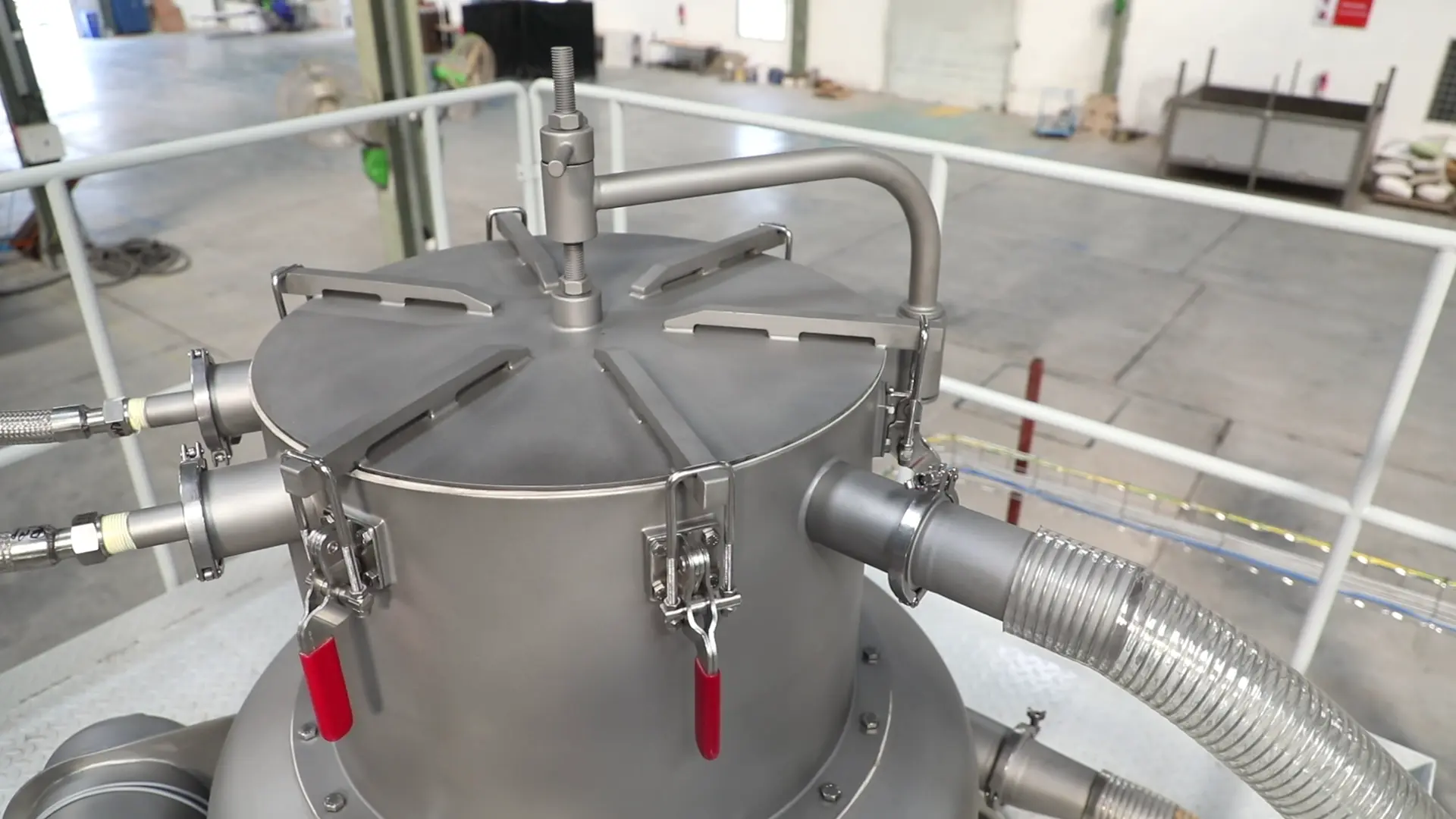
An anchor agitator carrying scraper blades sweeps the vessel wall continuously, clearing product from the heat transfer surface as it moves. Two things follow. Heat transfer is maintained through the batch instead of degrading as deposit builds, and burn-on is prevented rather than managed. In a product containing sugar, dairy solids or starch, a plain agitator loses the wall within minutes of the batch thickening.
Agitation across changing viscosity
A multi cook batch changes character dramatically during the cook. Sautéing aromatics involves a loose mixture of solids in oil. After liquid is added it is essentially a thin suspension. By the end of a reduction it may be a heavy paste.
A propeller or turbine agitator handles the middle stage and fails at both ends: it cannot move a loose bed of solids in a shallow oil film, and it turns a cavity in a thick paste while the rest stays still. Anchor and scraper geometry works across the range, which is why it is standard on these vessels rather than optional.
Tilting discharge
Viscous product does not flow out of a bottom valve willingly. Tilting the vessel pours the batch out completely, quickly and visibly, and it avoids the pumped transfer that would shear the product on the way out.
Temperature control that spans the range
The vessel has to hold a low simmer and reach sauté temperature, which means the heating system and its control must work across a wider band than a single-purpose kettle needs. Recipe-based control that steps through defined temperatures and hold times is what makes the sequence repeatable between operators.
Heating: Direct, Indirect, or Both
Most multi cook kettles use an indirect jacket carrying steam, hot water or thermal oil. Thermal oil is worth noting specifically, because it reaches the temperatures sautéing and roasting require, which steam at practical pressures does not.
Some vessels add direct steam injection for the wet phase, which heats far faster than a jacket can. The trade is that injected steam condenses into the product, so the formulation has to account for the added water. In a reduction process that water then has to be evaporated again, which is why direct injection suits heating and dissolution rather than concentration.
Where the vessel also cools, the same jacket carries chilled water or glycol after cooking, which turns a cooking kettle into a cook-and-cool vessel and removes a transfer at the end of the sequence.
Vacuum and Pressure Options
Two options extend the range of what one vessel can do.
Vacuum lowers the boiling point, so evaporation proceeds at a lower temperature. For a reduction that would otherwise hold product hot for a long period, that protects color and flavor substantially, and it speeds the reduction because more of the energy goes into evaporation rather than into holding temperature. It is the most valuable option on any vessel doing significant concentration.
Pressure raises the boiling point, shortening cook times where a long simmer is the constraint and retaining volatile aroma compounds that would otherwise escape. It requires a certified pressure vessel, which adds cost, inspection obligations and complexity at the lid and discharge.
Typical Process Sequences
| Product | Sequence performed in one vessel | What would otherwise be needed |
|---|---|---|
| Curry and gravy base | Heat oil, sauté aromatics, add paste and cook out, add liquid, simmer, reduce to target consistency | A bratt pan, a boiling vessel and a reduction kettle |
| Halwa and traditional sweets | Melt fat, roast flour, add sugar syrup, cook to setting consistency, discharge hot | A roasting pan and a separate cooking vessel, with a hot transfer between them |
| Sauces and ketchup | Heat, dissolve solids, boil, reduce to target solids, hold at filling temperature | A mixing tank, an evaporator and a holding vessel |
| Ready-to-eat curries | Sauté base, add protein and vegetables, add gravy, cook to specification, begin cooling | A cooking kettle plus a separate blending and cooling stage |
| Jams and fruit preserves | Heat fruit, add sugar, boil to target solids, discharge | A cooking pan and a finishing kettle |
| Dairy and khoya products | Heat, evaporate with continuous wall scraping, cook to solids, discharge | An open pan with manual scraping, which is labor intensive and inconsistent |
Reading the right-hand column explains the economics. A plant making several of these products would otherwise need most of the equipment listed there, plus the transfers between each. The multi cook kettle replaces the set, which is why it appears so often in prepared foods, sauces and traditional sweets manufacturing.
 “A multi cook kettle turns multiple cooking stages into one controlled process, keeping the product in the same vessel as viscosity, temperature, and process conditions change.“
See it in action
Cleaning and Changeover
The single-vessel argument creates a single-vessel obligation: everything that happens to the product happens on the same surfaces, so those surfaces carry residue from every stage of the sequence.
Two specification points follow. Spray coverage has to reach the entire internal surface including behind the agitator and the scraper blades, which is the area most likely to be missed and most likely to hold burnt residue. And the vessel must drain completely, since standing water after cleaning is a microbiological problem in a warm plant.
For plants running several products a day, automated cleaning is generally the right answer rather than manual washing, and the reasoning is set out in the guide to clean-in-place systems.
Selection Considerations
Cooking Equipment from Cybernetik
Cybernetik builds cooking equipment as part of complete food processing lines, so the vessel is specified alongside the charging, cooling, transfer and cleaning equipment around it. The cooking kettle covers rapid pressure cooking and the tilting kettle gentle atmospheric cooking with tilting discharge.
| Cybernetik cooking equipment | Specification |
|---|---|
| Cooking kettle | Rapid pressure cooking up to 2,000 liters, preserving flavor and nutrients |
| Tilting kettle | Gentle atmospheric cooking up to 1,500 liters with tilting discharge |
| Buggy lifter and tipper | Charging from buggies up to 350 liters |
| Melter, INCO-MELT range | 500 to 2,000 kg/hr for fats, butter, chocolate and cheese |
| High shear mixing | Column lift mixer at 500 liters and up to 3,000 rpm for dispersion and emulsification |
| Cooling | Convective and submerged cooling conveyors for temperature reduction after discharge |
| Clean-in-place | Single and multi-tank systems to 8,000 liters, recipe driven with parameter logging |
| Integrated lines | Ready-to-eat automation, food paste processing and flavor mixing systems |
| Build standard | SS316 product contact, SS304 non-contact, hygienic GMP construction |
| Control | Unified PLC and SCADA architecture with recipe-based operation |
For manufacturers producing prepared meals, the equipment sits within ready-to-eat automation lines, where cooking is engineered alongside the ingredient preparation before it and the cooling, filling and packing after it. That matters for multi cook duty specifically, because the vessel occupies the whole sequence and its cycle time governs the line rather than one stage of it.
The wider selection framework across cooking technologies is covered in the guide to industrial cooking equipment.
Cybernetik has operated for more than three decades, is headquartered in Pune with additional facilities in Gujarat and Raigad and international offices in the United States and UAE, and has installed over 6,000 systems across 30 plus countries, including more than 400 custom automation solutions. Further background is on the Cybernetik about page.