
Key takeaways
A pouch of dal makhani on a supermarket shelf has to taste the same in Delhi, Chennai and Dubai, survive months without a refrigerator, and cost little enough to compete with a home-cooked meal. Behind that pouch is a plant that cooks hundreds of kilograms of gravy an hour, adds tadka at the right moment, fills and seals without contamination, and sterilizes every pack. Doing that consistently, shift after shift, is what separates a successful RTE manufacturer from one that struggles with recalls and complaints.
Ready-to-eat food manufacturing is the industrial production of complete meals and dishes that need little or no preparation before eating. In India, most shelf-stable RTE products are cooked in large kettles, filled into retort pouches, trays or cans, and heat-treated after sealing so they keep at room temperature. Automation helps manufacturers hold taste and texture steady at scale, cut losses from burn-on and power cuts, meet food safety rules and reduce manual handling.
This article looks at what is driving the RTE sector, the challenges manufacturers face as they scale, and where automation makes the biggest difference.
What Counts as Ready-to-Eat Food
The term covers several product types that are made and stored in quite different ways.
| RTE category | Typical products | How shelf life is achieved |
|---|---|---|
| Shelf-stable retort products | Curries, dals, gravies, rice dishes, biryani, khichdi | Sealed in pouches, trays or cans and sterilized in a retort |
| Chilled ready meals | Fresh curries, pasta, salads, sandwiches | Cooked, cooled quickly and kept refrigerated with a short shelf life |
| Frozen ready meals | Parathas, snacks, meals, desserts | Cooked or part-cooked, then frozen |
| Dry and snack RTE | Namkeen, poha mixes, instant upma, breakfast cereals | Low moisture and protective packaging |
This article focuses mainly on shelf-stable and chilled cooked products, where the cooking and thermal processing steps are hardest to get right. A full stage-by-stage view of the process is covered in our guide to RTE food processing.
Trends Shaping RTE Food Manufacturing
Regional and home-style recipes
Early RTE ranges leaned on a few national favorites. Manufacturers now compete on regional dishes such as sambar, rajma chawal, Kerala curries and Bengali preparations, and on recipes that taste home-made rather than factory-made. That means more recipes on the same line, smaller batches and more frequent changeovers.
Clean labels and fewer preservatives
Buyers increasingly read ingredient lists. Retort processing allows long shelf life without chemical preservatives, which is one reason retort pouches have become the default format for shelf-stable Indian meals. The trade-off is that the cooking and sterilization steps must be controlled closely, because nothing else is protecting the product.
Exports and institutional demand
Indian RTE products sell to overseas markets with large diaspora populations, and to airlines, railways, defense and disaster relief. Export buyers expect documented food safety systems, traceability and consistent quality from batch to batch, which pushes manufacturers toward recorded, controlled processes.
New sales channels
Quick commerce and online grocery have made it easier for new RTE brands to reach customers, and harder for any brand to hide inconsistent quality, since reviews appear within days. A product that varies from batch to batch loses ratings quickly.
Higher volumes from the same floor space
As brands grow, many move from small kettles and manual filling to lines producing several hundred kilograms per hour. Floor space, utilities and labor rarely grow at the same rate, so productivity per square meter and per operator becomes a priority.
Rising food safety expectations
Retail chains, export buyers and institutional customers increasingly audit their RTE suppliers. They expect documented hazard analysis, validated thermal processes, traceability from ingredient lot to finished pack, and records that show every batch met its limits. Plants that still rely on handwritten logs and operator memory find these audits harder each year, which is pushing even mid-sized manufacturers toward automated data capture.
The Main Challenges in RTE Manufacturing
Holding taste and texture at scale
A recipe that works in a 20 liter pot does not automatically work in a 1,000 liter kettle. Heat-up time, evaporation, agitation and the order of ingredient addition all change with scale. Onion browning, spice blooming and tadka timing are especially sensitive. Without recipe control, each operator cooks slightly differently, and the product drifts.
Burn-on and fouling
Thick gravies, dals and sauces stick to hot kettle walls. Burnt product spoils flavor and color, creates black specks, slows heat transfer and increases cleaning time. Good agitation and controlled heating matter as much as kettle size. The choice between kettle types is explained in our guide to industrial cooking equipment.
Power outages mid-batch
A power cut during cooking stops agitation while the kettle wall is still hot. Product scorches, or a half-cooked batch has to be discarded. Plants that run on unstable supply need a plan for what happens to product during an outage, not just for restarting the equipment.
Food safety and sterilization
Shelf-stable low-acid foods must receive enough heat treatment after sealing to destroy spores that could otherwise grow in the pack. That requires validated retort cycles, accurate temperature records and seal integrity checks. FSSAI rules, export standards and customer audits all expect documented evidence that every batch was processed correctly.
Hygiene and changeovers
Cooked product is vulnerable to contamination between cooking and sealing. Every kettle, pump, pipe and filler that touches it must be cleaned thoroughly, and allergen changeovers add further steps. Manual cleaning is slow, uses a lot of water and varies with the operator.
New product launch time
Every new recipe or pack size needs its own trials, a validated retort cycle and shelf-life checks before launch. When each trial ties up a production kettle and operators for a full shift, launches slow down. Lines with recipe control and good records shorten this work, because settings can be changed, tested and repeated exactly.
Labor and manual handling
Lifting sacks of onions, tipping buckets of masala into hot kettles and carrying cooked product in containers are heavy, hot and repetitive jobs. They also bring the risk of burns, strains and foreign matter entering the product.
Where Automation Makes the Biggest Difference
Automation in RTE manufacturing does not have to mean a fully robotic plant. The biggest gains usually come from automating a few critical steps.
| Process step | Common problem | What automation adds |
|---|---|---|
| Ingredient loading | Heavy lifting, spillage, wrong order of addition | Buggies with lifters and tippers, dosing systems, recipe prompts |
| Cooking | Operator variation, burn-on, inconsistent timing | Agitated kettles, recipe control of temperature, time and additions |
| Tadka and tempering | Hard to time and scale | Dedicated tilting kettle for tempering, added at a set point in the recipe |
| Holding | Product loss during power cuts or filler stops | Insulated buffer tanks between cooking and filling |
| Filling and sealing | Weight variation, seal contamination | Automatic pouch fillers with weight control |
| Sterilization | Under-processing or over-cooking | Retorts with recorded, validated cycles |
| Cleaning | Slow, water-hungry, inconsistent | Clean-in-place systems with set recipes and records |
Recipe control
Recipe control is often the single biggest improvement. The control system stores each recipe as a sequence: heat to a set temperature, add onion, hold, add masala, add tomato, cook under pressure for a set time, release, add tadka. Operators follow prompts rather than memory, minor ingredients are added in the right quantity and order, and every batch is recorded. Changeovers between dishes become a matter of selecting a recipe.
Agitation and pressure cooking
Agitators that scrape the kettle wall prevent burn-on and keep temperature even through thick gravies. Pressure cooking shortens cook times for pulses and grains considerably. Kettles that combine agitation, scraping and pressure are covered in our guide to multi cook kettles.
Cleaning and records
Automated cleaning gives repeatable results with less water and time, and it produces a record that auditors can check. How CIP systems are designed for food plants is set out in the guide to clean-in-place systems.
Material handling between steps
A lot of time and product is lost moving material between steps. Lifters, tippers, transfer pumps and conveyors reduce manual handling and the risk of contamination. The broader picture is covered in the guide to material handling automation. Upstream steps such as fat melting and spice grinding can also be brought into the same controlled line.
How Packaging Format Shapes the Line
The pack an RTE product goes into affects far more than the last machine on the line. It decides how the product must be cooked, how it is filled and how long it spends in the retort.
| Pack format | What it means for production |
|---|---|
| Retort pouch | Thin profile heats quickly, so retort cycles are shorter and flavor is better preserved; seal area cleanliness is critical |
| Rigid tray | Suits microwave reheating and premium ranges; deeper packs need longer retort cycles |
| Can | Very robust and long shelf life, but longer heat penetration times can soften texture |
| Glass jar | Premium appearance for sauces and pickles; slower heating and cooling, and breakage risk on the line |
Because heat must reach the slowest-heating point in every pack, thicker formats need longer retort cycles, and longer cycles soften vegetables and darken gravies. Many manufacturers adjust their cooking step to compensate, cooking slightly less in the kettle so the product reaches the right texture after retorting. This is one more reason recipe control and accurate records matter.
 “Changing consumer preferences demand more recipes and frequent product changeovers. Recipe control and flexible processing equipment help manufacturers adapt while maintaining consistent quality.”

See it in action
Measuring the Results of Automation
An automation project should be judged on clear numbers that the plant already tracks or can start tracking before the project begins.
| Measure | What it shows |
|---|---|
| Output per shift | Whether the line delivers its rated capacity in daily operation |
| Yield | How much of the raw material ends up as saleable product, after burn-on, spillage and rejects |
| Batch-to-batch variation | Consistency of taste, texture, color and fill weight |
| Cleaning and changeover time | How much production time is lost between products |
| Water and energy per kg | The cost of cleaning and cooking for each kilogram produced |
| Rejects and complaints | Seal failures, weight rejects, foreign matter and customer complaints |
Recording these figures before automation gives a baseline. Without it, it is hard to show whether the investment paid back, and harder to see where the next improvement should come from.
Common mistakes when automating
Planning an RTE Automation Project
Manufacturers that get the most from automation usually follow a similar path.
A trial with real recipes is the best way to confirm a design. Cooking a full batch on the proposed kettle shows how the recipe behaves at scale, what adjustments are needed and how long cleaning really takes.
Ready-to-Eat Automation from Cybernetik
Cybernetik Technologies has been delivering turnkey automation since 1989, with more than 600 employees and over 6,000 projects installed. Its process division designs and builds food processing lines covering ingredient handling, cooking, holding, cleaning and packing.
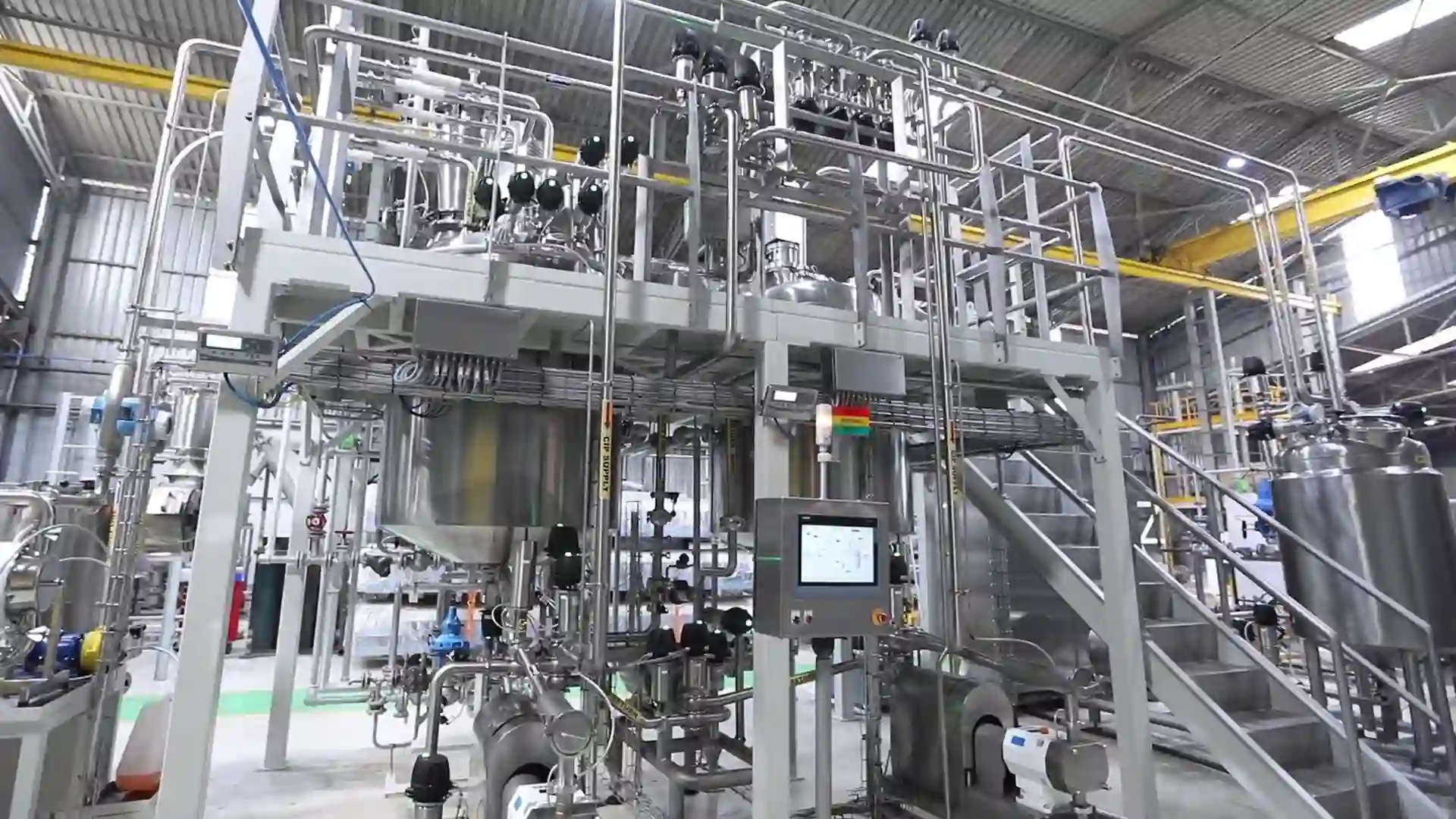
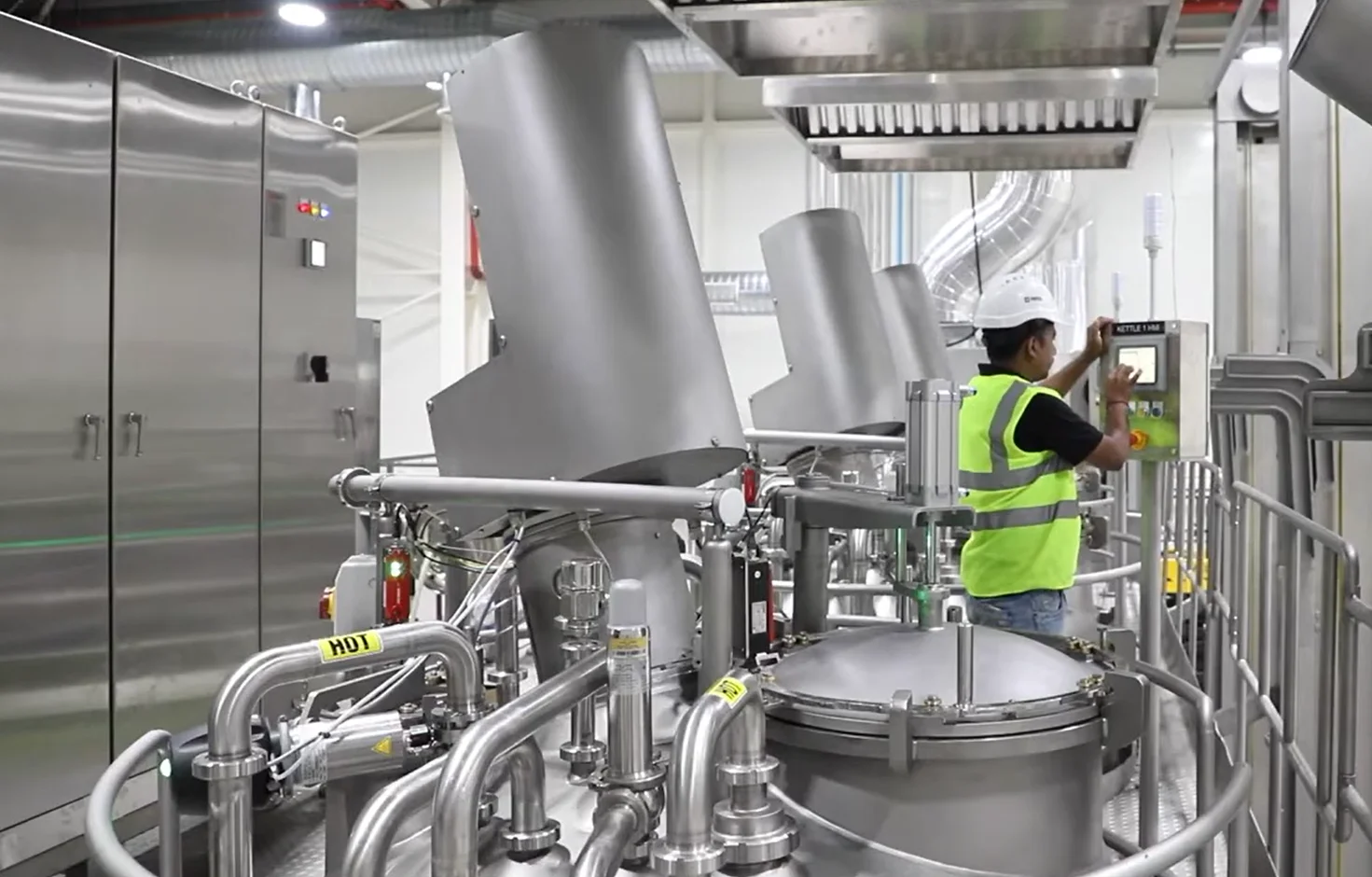
Cybernetik’s Ready-to-Eat Food Processing Automation line is designed for fast, consistent cooking of Indian RTE meals while preserving flavor and nutrition. In one installation, it delivered 900 kg/hr using two cooking kettles. Buggies with lifters and tippers load the kettles, cooking follows the selected recipe, a tilting kettle handles tadka, an insulated buffer tank protects product during power outages, and a retort and pouch packer complete the line.
| Cybernetik RTE line | Specification |
|---|---|
| Capacity | Up to 900 kg/hr with 2 cooking kettles, customizable |
| Cooking | Rapid pressure cooking with agitators to prevent burn-on |
| Tempering | Tadka added in a tilting kettle at atmospheric pressure |
| Control | Recipe selection with addition of minor ingredients and SCADA parameter control |
| Product protection | Insulated buffer tank to limit loss during power outages; retort for shelf life |
| Hygiene and safety | GMP build, non-stick surfaces, CIP integration, interlocks, pressure release valves and vents |