
Key takeaways
Ask ten suppliers in India for a rotary valve quote and you will get ten documents that look much the same: a drawing of a round housing with a vaned rotor, a capacity in kg/hr, a flange size and a material grade. The prices may vary by a factor of two or three. What the quotes do not show is how closely the rotor fits the housing, how that fit is measured, and whether the valve will still feed and seal properly after a year of running abrasive powder.
The right rotary valve manufacturer in India is one that sizes the valve from your material and pressure conditions, machines the housing and rotor to consistent, recorded clearances, builds in the hygiene or hazardous area features your plant needs, tests the valve before dispatch, and can refurbish it locally when the rotor wears. Price only becomes a fair comparison once those points are equal across quotes.
This guide explains what separates one rotary valve manufacturer from another: the kinds of suppliers in the market, what to check in their workshop, the documents and tests to ask for, and how to compare a shortlist.
Why the Manufacturer Matters More Than the Datasheet
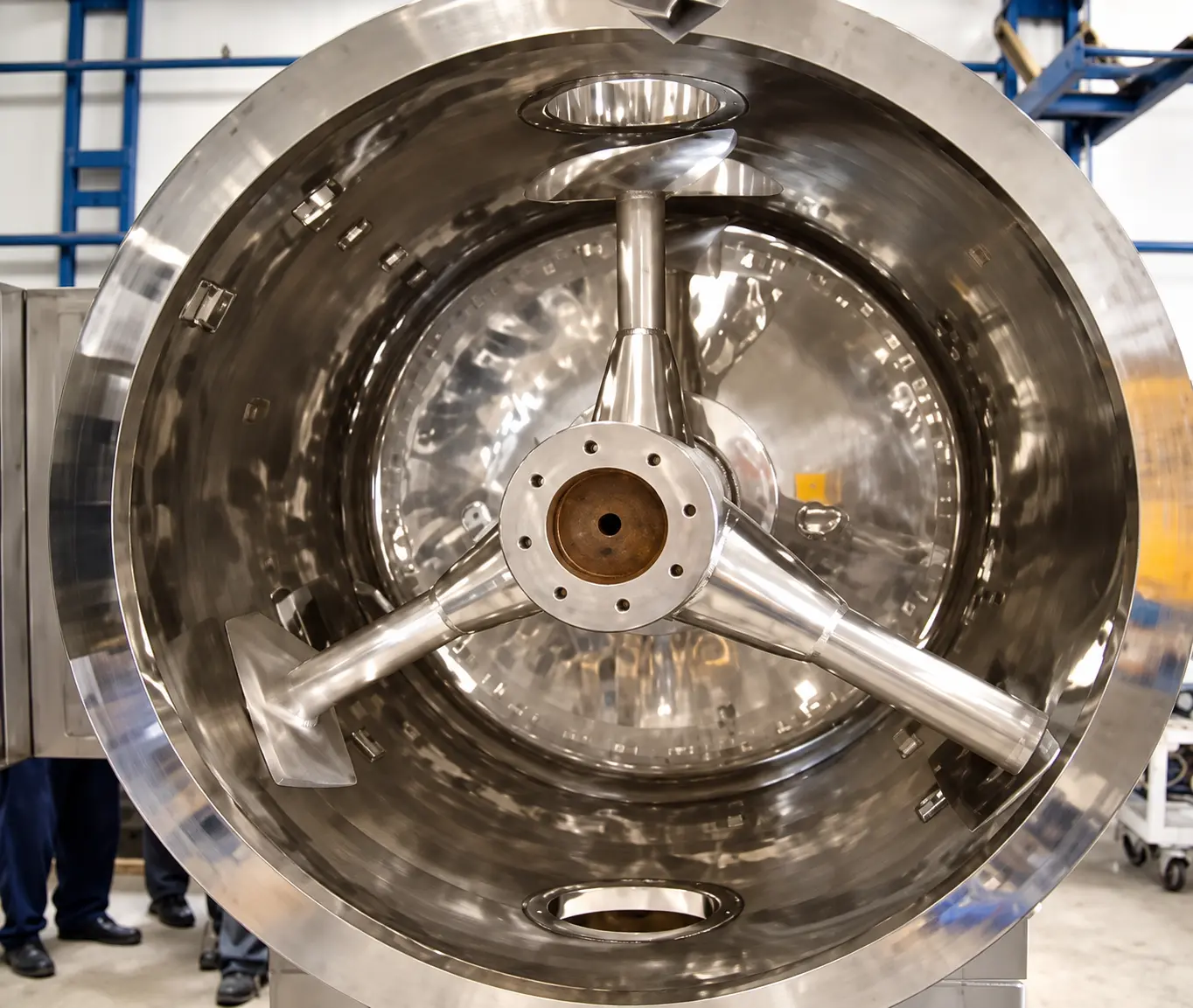
A rotary valve has very few parts. A rotor with six to ten vanes turns inside a bored housing, closed at each end by covers that carry the bearings and shaft seals. Material falls into the pockets at the top and drops out at the bottom, while the small gap between vane tips and housing limits air passing through. The working principle, along with the main valve types and rotor designs, is covered in the guide to industrial valves.
Because the design is simple, performance depends almost entirely on execution. The roundness and finish of the housing bore, the accuracy of the rotor, the gap at the tips and sides, the bearing arrangement and the seal choice decide how much air leaks, how evenly pockets fill and how long the valve lasts. A valve with clearances twice as large as intended will still turn and still feed, but it will leak more air, lose capacity on a pneumatic line and wear faster. None of that is visible on a datasheet.
Confirm the valve is the right device first
Before choosing who builds it, confirm that a rotary valve is the right device. If the job is only to shut off flow under a hopper, a butterfly or slide gate is simpler. If accurate metering of a cohesive powder matters more than holding pressure, a screw feeder may suit better. The differences are explained in the article on flow control valves. A good manufacturer will raise this question itself rather than sell a rotary valve by default.
Three Kinds of Rotary Valve Suppliers in India
| Type of supplier | What they usually offer | What to watch for |
|---|---|---|
| General fabricator or machine shop | Low price and quick delivery, often built to a drawing the buyer supplies | Clearances set by eye, little documentation, inconsistent housing finish |
| Valve manufacturer | A standard range of sizes, in-house machining, documented materials and testing | May supply only the valve, leaving venting, pick-up and controls to you |
| Process system supplier | Valve designed together with the silo, conveying line, filter and controls | Larger scope needs a clear specification and a defined scope of supply |
A machine shop can be a reasonable choice for a non-critical, low-pressure drop-through application where the buyer has strong in-house engineering. For pneumatic conveying, food and pharmaceutical duties, or combustible dusts, an established valve manufacturer or process system supplier is usually the safer route, because the valve has to work as part of a system rather than on its own.
What to Check at the Manufacturer’s Workshop
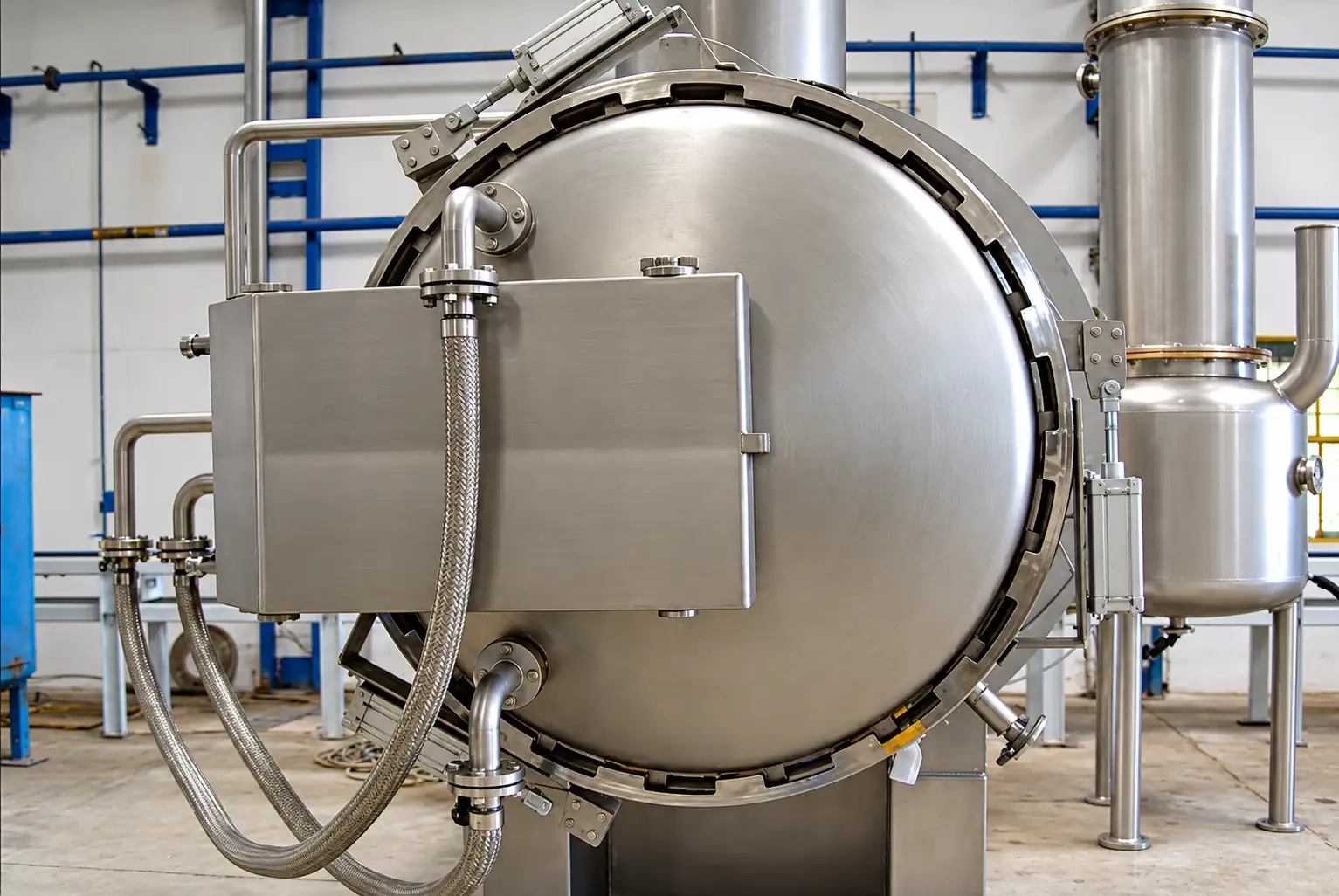
A visit to the workshop tells you more than any brochure. Ask to see valves being machined and assembled, not only a finished display piece.
| What to look at | What a good manufacturer shows you |
|---|---|
| Housing machining | Bores machined on CNC or boring equipment, not finished by hand, so every housing is round and true |
| Rotor manufacture | Rotors machined and balanced, with vanes square to the shaft and consistent from unit to unit |
| Clearance setting | Tip and side clearances measured with gauges and written on a record for each valve |
| Raw material | Stainless steel or cast iron with mill test certificates, stored and marked by grade |
| Wear protection | Options such as hard-faced tips, hardened housings or replaceable tips for abrasive products |
| Seals and bearings | Bearings mounted outboard of the product zone, with seal types chosen for the pressure and product |
| Test bench | A place to run valves before dispatch and, ideally, to check air leakage at pressure |
Questions worth asking on the visit
Sizing: Where a Good Manufacturer Earns Its Fee
Capacity on a quote is usually a nominal figure at a set speed with full pockets. Real throughput depends on four things: pocket volume per turn, rotor speed, how full the pockets get and the bulk density of the material. A capable manufacturer asks for all four and sizes the valve so it reaches the required rate at a moderate speed, with room to increase.
Two details often trip up buyers. First, pockets fill less as speed rises, and less again when leakage air rises through the inlet on a pressure line. Second, aerated powder arriving from a cyclone or vacuum receiver can be far lighter than the same powder settled in a bag. A valve sized on settled density can end up short of capacity on site. If a supplier quotes capacity without asking about pressure difference and bulk density, treat the figure with caution.
When the valve feeds a pneumatic line, ask how the valve, venting and pick-up adapter will be designed together. A conveying system is only as reliable as its feed point, which is why the guide to choosing a pneumatic conveying system manufacturer treats the rotary valve as part of the system rather than a separate purchase.
Documentation a Serious Manufacturer Provides
| Document | Why you need it |
|---|---|
| General arrangement drawing | Confirms flange sizes, drive position and space for rotor withdrawal before fabrication starts |
| Material test certificates | Proves the stainless steel grade of product contact parts |
| Clearance and inspection record | Shows the tip and side clearances actually achieved on your valve |
| Test report | Records the run test and, where agreed, the air leakage test before dispatch |
| Hazardous area documents | Needed where the valve handles combustible dust or sits in a classified zone |
| Qualification documents (DQ, IQ, OQ) | Required by pharmaceutical and many food plants to validate equipment under GMP |
| Spares list and manual | Lets you stock seals, bearings and tips before the first stoppage |
If a manufacturer cannot provide a clearance record or material certificates, the valve has not been built to be checked. That becomes a problem the first time it underperforms and nobody can say whether the clearance is right.
Compliance in Indian Plants
Food and pharmaceuticals
Food and pharmaceutical plants need hygienic construction: polished contact surfaces, no crevices, food-grade seals and a design that can be stripped and cleaned between products. Quick-release end covers or rotors that slide out on rails make a large difference where changeovers are frequent. Pharmaceutical buyers should also confirm the manufacturer can support validation under GMP and the revised Schedule M.
Combustible dust
Sugar, flour, starch, spices and many chemical powders can form explosive dust clouds. Valves for these duties need non-sparking construction, proper earthing and flameproof electrical equipment. In India, flameproof electrical equipment is approved through PESO, and many manufacturers also build to ATEX for export or multinational plants. Where the valve is meant to stop a flame or pressure wave passing from one part of the plant to another, it must be specifically designed and certified for that role. Confirm the zone classification with your safety team and make sure the manufacturer designs to it.
 “A rotary valve’s value extends beyond its purchase price. Durable construction, accessible spare parts, and local refurbishment help reduce downtime and improve long-term operating efficiency.”

See it in action
The Factory Acceptance Test
Agree the test protocol when you place the order so both sides know what counts as a pass. A short test before dispatch catches most problems that would otherwise appear during commissioning.
| Factory acceptance check | What it confirms |
|---|---|
| Dimensional check | Flanges, drive position and overall size match the approved drawing |
| Clearance verification | Tip and side clearances match the inspection record |
| Run test | The rotor turns smoothly through its speed range without rubbing, noise or heat |
| Air leakage test | Leakage at the design pressure difference is within the agreed figure |
| Seal check | No air or powder escapes along the shaft |
| Strip and clean check | For hygienic valves, the rotor and covers can be removed and refitted in the agreed time |
Planning the Project Timeline
Delivery dates on quotes usually count from order and drawing approval, not from the first inquiry. A realistic plan allows time for agreeing the specification, approving the general arrangement drawing, machining and assembly, the factory acceptance test, dispatch, installation and commissioning. Valves in special materials, hard-faced rotors or certified hazardous area construction can take longer than standard units, so confirm these lead times early.
The stages that most often slip sit with the buyer. Drawing approval waits for comments from several departments, flange details on the silo or conveying line are not fixed, or the site is not ready when the valve arrives. Agreeing who approves what, and by when, keeps the manufacturer’s schedule meaningful. Where the valve is part of a wider system, fix the interfaces with the silo, filter and conveying line first, since a change to any of them can change the valve.
Service and Refurbishment in India
Every rotary valve wears. Tips and housing bores open up, seals and bearings fail, and air leakage slowly rises until throughput falls. How quickly the valve can be restored depends on the manufacturer. Ask whether they hold spare rotors or tips in India, whether they can re-machine housings and re-tip rotors, and how quickly an engineer can reach your site. A cheaper valve that needs to be sent away for weeks to be refurbished often costs more over its life than a better-supported one.
It also helps when the manufacturer can look beyond the valve. Jamming is often caused by lumps upstream, which a lump breaker above the valve can prevent, and slow drift in feed rate is easier to catch when the valve’s speed and rotation signals feed into the plant control system, as described in the guide to material handling automation.
A Simple Scorecard for Your Shortlist
| Criterion | Suggested weight | How to score it |
|---|---|---|
| Application understanding | 25 percent | Did they ask about material, bulk density, pressure difference and temperature before quoting? |
| Build quality and records | 20 percent | Workshop visit, machining method, clearance records and material certificates |
| Compliance | 15 percent | Hygienic design, hazardous area construction and validation support where needed |
| System scope | 15 percent | Can they supply venting, pick-up, controls and the equipment around the valve? |
| Service in India | 15 percent | Spares stock, refurbishment capability and response time |
| Price | 10 percent | Compared only once scope, materials, options and tests match |
Price comes last for a reason. A lower figure often means looser clearances, fewer documents or a valve without venting and controls, all of which cost money later.
Rotary Valves from Cybernetik
Cybernetik Technologies has been delivering turnkey automation since 1989, with more than 600 employees and over 6,000 projects installed. It designs and manufactures its equipment in India, and its process division supplies powder and liquid handling systems for food, pharmaceutical and chemical plants, from bag and bulk bag unloading to storage, conveying, mixing and packing.
Cybernetik’s rotary valve is a leak-proof valve with non-sparking construction for flow rates up to 6,000 kg/hr. It handles food powders such as wheat, rice and chickpea flour, sugar, spices, tea, coffee and whey powder, as well as active pharmaceutical ingredients.
| Cybernetik rotary valve (REFE-ROVA) | Inlet and outlet size |
|---|---|
| 2,000 kg/hr | NB 100 |
| 3,000 kg/hr | NB 150 |
| 4,000 kg/hr | NB 200 |
| 5,000 kg/hr | NB 250 |
| 6,000 kg/hr | NB 300 |
| Custom capacities | On request |