
Key takeaways
A pneumatic conveying system can look deceptively simple on a drawing: a feeder, a blower, a length of pipe and a receiver at the far end. In practice it is one of the least forgiving pieces of equipment in a powder plant. Get the design slightly wrong and the line blocks, the product breaks down, bends wear through, blends separate or dust escapes.
That is why choosing the manufacturer matters more here than for most equipment. Two suppliers can quote what looks like the same system and deliver very different results, and the difference usually comes down to whether they designed the system around your material or simply sized it from a flow rate and a distance.
This guide covers what separates capable pneumatic conveying suppliers from the rest, the questions that reveal the difference, and the factors that matter particularly for plants in India.
Why Pneumatic Conveying Is Hard to Get Right
Mechanical conveyors carry material on a belt or push it with a screw. A pneumatic system moves it with air, and air is a far less predictable carrier.
Whether material travels smoothly depends on its particle size, density, shape, moisture, cohesiveness and how easily it breaks. Too little air velocity and it settles out of the air stream and blocks the pipe. Too much and it hits bends hard enough to damage the product and wear the pipe. The working window between those two can be narrow, and it is different for every material.
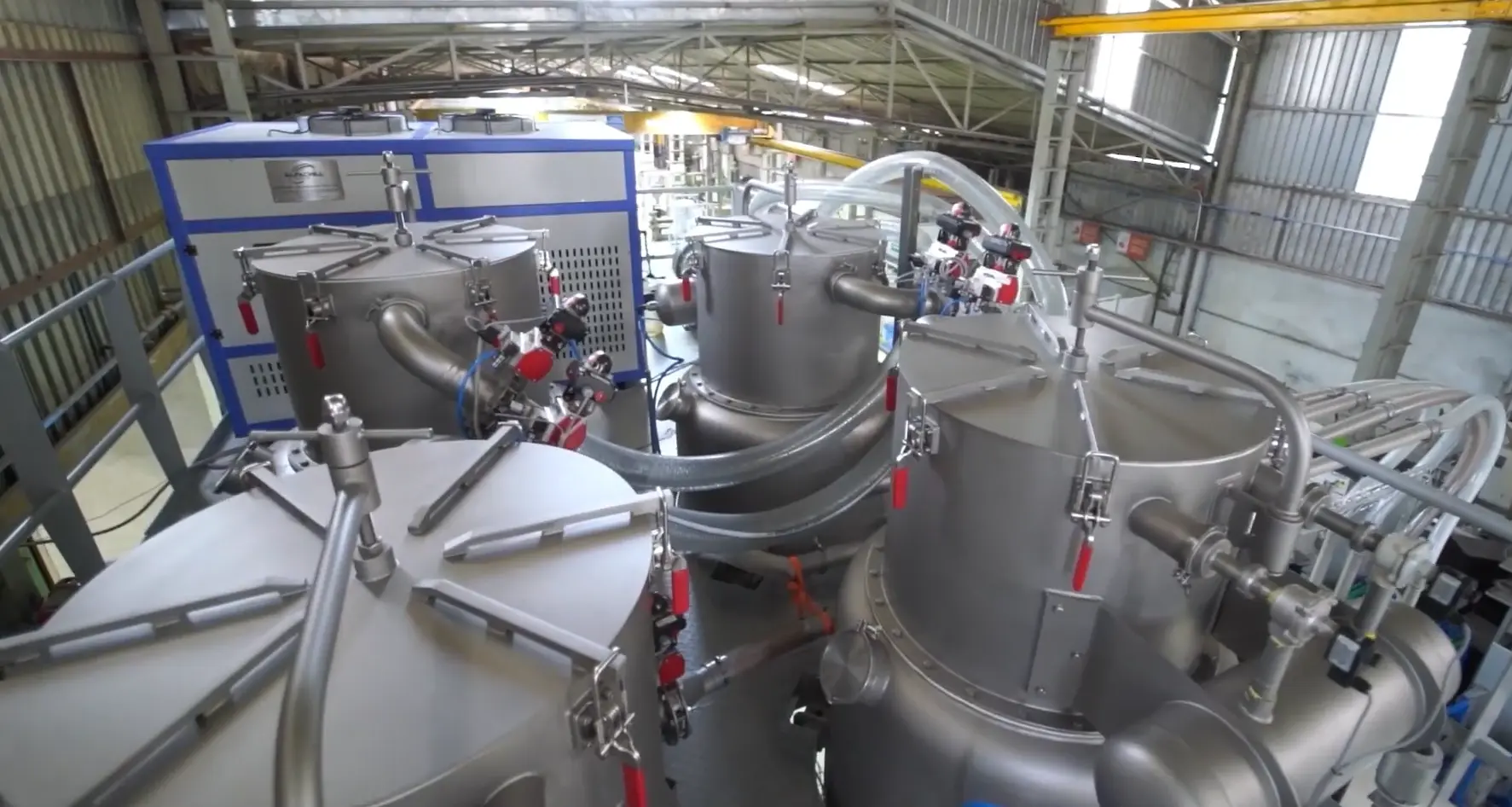
The system is also a set of parts that all have to work together: the feeder or rotary valve that meters material into the line, the blower or vacuum pump, the pipeline with its bends and diverters, and the filter receiver that separates material from air at the destination. A weakness in any one of them affects the whole system.
The Four Basic Configurations
A capable supplier should explain which of these suits your application and why, rather than offering the one they always build.
| Configuration | How it works | Suits |
|---|---|---|
| Dilute phase, pressure | A blower pushes material at high velocity, suspended in the air stream | Robust materials, moderate distances, one source to several destinations |
| Dilute phase, vacuum | A vacuum pump pulls material through the line into a receiver | Several pick-up points feeding one destination, with any leak drawing air in rather than pushing dust out |
| Dense phase, pressure | Material moves slowly in slugs, pushed at higher pressure | Fragile, abrasive or blended products, and longer distances |
| Dense phase, vacuum | Slower, lower-velocity transfer under vacuum | Gentle transfer over shorter distances, often in food and pharma |
The dilute versus dense choice is the big one. Dilute phase is simpler and cheaper, but high velocity can break fragile particles, wear pipework on abrasive materials and separate the components of a blend. Dense phase moves material slowly in slugs, which protects product, reduces wear and keeps blends together, at a higher cost and with a greater need for correct design.
How pneumatic conveying compares with belt, screw, vibratory and other conveyors more generally is covered in the guide to material handling conveyors.
The Question That Sorts Suppliers: Will You Test My Material?
This single question tells you more about a pneumatic conveying supplier than anything else.
Material behavior in a conveying line is hard to predict from a data sheet. Two powders with similar particle sizes can convey completely differently. A supplier who wants to test your actual material, whether in their own facility or through a partner, is designing a system around what your powder really does. A supplier who quotes from flow rate and distance alone is making assumptions and leaving the risk with you.
Useful testing looks at bulk density, particle size distribution, moisture content, abrasiveness, friability and how the material flows and packs. Conveying trials on a test rig go further, showing the actual velocities and pressures that move your product reliably. The result should be a written report, because it is the basis for any performance guarantee.
Signs of Real Design Capability
Calculations, not rules of thumb
Pipeline diameter, air velocity at the pickup point, pressure drop along the line and blower sizing are calculations based on the material and the route. A supplier who can show that working is designing. One who picks a pipe size from habit is not.
Thoughtful bend design
Bends are where abrasive materials wear through and fragile materials break. Good suppliers choose bend types and radii deliberately, and use wear-resistant materials or special bend designs where the product demands it. A system with standard bends everywhere, conveying an abrasive product, will need frequent replacements.
The rotary valve
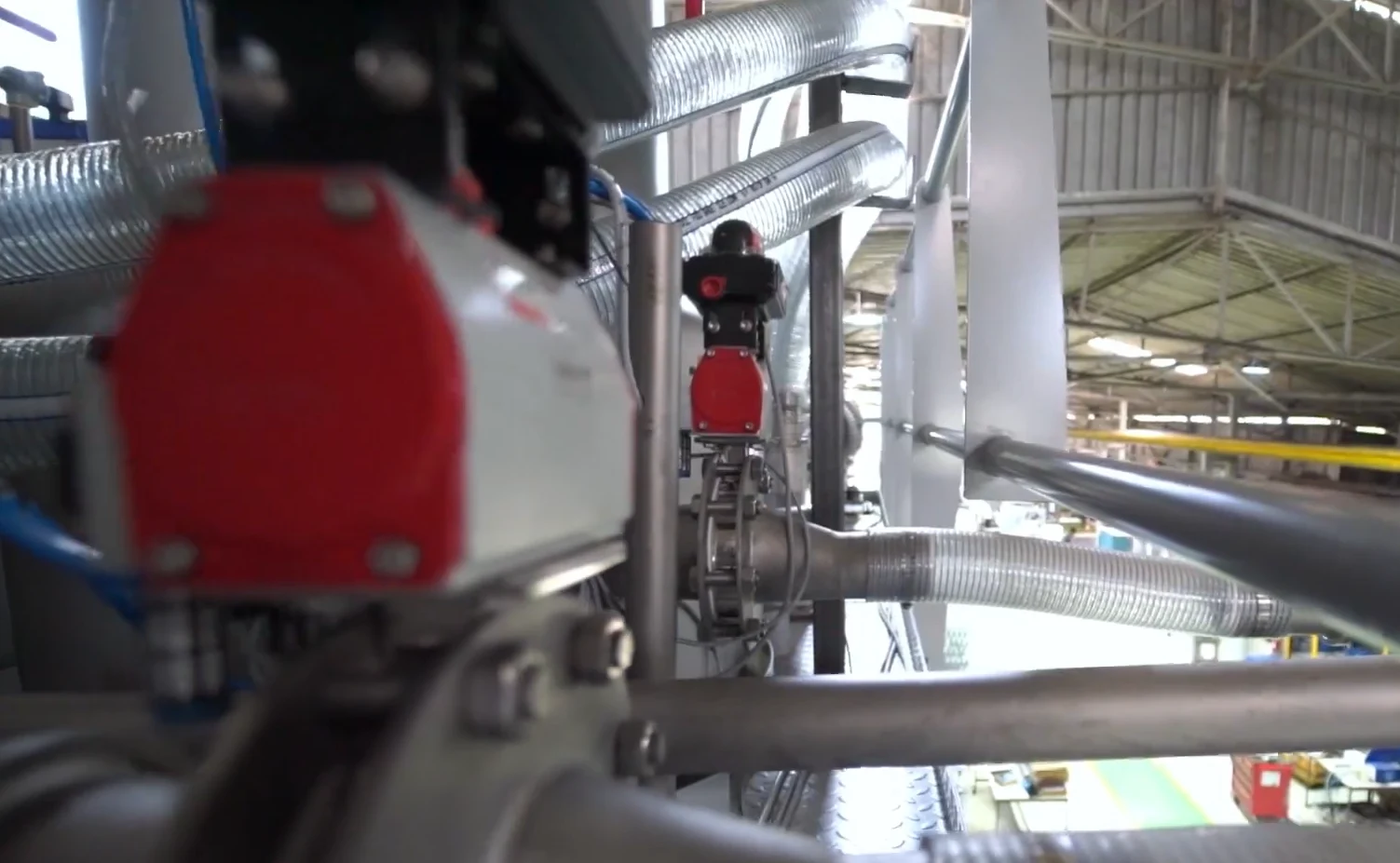
The valve feeding material into a pressure line has to seal against the pressure while metering product. A worn or poorly fitted valve leaks air, which reduces conveying performance and makes the system unstable. Valve quality and how wear is handled deserve specific questions.
How rotary and metering valves work, and why metering differs from simple on-off control, is explained in the article on flow control valves.
The filter receiver
At the destination, air and material have to be separated cleanly. Filter area, filter material and the cleaning method all decide whether the receiver keeps working or clogs. An undersized filter is a common source of dust problems and falling conveying rates.
Factors That Matter Especially in India
Humidity and moisture
Monsoon humidity affects both the conveying air and the product. Hygroscopic powders such as sugar, salt and many food ingredients absorb moisture, cake and stick to pipe walls. Compressed or blown air can carry moisture into the line as well. A good supplier asks how humid your site gets and plans for air drying or cooling where the product needs it. One who ignores the climate is designing for conditions your plant will not have for several months a year.
Dust and ambient heat
Hot, dusty conditions affect blower performance, filter loading and the equipment around the system. Blowers and filters sized for cooler, cleaner air can underperform in an Indian summer.
Power supply
Voltage fluctuations and interruptions affect blowers and controls. It is worth asking how the system handles a power interruption mid-transfer, since a line stopping with material in it can leave a plug that has to be cleared.
Local service and spares
Wear parts such as bends, valve components and filters need replacing over time. Where spares come from abroad, lead times and customs can turn a simple replacement into a long stoppage. Ask where service engineers are based, what response time is committed, and which spares are held in India.
Hazardous area certification
Many powders conveyed pneumatically are combustible, and fast-moving dust in pipes and receivers is exactly the condition that raises explosion risk. Equipment for classified areas needs suitable protection, and in India that includes certification recognized locally, such as approvals for flameproof electrical equipment. Ask which certifications the supplier’s equipment carries rather than assuming.
 “From material testing to dust collection and downstream feeding, integrated powder handling helps manufacturers improve process reliability, protect product quality, and reduce avoidable production interruptions.”

See it in action
Hygiene for Food and Pharmaceutical Plants
In food and pharmaceutical duty, the pipeline and receiver are product contact surfaces, and the same hygiene standards apply as anywhere else. Look for sanitary construction, smooth internal surfaces, connections that avoid crevices, and a practical way to clean the system between products. Vacuum systems have a natural advantage here, because any small leak draws air in rather than pushing product out into the room.
Changeover matters too. A system conveying several products needs a reliable way to clear one before the next, or cross-contamination becomes a real risk.
Energy Use
Pneumatic conveying generally uses more energy per ton moved than mechanical conveying, because moving large volumes of air takes power. That is a fair trade for routing flexibility and enclosed, dust-free transfer, but it should be understood up front.
Ask for an estimate of blower power and running cost, not just the purchase price. An oversized blower wastes energy on every transfer for the life of the system, and a well-designed system is sized to move your material reliably without excess air.
Scope Gaps to Watch For
Asking every supplier to price the same clear scope, with exclusions listed, is the only way to compare quotations fairly.
Questions to Put to a Supplier
| Question to ask | What a good answer sounds like |
|---|---|
| Will you test our material? | Yes, with trials on our actual powder and a written report of the results |
| Dilute or dense phase, and why? | A reasoned choice based on our product’s fragility, abrasiveness and blend behavior |
| What rate will you guarantee? | A rate on our material, at our distance and layout, stated in writing |
| How will moisture be handled? | A plan for air drying or cooling where our product absorbs moisture |
| What energy will it use? | An estimate of blower power and running cost, not just the purchase price |
| How are wear points handled? | Specific bend designs and materials for abrasive products, with replacement parts identified |
| What is outside your scope? | A clear list covering utilities, supports, dust collection and integration |
| Where are service and spares? | Named local support with committed response times and spares held in India |
Red Flags
When Pneumatic Conveying Is Not the Answer
A good supplier will sometimes tell you pneumatic conveying is the wrong choice. For short, straight transfers, a screw conveyor may be simpler and use less energy. For very fragile products over short distances, gentler mechanical options can work better. For highly abrasive materials at high rates, wear costs may favor other approaches. A supplier who only builds pneumatic systems will always recommend one, so it helps to work with someone who can compare options honestly.
Integrated Powder Handling from Cybernetik
Cybernetik builds pneumatic conveying as part of complete powder handling lines rather than as standalone pipework. In its multiple ingredient handling system, ingredients are unloaded and screened at a bag tipping station with a vibro sifter, a pneumatic conveying system moves them dust-free to their storage silos, and dedicated screw conveyors then feed each ingredient downstream according to the selected recipe.
That integration addresses several points raised above. Screening happens before conveying, so lumps and foreign material are removed before they can block the line. Pneumatic transfer handles the long, awkward route to storage, while screw conveyors handle the short, metered feed where precision matters more than routing. The whole sequence is built to GMP standards for dust-free, contamination-free handling.
Around that, the wider range covers bag depalletizing and slitting, IBC and drum transfer and decanting, sifting, storage silos, metering valves and packing, so conveying is designed as one part of a line rather than a separate purchase.
Cybernetik has been building automation for more than three decades. It is headquartered in Pune with facilities in Gujarat and Raigad and offices in the United States and UAE, and has installed over 6,000 systems in more than 30 countries, including over 400 custom automation solutions. More background is on the Cybernetik about page.