
Key takeaways
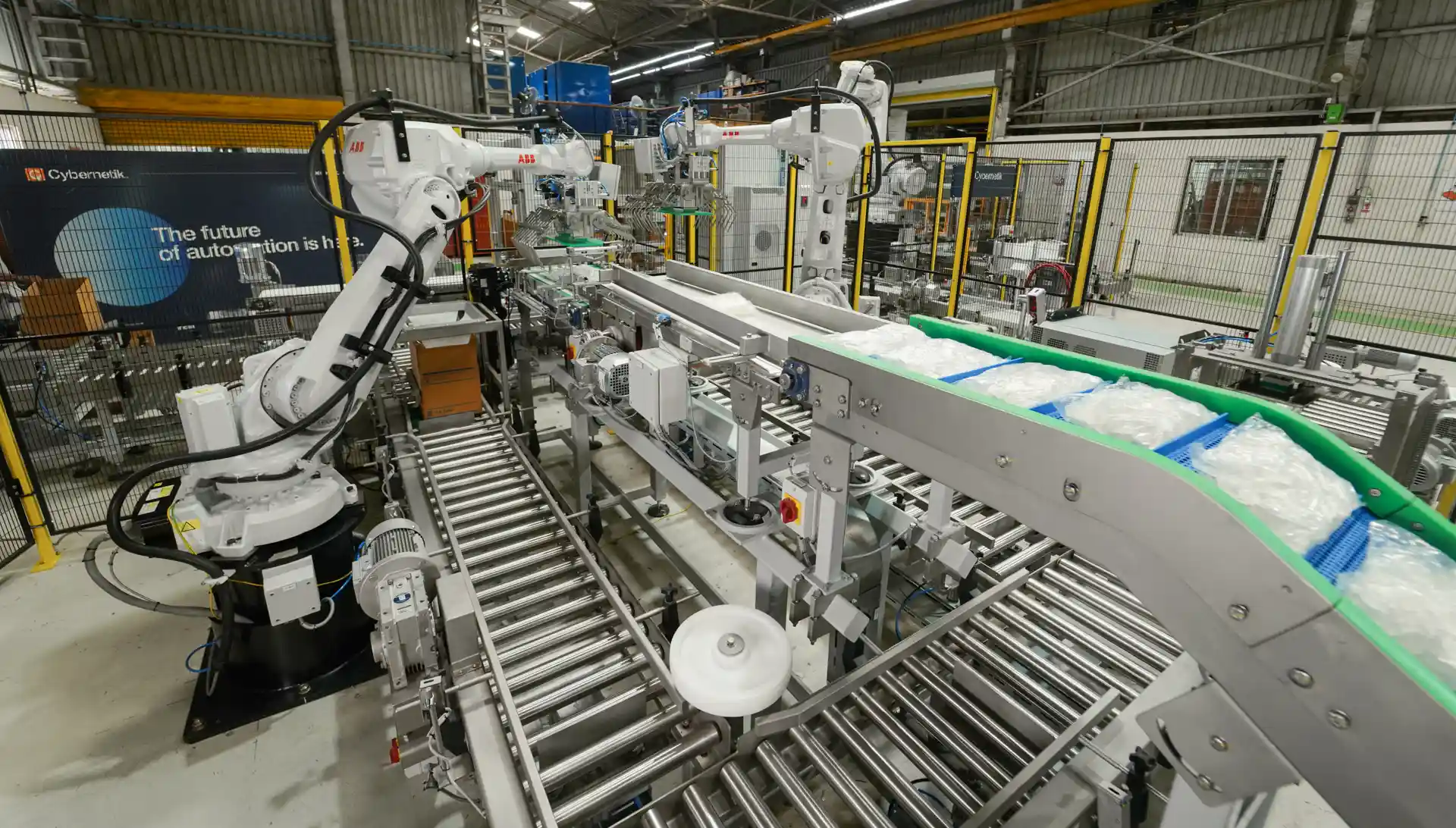
Horizontal conveying is the connective tissue of a processing plant. Almost every machine on the floor is fed by one conveyor and discharges onto another, and the conveyors between them determine whether the line behaves as a system or as a set of machines that happen to be near each other.
The machine itself is straightforward, which is why horizontal conveyors are usually specified last and briefly. That is where the trouble starts. Most of what makes a horizontal conveyor succeed or fail is not in the conveyor at all. It is in what it connects to, how product arrives and leaves, and what the conveyor is expected to do besides transport.
This guide approaches the selection from that direction: what job the conveyor is doing in the line, how layout decisions constrain it, and where the interfaces need attention. For the mechanical design and sizing side, see the guide to flat belt conveyor design.
A Horizontal Conveyor Is Rarely Just Transporting
Ask what a conveyor is for and the usual answer is moving product from one place to another. In practice most horizontal conveyors are doing at least one other job at the same time, and that second job is what should drive the specification.
A belt feeding a packing machine is metering, and its speed control matters more than its capacity. A belt between two machines running at different rates is accumulating, and how gently it holds a queue matters more than how fast it runs. A belt passing a checkweigher or metal detector is presenting product, and its stability and layer depth matter more than either. Specify all three as generic transport and each one underperforms in a different way.
| Function | What it demands of the conveyor | Configuration that suits it |
|---|---|---|
| Straight transport | Move product from A to B without damage or spillage | Flat belt on slider bed, speed matched to the receiving machine |
| Accumulation | Hold a queue of product without crushing the leading items | Low friction belt or zero pressure design, with product sensing |
| Metering and feeding | Deliver product to a downstream machine at a controlled rate | Variable speed drive, short belt, tight speed control |
| Inspection and sorting | Present product in a single flat layer with access from both sides | Wide flat belt at low speed, open frame, good lighting access |
| Merging and diverting | Combine or split product streams without collisions | Multiple belts with controlled speed differentials and guides |
| Bulk transfer | Carry loose material at volume without edge spillage | Troughed belt with skirting, sized on load area rather than width |
Layout Comes Before the Machine
Length is decided by what sits at each end
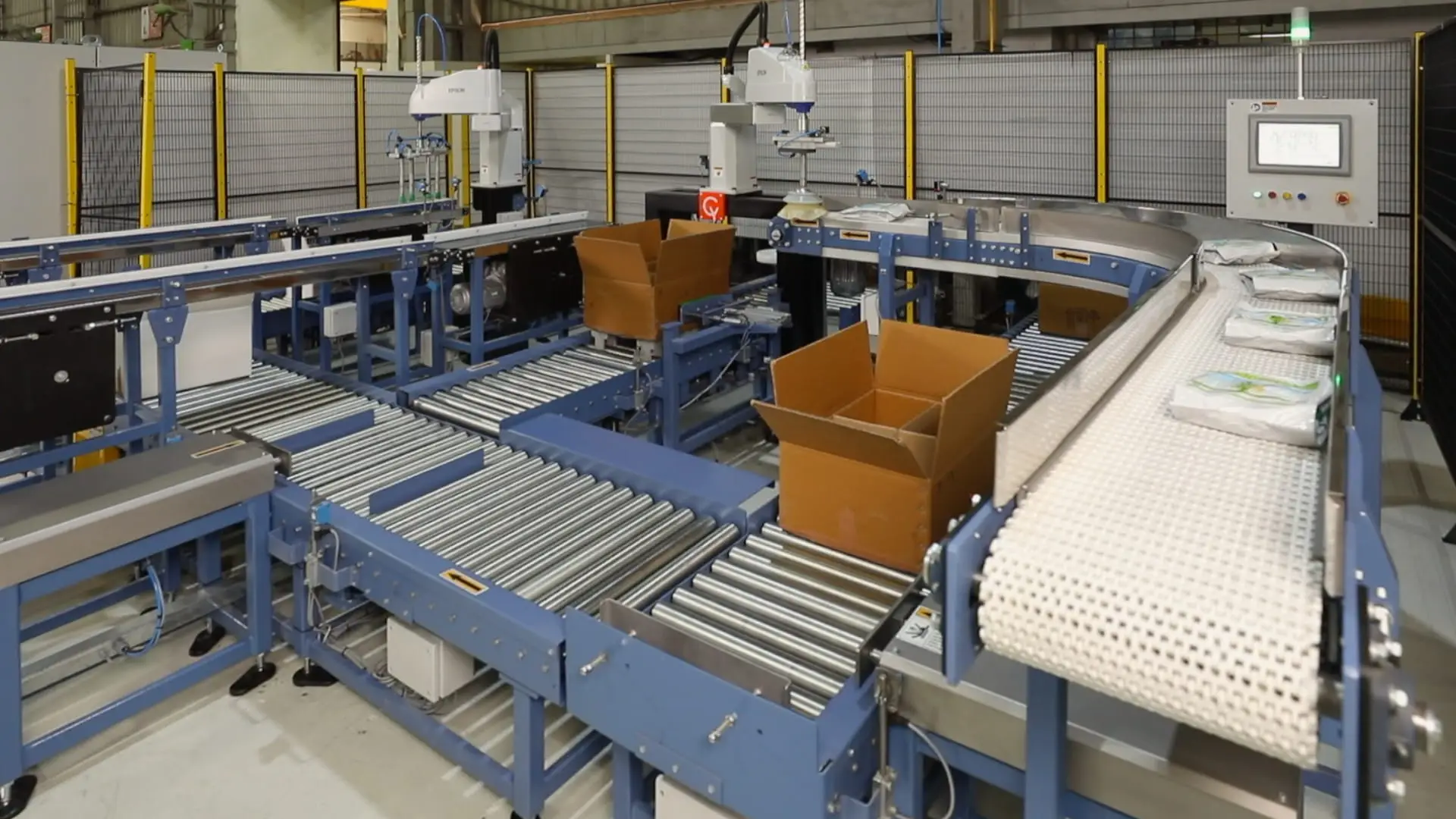
Conveyor length is usually treated as a given, dictated by where machines already stand. It is worth challenging early, because a short conveyor is cheaper, tracks better, holds less product and is easier to clean. Where a long run exists only because two machines were placed apart for reasons nobody remembers, moving a machine is often the cheaper answer.
Curves and direction changes
A flat belt cannot turn. Direction changes are handled either by a transfer onto a second conveyor at an angle, or by a modular plastic belt built to negotiate curves. Transfers are simpler and cheaper but introduce a gap where small or unstable products tip and jam. Curved modular belts avoid the gap at higher belt cost. Which is right depends entirely on product stability, and this is a decision worth making at layout stage rather than after the first jam.
Elevation changes
A horizontal layout that needs to gain height somewhere has three options: an inclined section within the same conveyor, a separate elevating conveyor, or a change of technology. Beyond roughly 15 to 20 degrees a plain belt stops working, so a flight cleated belt conveyor takes over for steeper lifts, raising product up to 6 m in pockets rather than on a flat surface.
Access and hygiene around the run
A conveyor is a barrier as well as a transport device. Long uninterrupted runs cut a plant in half, and operators will climb over them unless a crossover is provided. In washdown environments the space under and around the conveyor determines whether it can be cleaned properly, and that space is decided by layout, not by the conveyor supplier.
Transfers Are Where Lines Actually Fail
Most complaints about horizontal conveyors trace back to transfer points rather than to the belts themselves.
 “A conveyor that transports, meters, accumulates, or presents product requires a different engineering approach; treating every horizontal conveyor as simple transport is where performance problems begin.”
See it in action
Applications
When a Belt Is Not the Right Horizontal Conveyor
Horizontal transport does not automatically mean a belt. For powders and fine granular material where dust containment matters, a screw conveyor moves material fully enclosed inside a trough or tube, and can take multiple inlets and outlets along its length, which a belt cannot.
For fragile or sticky product, or where conveying should double as screening, dewatering or cooling, a vibratory conveyor moves material by controlled oscillation with no belt surface to clean or replace. Choosing the technology to suit the material, rather than defaulting to belt, is the single decision with the largest effect on running cost.
Horizontal Conveying from Cybernetik
Cybernetik engineers conveying as part of complete process lines rather than as standalone equipment, which means belt type, speed, transfer geometry and layout are specified against the material and the machines at both ends.
The conveying range covers flat and trough belt conveyors, flight cleated belts, vibratory conveyors, screw conveyors, bucket elevators and convective and submerged cooling conveyors, alongside the grinding, mixing, sifting, storage and packing equipment they connect. The full range sits under process automation solutions.
Cybernetik has operated for more than three decades, is headquartered in Pune with additional facilities in Gujarat and Raigad and international offices in the United States and UAE, and has installed over 6,000 systems across 30 plus countries, including more than 400 custom automation solutions. With over 600 employees and divisions spanning Process Automation, Packaging Automation, CleanTech, Extraction, Labs and Defence, a conveyor is specified with knowledge of everything it connects to. Further background sits on the Cybernetik about page.