
Key takeaways
Material handling systems play an important role in maintaining production efficiency across food, pharmaceutical, and powder-processing industries. Among the many conveying technologies used in manufacturing, bucket elevators remain one of the most reliable solutions for transferring bulk materials vertically while minimizing product loss.
However, selecting a bucket elevator involves much more than comparing equipment specifications. The manufacturer behind the equipment directly influences system performance, hygiene, maintenance requirements, operational efficiency, and long-term reliability. A poorly designed conveying system can increase downtime, create contamination risks, and reduce productivity.
Manufacturers must evaluate several factors before investing in a new bucket elevator system, including industry experience, hygienic design, automation capabilities, customization options, and material handling expertise. This guide explains how to choose the right bucket elevator manufacturer while highlighting the features that are most important for food and pharmaceutical manufacturing environments.
Why Choosing the Right Bucket Elevator Manufacturer Matters
Production Efficiency Depends on Equipment Design
A bucket elevator is more than a transportation system. It directly affects how materials move throughout the production process. When material transfer is inconsistent, manufacturers often experience production bottlenecks, delayed processing cycles, and reduced equipment utilization.
Well-designed bucket elevators ensure smooth product movement from one processing stage to another. Consistent loading and unloading improve production flow while reducing interruptions that can affect overall plant performance. Manufacturers should look for suppliers that design equipment specifically for continuous operation rather than adapting standard conveyors for vertical material handling.
Production efficiency is also influenced by how effectively the equipment handles different materials. Fine powders, food ingredients, and pharmaceutical products require controlled conveying systems that prevent material segregation while maintaining a steady flow throughout the process.
The Right Manufacturer Improves Product Quality
Product quality is closely linked to material handling. During transportation, powders and bulk materials can become contaminated, damaged, or separated if the conveying system is not designed correctly.
Food manufacturers handling products such as flour, spices, cocoa, and milk powder require equipment that protects product integrity throughout the conveying process. Similarly, pharmaceutical manufacturers processing active ingredients and formulations require contamination-free transportation that complies with strict hygiene standards.
Manufacturers with industry-specific expertise understand these challenges and design systems that minimize product loss while maintaining consistent quality throughout production.
Long-Term Operating Costs Should Be Considered
Many manufacturers focus only on the initial equipment investment while overlooking long-term operating costs. Maintenance expenses, replacement components, equipment downtime, energy consumption, and cleaning requirements all contribute to the total cost of ownership.
Choosing a manufacturer that emphasizes durability, preventive maintenance, and equipment reliability can significantly reduce operating expenses over time. Investing in a well-engineered conveying system often provides greater value than selecting the lowest-cost option.
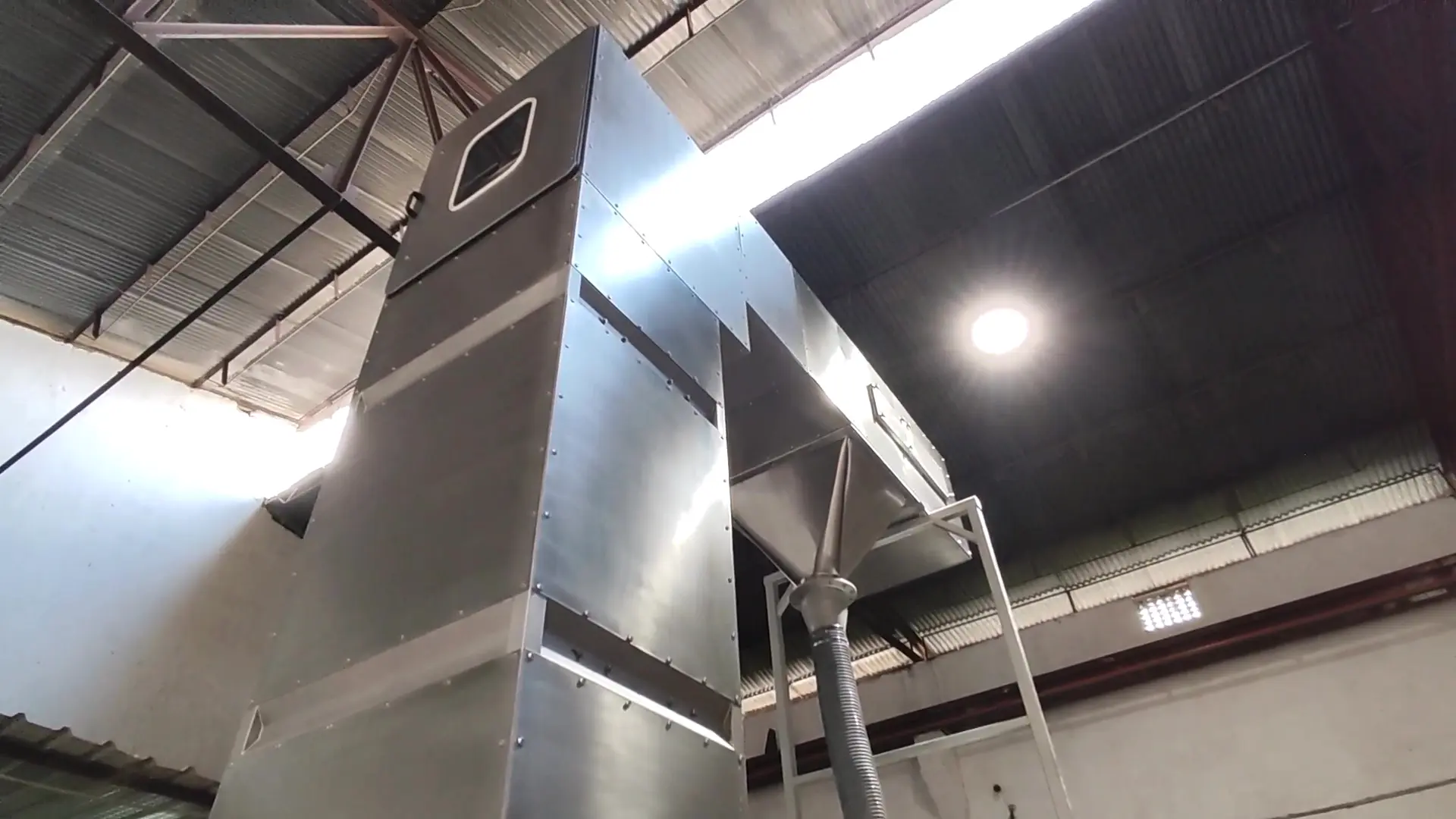
Factors to Consider When Selecting a Bucket Elevator Manufacturer
Industry Experience and Application Knowledge
One of the most important selection criteria is industry experience. A manufacturer with extensive knowledge of food and pharmaceutical manufacturing will better understand the unique challenges associated with hygienic material handling.
Manufacturers should evaluate whether the supplier has experience with:
Industry-specific knowledge allows manufacturers to develop customized solutions rather than offering standardized equipment that may not meet application requirements.
Hygienic Design and Material Selection
Equipment design directly affects cleaning efficiency, contamination control, and regulatory compliance. Food and pharmaceutical manufacturers should prioritize equipment that follows Good Manufacturing Practice (GMP) guidelines and incorporates hygienic design principles.
Several design features contribute to a more hygienic conveying system:
These features become increasingly important in facilities that process multiple products throughout the day.
Material Handling Expertise
Different materials behave differently during transportation. A bucket elevator designed for one application may not perform efficiently when handling another material.
Manufacturers should select suppliers that have experience handling products such as:
Understanding material characteristics allows manufacturers to design conveying systems that maintain product quality while improving operational efficiency.
Customization Capabilities
Every manufacturing facility operates differently. Production volumes, plant layouts, discharge heights, product characteristics, and available installation space vary significantly between facilities.
Instead of selecting standardized equipment, manufacturers should look for suppliers that offer customized solutions based on operational requirements.
Important customization options include:
- Conveying capacities that align with current and future production requirements.
- Custom discharge heights that support different facility layouts.
- Multiple equipment configurations that adapt to specific manufacturing processes.
- Flexible system designs that simplify future expansion.
Customization improves operational efficiency while allowing manufacturers to optimize their production environments.
Understanding C-Type and Z-Type Bucket Elevator Configurations
C-Type Bucket Elevators
C-type bucket elevators use a rack-and-pinion mechanism to ensure smooth bucket movement throughout the conveying process. This design improves equipment stability while maintaining continuous product flow.
Because the buckets remain stable during operation, manufacturers can reduce product spillage and improve conveying accuracy. C-type systems are particularly effective in applications that require controlled loading and unloading.
The rack-and-pinion mechanism also improves equipment durability while reducing bucket wobbling during operation.
Z-Type Bucket Elevators
Z-type bucket elevators use a cam-disc arrangement that allows smooth loading, transportation, and unloading throughout the conveying cycle.
The design supports gentle product handling, making it particularly suitable for food and pharmaceutical manufacturing environments where product quality must be preserved.
Chain guides further improve bucket stability by minimizing unnecessary movement throughout the conveying process.
Selecting the Right Configuration
Choosing between a C-type and Z-type bucket elevator depends on several factors, including product characteristics, production requirements, equipment layout, and desired throughput.
Manufacturers should evaluate:
| Selection Factor | Evaluation Criteria |
|---|---|
| Product characteristics | Powder, granules, or specialty materials |
| Production requirements | Batch or continuous processing |
| Facility layout | Available installation space |
| Material sensitivity | Fragile or free-flowing products |
| Throughput requirements | Required conveying capacity |
Working with an experienced manufacturer simplifies this selection process while ensuring that the chosen system supports long-term production requirements.
 “The best bucket elevator solutions are built on a combination of industry expertise, customized engineering, automation integration, and a deep understanding of material behavior.”

See it in action
Technical Specifications That Manufacturers Should Evaluate
Equipment specifications should always be evaluated within the context of production requirements.
Several performance indicators should be reviewed before making a purchasing decision.
| Specification | Performance |
|---|---|
| Conveying capacity | Up to 4,000 kg/hr |
| Discharge height | Up to 20 m |
| Contact surfaces | SS316L |
| Non-contact surfaces | SS304 |
| Surface finish | Grit and glass bead |
| Sound level | 75-80 dB |
| Operation | Continuous |
Capacity determines how much material the system can transport within a specific period. Manufacturers should select equipment that supports both current production volumes and future expansion. Discharge height affects equipment placement and facility design. Systems capable of transferring materials up to 20 meters provide greater flexibility when designing multi-level manufacturing facilities.
Material selection influences equipment durability, cleaning efficiency, and regulatory compliance. Stainless steel construction improves corrosion resistance while supporting hygienic operations. Surface finishes also play an important role because they reduce material buildup and simplify cleaning procedures.
Why Food and Pharmaceutical Manufacturers Require Specialized Bucket Elevators
Traditional bucket elevators used in mining, agriculture, and cement applications are not designed for highly regulated manufacturing environments. Food and pharmaceutical manufacturers require specialized equipment that prioritizes hygiene, product protection, and contamination control.
Dust-free operation is one of the most important requirements because airborne particles can create contamination risks while reducing product recovery. Integrated dust extraction systems help maintain cleaner production environments while improving operator safety. Material loss is another important consideration. Conventional conveying systems can allow products to accumulate inside the equipment, reducing efficiency and increasing waste. Advanced bucket elevator designs minimize material loss through scraper systems and specialized chain configurations.
Maintenance also affects productivity. Equipment that requires frequent servicing can disrupt production schedules and increase operating costs. Features such as self-lubricating chains, chain guides, tension adjusters, and torque limiters improve reliability while reducing downtime.
Safety should also be a priority. Modern bucket elevators incorporate safety mechanisms that automatically shut down the system when inspection doors are opened, protecting both operators and equipment. For these reasons, manufacturers should avoid selecting general-purpose conveying equipment for food and pharmaceutical applications.
Why Choose Cybernetik for Bucket Elevator Solutions?
Cybernetik’s C-Type and Z-Type Bucket Elevator systems are designed specifically for hygienic powder handling applications in food and pharmaceutical manufacturing.
The company’s engineering approach focuses on improving operational efficiency while maintaining the highest standards of product quality and contamination control.
Key advantages include: