
Key takeaways
For most of the history of lithium battery packs, the module was taken for granted. Cells went into modules, modules went into packs, and the only questions were how many of each. Cell-to-pack designs remove that middle level, mounting cells directly into the pack structure. The gains are real and substantial, but so are the things given up, and the trade is not the same for every application, every chemistry or every cell format.
This article covers why modules existed in the first place, what removing them actually buys, what it costs, and which applications each architecture suits.
The Architecture Spectrum
The choice is not binary. Three levels of integration are in production, and they form a progression.
Each step upward in integration trades reversibility for efficiency. That framing is more useful than treating cell-to-pack as simply newer and therefore better.
Why Modules Existed
Modules were not an accident of early design. They solved four real problems, and any architecture removing them has to solve those problems another way.
Handling. A module is a manageable sub-assembly that can be built on one line, tested, stored and transported. Individual cells are small, numerous and fragile; a finished pack is large, heavy and live. The module sits at a size that is convenient to work with.
Testing. A module can be electrically verified before it is committed to a pack. That is a quality gate, and it means a defect discovered at module level costs a module rather than a pack.
Serviceability. A failed module can be replaced without discarding the pack. For warranty economics this matters enormously, because it caps the cost of a field failure at a fraction of the pack value.
Thermal separation. Module walls provide physical barriers between groups of cells, which slows or stops propagation if one cell fails. In a module design this separation comes for free as a consequence of the structure.
What Cell-to-Pack Gains
What It Costs
The losses are the mirror image of what modules provided.
The test gate disappears. Without a module stage, there is no point at which a sub-assembly can be verified before it is structurally committed. Every quality check has to happen before cells are bonded, because after that a marginal cell cannot be removed. This raises the precision requirement on cell grading, insulation placement and weld verification, and it raises the cost of a defect found late.
Repair economics change. A module-based pack with one failed group can be repaired by replacing that group. A bonded cell-to-pack assembly with the same failure may be uneconomic to repair, so the manufacturer carries the whole pack cost rather than a fraction of it. That shifts warranty exposure and is a genuine reason cell-to-pack manufacturers invest more heavily in inline verification than the architecture alone would suggest.
Thermal propagation must be engineered rather than inherited. Module walls provided separation as a by-product of structure. In a cell-to-pack design, barriers, thermal pads and venting paths have to be designed and placed deliberately, and their placement verified during assembly, because once the cover closes a missing barrier is invisible.
Tolerance stacks directly. In a module design, the module absorbs some dimensional variation between cells before the pack sees it. Without that buffer, cell dimensional variation accumulates straight into the pack, which raises the demands on incoming cell consistency and on the fixturing that positions cells during assembly.
The Comparison
| Criterion | Module-based | Cell-to-pack | Advantage |
|---|---|---|---|
| Volume utilization | Module housings and gaps consume pack volume | Cells occupy more of the available envelope | Cell-to-pack |
| Mass | Duplicated housings at module and pack level | One structural enclosure rather than two | Cell-to-pack |
| Part count | Higher, with module frames, fasteners and connectors | Substantially lower | Cell-to-pack |
| Sub-assembly testing | Modules tested before pack commitment | No intermediate test gate exists | Module-based |
| Field serviceability | One module replaced without touching the rest | Repair frequently uneconomic | Module-based |
| Thermal propagation control | Module walls provide inherent separation | Barriers must be engineered in deliberately | Module-based |
| Manufacturing tolerance | Module absorbs some dimensional variation | Tolerance stacks directly into the pack | Module-based |
| Assembly line complexity | Two build stages, more stations | Fewer stations, higher precision at each | Depends |
| End of life disassembly | Modules separate for reuse or recycling | Bonded cells are harder to recover | Module-based |
 “The success of cell-to-pack depends on more than integration; cell format, chemistry, manufacturing precision, thermal management, and verification must work together as one engineered system.”

See it in action
Cell Format and Chemistry Decide Feasibility
Cell-to-pack is not equally practical for every cell, and two properties largely determine whether it works. Format matters because the cell has to contribute structure. Long prismatic and blade cells are self-supporting and can span the pack, effectively acting as structural members themselves, which is why cell-to-pack designs appeared first with those formats. Cylindrical cells are individually strong but do not span anything, so cylindrical cell-to-pack requires structural adhesive or potting to create a rigid assembly from many small elements, which is a different and messier manufacturing problem.
Chemistry matters because of thermal behavior. Lithium iron phosphate is more thermally stable than nickel-rich chemistries and less prone to violent propagation, which makes it more forgiving of the reduced physical separation that cell-to-pack implies. That is not incidental to the history: cell-to-pack emerged largely alongside LFP, and part of its purpose was to recover at pack level the energy density that LFP gives up at cell level.
The practical conclusion is that architecture, format and chemistry are chosen together. A cell-to-pack design with a nickel-rich chemistry and cylindrical cells is possible but demands far more of the propagation barriers and the assembly process than a blade LFP design does.
What Changes on the Assembly Line
The station sequence changes less than expected; the tolerances and verification density change considerably. The full sequence for a conventional pack is set out in the guide to EV battery pack assembly, and the differences under cell-to-pack fall into four areas.
Serviceability, Second Life and Recycling
The consequences of integration extend well past the factory.
In service, a module-based pack can be diagnosed to a module and repaired at that level. A bonded pack usually cannot, which means a single cell failure can retire an otherwise healthy assembly. For fleet operators, where downtime and repair cost are managed closely, that is a significant consideration.
At end of first life, module-based packs are considerably easier to repurpose. Stationary storage second-life applications generally take modules rather than whole vehicle packs, because modules can be tested, matched and reconfigured. Bonded packs are harder to break down into usable units.
For recycling, disassembly is the first step and adhesive is the obstacle. Bonded assemblies require more energy and more processing to separate materials, which affects both the cost and the recovered value. Regulatory direction in several major markets is toward greater accountability for end-of-life outcomes, so this is a consideration that is likely to grow rather than diminish.
Which Architecture Suits Which Application
Building Either Architecture
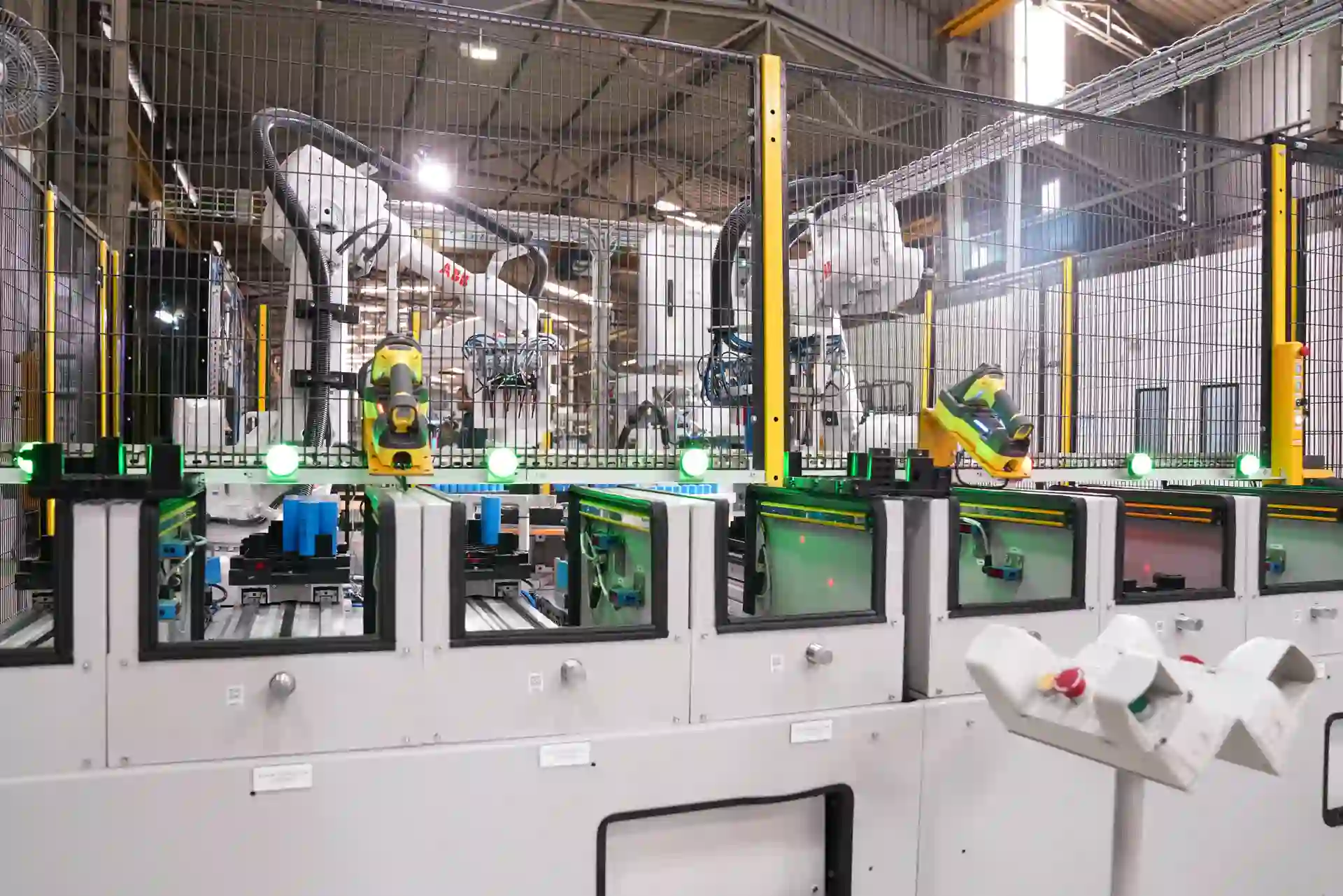
Cybernetik builds battery pack assembly automation across cell formats and architectures, with assembly lines adaptable to multiple module configurations rather than fixed to one.
| Cybernetik battery pack assembly capability | Specification |
|---|---|
| Cell formats handled | Cylindrical 18650, 21700 and 32140, plus prismatic, pouch and blade |
| Cell diameters | 32, 33, 35, 40, 42 and 46 mm |
| Line speed | Up to 6,000 cells per hour |
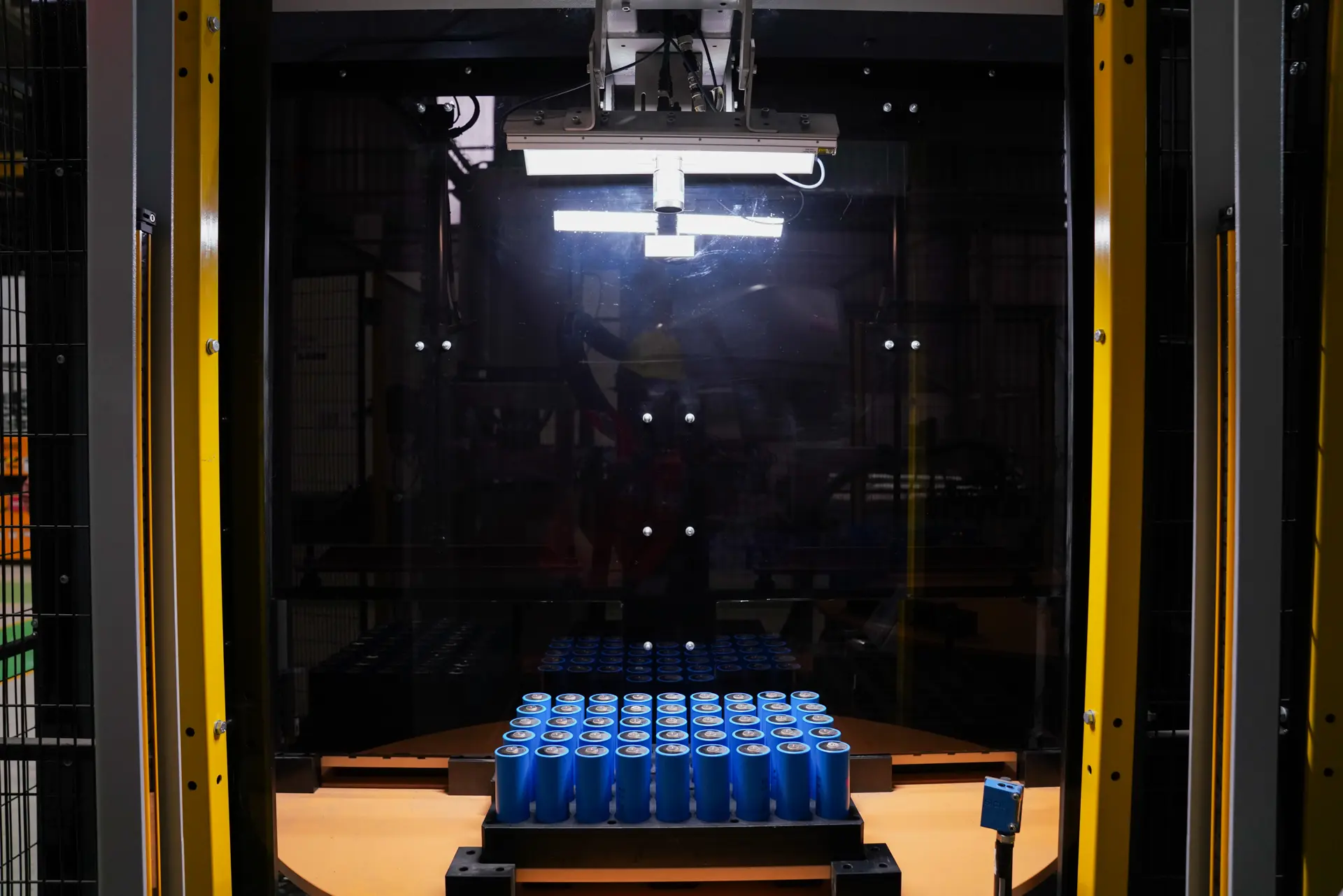
| Cell verification | OCV, IR and ACIR testing on every cell with robotic sorting onto parallel conveyors |
| Surface preparation | Plasma cleaning with vision-confirmed insulation application and polarity checking |
| Joining | Laser and resistance welding with inline weld integrity testing on every joint |
| Module flexibility | Assembly lines adaptable to multiple module configurations |
| Pack assembly | Thermal pad and barrier placement, BMS mounting, gasket and cover assembly |
| End of line | BMS and TCU programming, air leakage testing, electrical testing and laser marking |
| Traceability | Barcode and RFID capture with MES connectivity and process logging |
Two capabilities in that table matter directly to this decision. Handling blade format alongside cylindrical, prismatic and pouch covers the cell types cell-to-pack designs actually use. And inline verification at every station, weld integrity on every joint, vision-confirmed insulation, polarity checking, is precisely what compensates for the missing module test gate.
Cybernetik has operated for more than three decades, is headquartered in Pune with additional facilities in Gujarat and Raigad and international offices in the United States and UAE, and has installed over 6,000 systems across 30 plus countries, including more than 400 custom robotic automation solutions. In electric mobility that work has been delivered for manufacturers including Hero MotoCorp, TVS Motor, Livguard and Matter. Further background is on the Cybernetik about page.