
Key takeaways
Walk into any high-volume packaging plant at 3 AM and you will see the same pattern. Output that ran cleanly during the day shift starts to drift at midnight. Pack weights vary by a few grams. Empty pouches start showing up in the reject bin. The wrapping machine that hummed at rated speed earlier is now stopping every 15 minutes for jams. By the time the morning shift arrives, the operator hand-off log is full of small adjustments and the line is producing 70 percent of what it should.
This is not a people problem. It is a feeding problem. The infeed stage of any packaging line – the flow feeder -is what either holds output steady through every shift or quietly hands you variability you cannot afford. When the flow feeder is engineered properly, shift-to-shift consistency stops being a function of who is on the floor. When it is not, every operator change becomes a new set of micro-adjustments, and your OEE numbers tell the story.
This guide explains what flow feeders actually do, the four main flow feeder configurations Cybernetik builds for primary packaging, and exactly how each one removes the operator-dependent variability that shows up in 24×7 packaging operations. Whether you are filling bags of powder, packing cartons of biscuits, or flow-wrapping enrobed chocolates, the right flow feeder turns shift change into a non-event.
What Is a Flow Feeder in a Packaging Line?
A flow feeder is the metered-flow stage that delivers product into the primary packaging machine the wrapper, filler, weigher, or bagger at a controlled rate, orientation, and quantity. It sits between the upstream producing equipment (an oven, enrober, mill, or bulk bin) and the packaging machine itself, and its job is to absorb upstream variability so the packaging machine never starves and never surges.
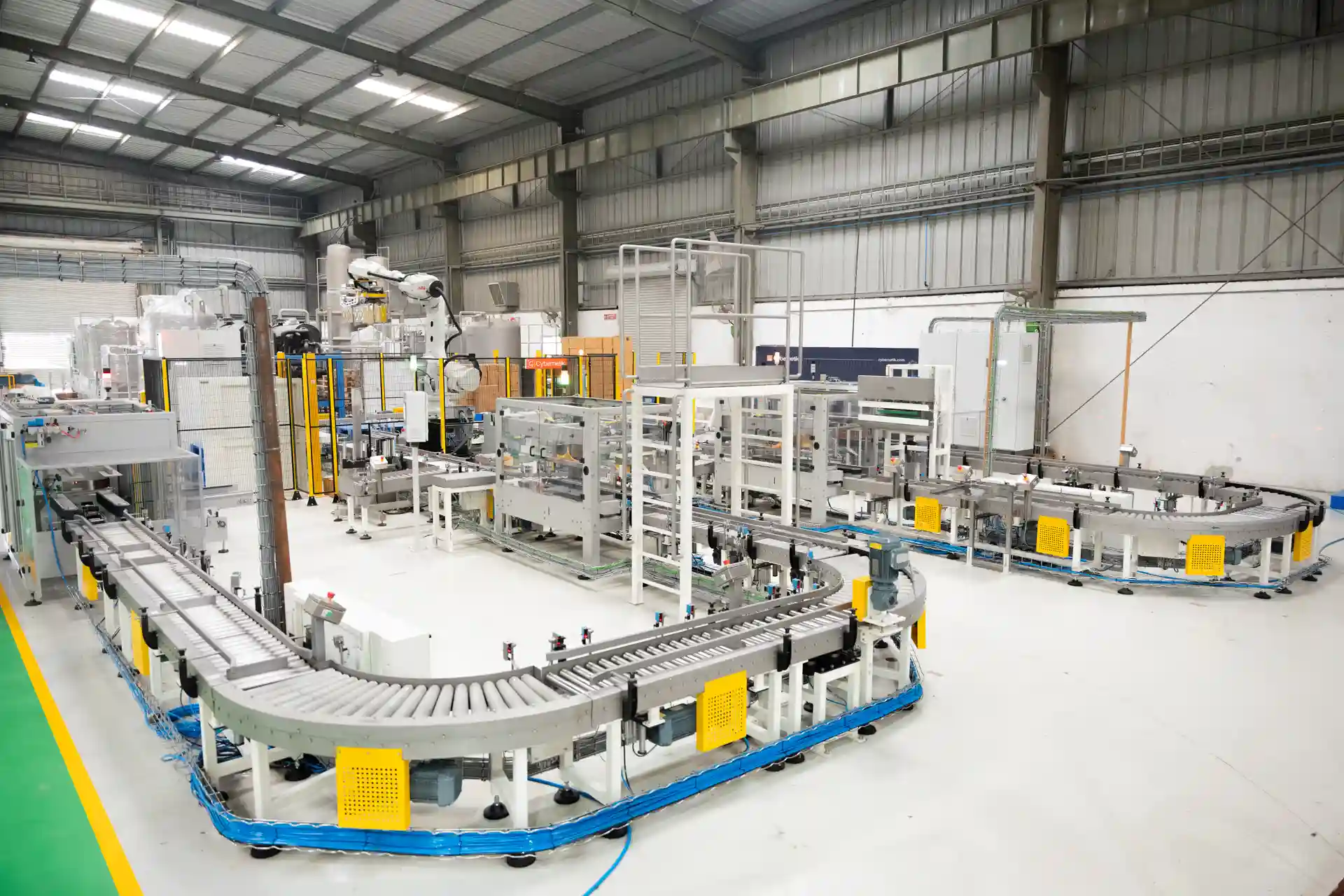
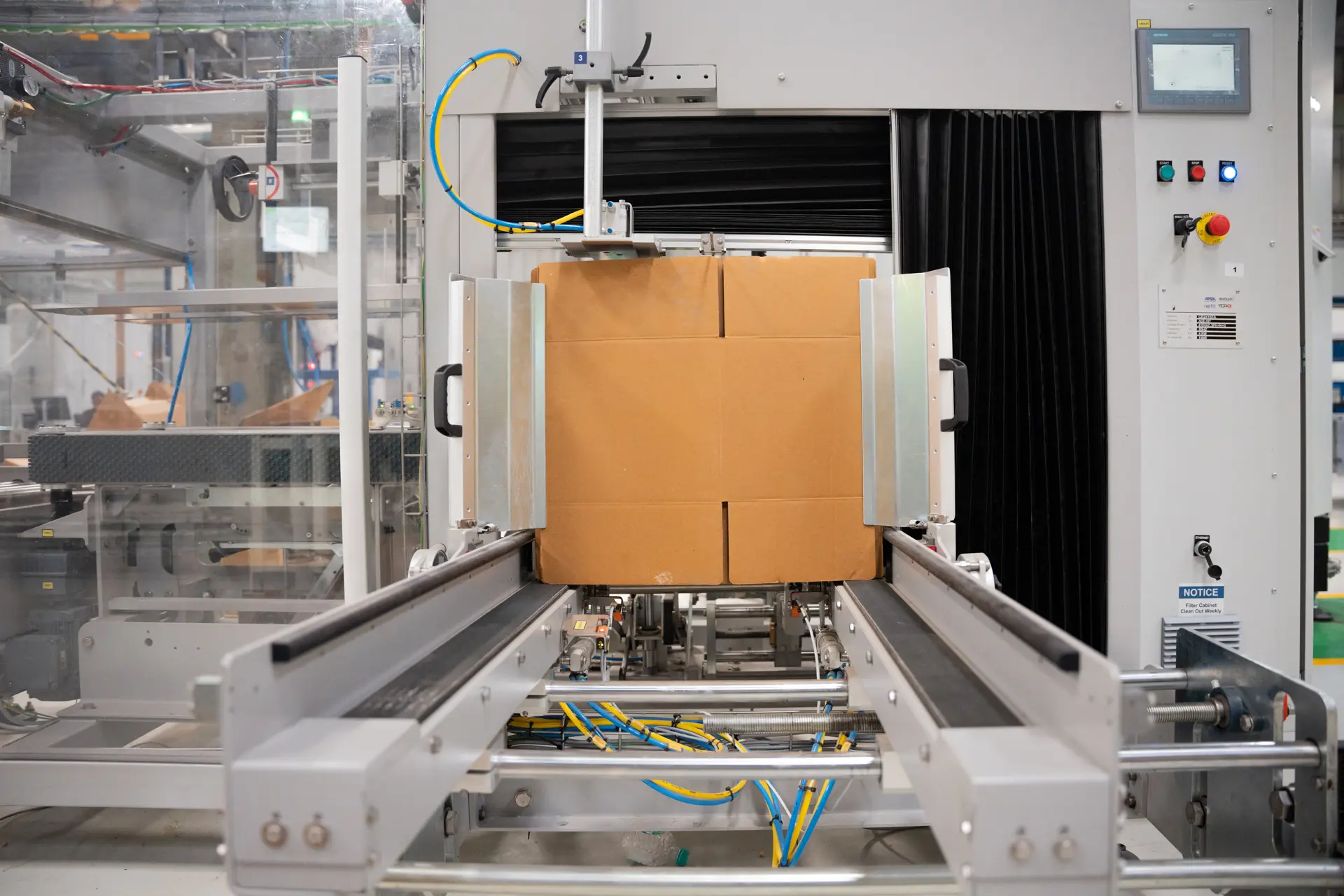
Cybernetik Packaging Automation builds flow feeders as part of complete primary packaging lines, not as standalone units. That distinction matters: a flow feeder built without reference to the downstream wrapper or bagger speed will always create either jams or empty packs. A flow feeder engineered as part of the same control architecture, with the same PLC and HMI, runs in lockstep with the packaging machine and stays in lockstep through every shift, every operator, and every changeover.
The four conditions a flow feeder is responsible for
Get all four right and your packaging line runs at rated speed every shift. Get any one wrong and the line will quietly underperform – usually in ways that only show up in the rejection bin or the audit report.
Why Multi-Shift Operations Are Where Flow Feeders Pay Back Hardest
Single-shift operations can hide a lot of feeding inconsistency. A skilled day-shift operator learns the line’s quirks, makes constant micro-adjustments, and keeps output close to rated. The same line running 24×7 across three shifts cannot rely on that. Five things start to drift the moment the operator changes:
A properly engineered flow feeder removes every one of these from the operator’s hands. The vibratory amplitude, the screw RPM, the conveyor pitch, the vision rejection criteria, the gripper trajectory – all are recipe parameters set once on the HMI and held automatically. Shift change becomes a log entry, not a re-tuning exercise.
The Four Flow Feeder Configurations Cybernetik Builds for Primary Packaging
Cybernetik’s primary packaging portfolio includes flow feeder configurations matched to four very different product families. Choosing the right one is the single most important sizing decision in a primary packaging line investment.
1. Vibratory Flow Feeders (Coarse + Fine) for Carton and Bag Filling
Cybernetik’s Carton Weigh & Fill System uses a vibratory feeder with separate coarse and fine feeding stages, working alongside a check weigher and metal detector for hygienic conveying and precise food packaging. Coarse feeding does the bulk of the fill quickly; fine feeding drops the last few percent into the carton with high accuracy. The result is repeatable pack weight to tight tolerance, and the same tolerance held across day, evening, and night shifts because the coarse-to-fine handover is a control parameter, not an operator decision.
The same coarse-and-fine vibratory architecture is built into Cybernetik’s Open Mouth Bag Filler and Small Bag Filler Machine for 1 kg to 50 kg bag formats – with optional Variable Frequency Drive control and gross/net weighing for customers running mixed SKUs across shifts.
2. Screw Flow Feeders for Powders and Granules
For powders, pellets, and free-flowing granules where weight tolerance has to hold to 0.1 percent, Cybernetik specifies fine screw feeders inside its bag filling and valve bag packer lines. The High Speed Bagging Machine uses twin-channel gravity loading combined with fine screw feeders to deliver precision filling at high throughput, with robotic arms enabling automatic switching between 25 kg and 50 kg (or 50 lb and 100 lb) bag formats.
The Valve Bag Packer offers multiple flow feeder options – Impeller (up to 6,000 kg per hour at 0.5 percent tolerance), Auger (up to 3,000 kg per hour at 0.1 percent tolerance), or Air loading – all under the same dust-and-spillage-free architecture. Selecting the right feeder type for a specific powder is what decides whether the line holds tolerance through the night shift or quietly drifts.
3. Conveyorized Flow Wrapper Feeding for In-Transit Wrapping
Cybernetik’s Conveyorized Flow Wrapper Feeding system is direct-contact packaging automation that wraps in-transit naked products at high speeds – up to 400 parts per minute, customizable based on product. Products arrive on the infeed conveyor, a counter records their presence and number, and multiple rollers on the un-winder feed the film that is wrapped longitudinally and sealed before transverse cutting completes the pack. Quality control rejects empty and double-packed pouches at the outfeed.
The system is built for cookies, biscuits, energy bars, soaps, toffees, and similar products that arrive already oriented from upstream and it is engineered to hold that 400 parts per minute rate steadily, shift after shift, without operator intervention.
4. Robotic Vision-Guided Flow Feeders for Random-Orientation Products
When products arrive randomly distributed and randomly oriented typical after enrobing, panning, or cooling tunnels – Cybernetik builds Robotic Flow Wrapper Feeding with vision-guided delta robots. The vision system analyzes products on the infeed conveyor, rejects out-of-shape or broken units, and guides the delta robot to pick and place only accepted products into the longitudinal slot on the outfeed conveyor.
The flagship turnkey configuration the Robotic High Speed Pick and Place System for Enrobed Chocolate -combines two vision systems and four delta robots to reach speeds of up to 480 parts per minute, with main PLC and SCADA control for recipe selection and FDA-compliant build for international markets. The same recipe runs on every shift; the same vision rejection criteria apply at 3 AM as at 3 PM.
Side-by-Side: Which Cybernetik Flow Feeder Fits Which Application
The table below maps Cybernetik’s flow feeder portfolio to the products and packaging stages they are built for. Use it as a first-pass sizing reference; final selection depends on throughput, format mix, and hygiene class.
| Flow Feeder Type | Where It Sits On The Line | Best For | Cybernetik Reference |
|---|---|---|---|
| Vibratory Feeder (Coarse + Fine) | Pre-fill stage for cartons and bags | Free-flowing snacks, naked chocolate, granules needs precise weight tolerance | Carton Weigh & Fill System with Vibratory Feeder |
| Screw Feeder | Bag and bulk fill stations | Powders, pellets, granules up to 0.1% weight tolerance | Open Mouth Bag Filler, High Speed Bagging Machine |
| Conveyorized Flow Wrapper Feeder | Direct infeed to flow wrapping | Oriented naked products at up to 400 parts/min – biscuits, bars, soaps | Conveyorized Flow Wrapper Feeding |
| Robotic (Vision-Guided) Flow Feeder | Pick & place into flow wrapper | Random-orientation products from enrobers – up to 480 parts/min | Robotic Flow Wrapper Feeding |
| Candy Conveyance & Distribution | Bulk handling pre-packaging | Bulk candy, confectionery distribution to multiple lanes | Candy Conveyance & Distribution System |
| Multi-Feeder (Impeller / Auger / Air) | Valve bag stations | Up to 6,000 kg/hr (Impeller) or 0.1% tolerance (Auger) | Valve Bag Packer |
 “A wrapper feeding system is more than an infeed solution – it integrates product orientation, vision-guided handling, quality control, and synchronized automation to keep modern packaging lines operating at full capacity.”
See it in action
Five Ways a Cybernetik Flow Feeder Stabilises Your Packaging Output Across Shifts
1. Recipe-Driven Set Points Replace Operator Judgment
Every Cybernetik flow feeder ships with HMI-based recipe management. Vibratory amplitude, screw RPM, conveyor pitch, vision rejection thresholds, and gripper trajectories are recipe parameters set once and held automatically. Shift change does not reset them, and operator skill differences do not move them.
2. Coarse-and-Fine Architecture Holds Pack Weight Tolerance Tight
In the carton and bag filling lines, the separate coarse-and-fine feeder stages and the integrated check weigher work together to hold pack weight to 0.1 percent tolerance and to hold that tolerance whether the line is in hour one or hour eight of a shift.
3. Built-In Quality Control Catches What Tired Eyes Miss
Across all four configurations, Cybernetik builds in detection and rejection of empty and double-packed pouches at the outfeed. The robotic configuration adds upstream vision-based rejection of broken and out-of-shape products. Night-shift fatigue does not change the rejection criteria because the rejection criteria are not human.
4. GMP-Built Hygiene That Does Not Depend on Operator Practice
Stainless steel contact parts, food-grade belts, dust-free operation, de-aeration during bag filling, and minimised human touch points are part of the equipment build, not part of the SOP. Bacterial load on food and pharma primary packs stays consistent because the equipment is the hygiene barrier, not the operator’s gloves.
5. Single Control Architecture for Upstream and Downstream Integration
Cybernetik flow feeders are designed for upstream and downstream automation.They tie into producing equipment at the infeed and into case packers, cartoners, palletizers, and end-of-line systems at the outfeed under a single PLC and SCADA architecture, with safety interlocks unified across the line. One recipe, one HMI, one safety chain across every shift.
When to Invest in a Flow Feeder Upgrade
If your line shows two or more of the symptoms below, the business case for a Cybernetik flow feeder is typically self-funding within 12 to 24 months on labour, yield, and uptime savings alone: