
Key takeaways
Cross 350 parts per minute on a flow wrapping line and the rules of the game change. At lower speeds, mechanical infeed systems – timing screws, pucks, indexed conveyors – can be tuned to deliver oriented product into the wrapping film. Above that threshold, the same systems either jam under load or demand product geometry so consistent that no real production line can supply it. Enrobed chocolates exit the cooling tunnel at random angles. Biscuits arrive across the belt width in unpredictable lanes. Energy bars come off a former with edge variability that mechanical guides cannot rescue. The flow wrapper is rated at 400 plus parts per minute, but it actually runs at 250 because the feeding stage cannot keep up.
This is the gap a robotic feeder closes. By combining a vision system with high-speed delta robots, a robotic feeder adapts in real time to whatever arrives on the infeed conveyor – picking accepted units, rejecting broken or out-of-shape ones, and placing every accepted product into the longitudinal slot of the flow wrapper at the exact pitch the wrapping head expects. The result: the wrapping machine runs at its full rated speed, every cycle, regardless of how messy the upstream presentation is.
This guide explains where robotic feeders fit on a high-speed flow wrapping line, what Cybernetik’s Robotic Flow Wrapper Feeding system actually does inside, and how the flagship turnkey configuration reaches 480 parts per minute on enrobed chocolate while staying within FDA and GMP compliance limits. Whether you are running a chocolate, biscuit, candy, or pharmaceutical line, the right robotic feeder is what turns a high-speed flow wrapper from a marketing spec into a measured shift output.
What Is a Robotic Feeder in a Flow Wrapping Line?
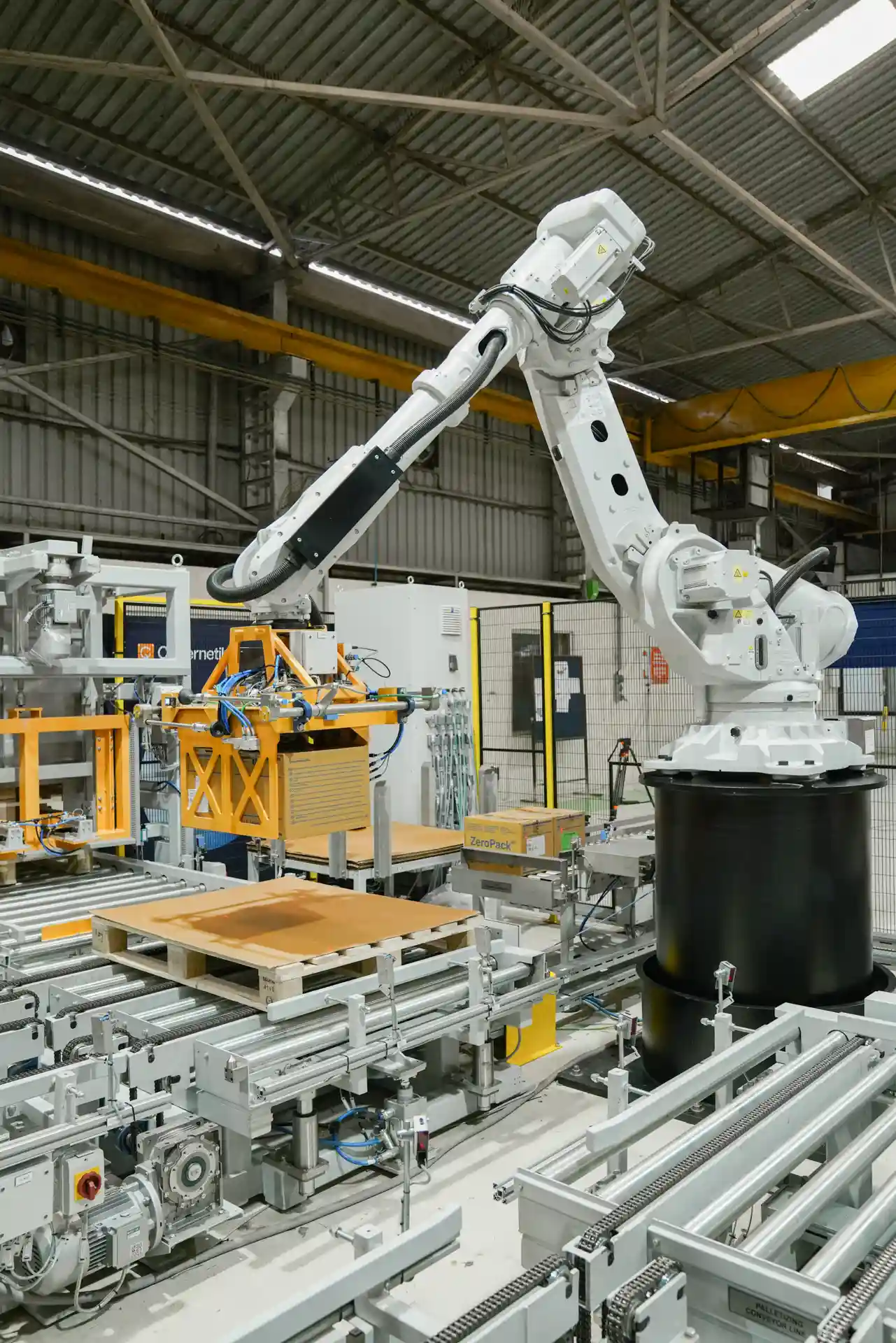
A robotic feeder is a vision-guided pick-and-place system that delivers naked product into a flow wrapping machine at the correct pitch and orientation. It replaces mechanical singulation – timing screws, pucks, gates, manual loading – with two coordinated subsystems: a vision system that sees and classifies every product on the infeed conveyor, and one or more delta robots that act on what the vision system tells them in real time.
Cybernetik’s Robotic Flow Wrapper Feeding system is built exactly this way. The vision system analyzes products arriving on the infeed conveyor, rejects out-of-shape and broken products, and guides the delta robots to pick and place only the accepted ones into the longitudinal slot on the outfeed conveyor. Rollers on the un-winder then feed film over the products, transverse sealing and cutting complete the wrapping operation, and a post-wrap quality check rejects any double-packed or empty pouches that slip through
Why this architecture beats mechanical singulation at high speed
Inside Cybernetik’s Robotic Flow Wrapper Feeding System
Cybernetik’s Robotic Flow Wrapper Feeding system is engineered specifically for high-speed flow wrapping of products with variable shape, size, or orientation. It is the configuration of choice when product arrives directly from an enrober, panning drum, cooling tunnel, or any process where mechanical orientation cannot be guaranteed.
Technical specifications
How a single cycle runs
The full cycle stays within hygienic limits because every contact part is GMP-built, the grippers are food-grade and customizable per SKU, and the safety guarding includes security switches and door interlocks. There is no manual touch point inside the wrap zone.
Robotic Feeder vs Conveyorized Feeder: Which One Fits Your Line?
Cybernetik builds both robotic and conveyorized flow wrapper feeders on a common engineering platform. The choice between them comes down to one operational reality: how product arrives at the feeding stage. The table below compares the two configurations on the parameters that drive the buying decision.
| Specification | Conveyorized Flow Wrapper Feeding | Robotic Flow Wrapper Feeding (Delta + Vision) |
|---|---|---|
| Speed | Up to 400 parts/min (product-based, customizable) | 100 parts/min per robot – up to 480 parts/min in a 4-robot line |
| Infeed Requirement | Pre-oriented products on infeed conveyor | Random orientation, randomly distributed across belt width |
| Vision System | Optional product counter only | Real-time vision: rejects out-of-shape and broken units, guides pick & place |
| Material of Construction | SS contact, food-grade belts, CS non-contact | SS contact, food-grade belts and food-grade grippers, CS non-contact |
| Footprint | 3.5 x 1 x 2 m | 5 x 2 x 4 m (full line) |
| Sound Level | Up to 80 dB | Under 80 dB |
| Quality Control | Empty + double pack rejection at outfeed | Pre-wrap broken/out-of-shape rejection + post-wrap empty/double pack rejection |
| Best Suited For | Cookies, biscuits, energy bars, soaps | Enrobed chocolates, candies, soft confectionery, irregular-orientation products |
| Compliance | GMP-built, food and pharma grade | GMP + FDA standards (Robotic High Speed Pick & Place line) |
Practical rule of thumb: if your product arrives oriented and singulated from the upstream process, Conveyorized Flow Wrapper Feeding is the lower-footprint, lower-cost solution and runs to 400 parts per minute. If your product arrives randomly distributed and randomly oriented – typical of enrobed, panned, or cooling-tunnel-discharged confectionery – only a robotic feeder will hold the wrapping machine at its rated speed.
Products and Wrappers a Robotic Feeder Handles Best
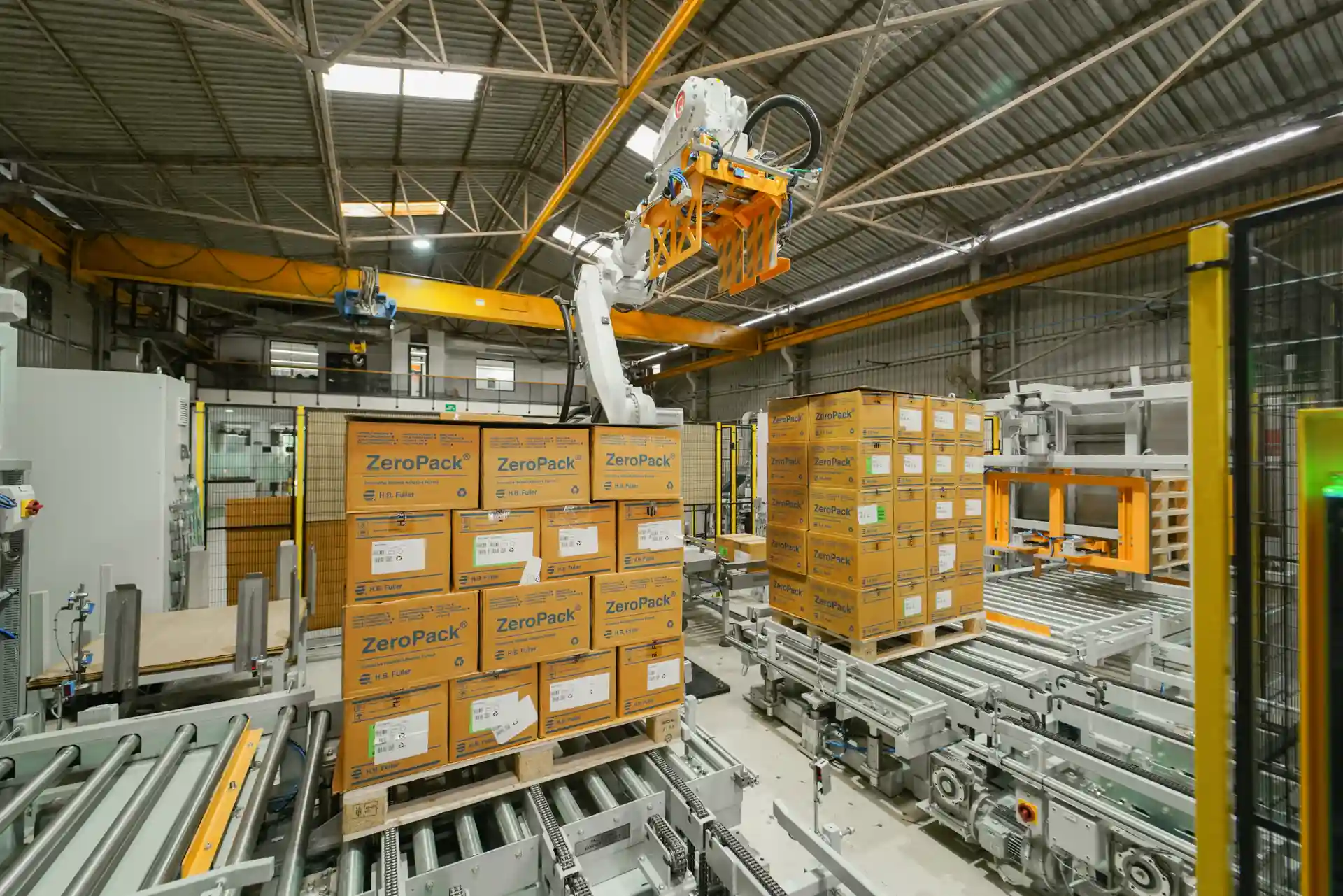
The Cybernetik Flow Wrappers Feeder platform – robotic and conveyorized variants on the same engineering base – is application-agnostic within the food, confectionery, pharmaceutical, and FMCG segments. The robotic feeder configuration is specifically the right answer where shape variation, orientation randomness, or surface delicacy are present.
Products commonly handled on a robotic feeder line
Wrapper formats compatible
 “A robotic feeder doesn’t just supply products to a flow wrapper; it synchronizes vision, robotics, and precision handling to keep high-speed packaging lines operating at their full potential.”
See it in action
When to Invest in a Robotic Feeder for Your Flow Wrapping Line
Robotic feeders are a higher-capex decision than conveyorized feeders, and they earn their cost in specific operational conditions. If two or more of the following are true on your line, the business case is typically self-funding within 18 to 30 months on yield, throughput, and labor savings: