
Key takeaways
Anyone who has timed a manual case packing operation across a full shift has seen the same curve: a brisk start, a steady mid-morning, a notable dip after lunch, and a long slow erosion through the afternoon. Headcount stays constant; throughput does not. The case packer is the only stage of a packaging line where the bottleneck is consistently human stamina rather than machine capability. Moving to an automatic case packer is the only intervention that removes the human stamina curve from the equation entirely.
This guide explains exactly what an automatic case packing machine does that a manual or semi-automatic operation cannot, where a semi automatic case erector fits as an intermediate step, and how Cybernetik configures fully automatic case packing lines for plants ready to take the step. If your line still depends on operators to keep cadence, this is the equipment specification , and the maturity model , for moving past it.
What Is an Automatic Case Packer?
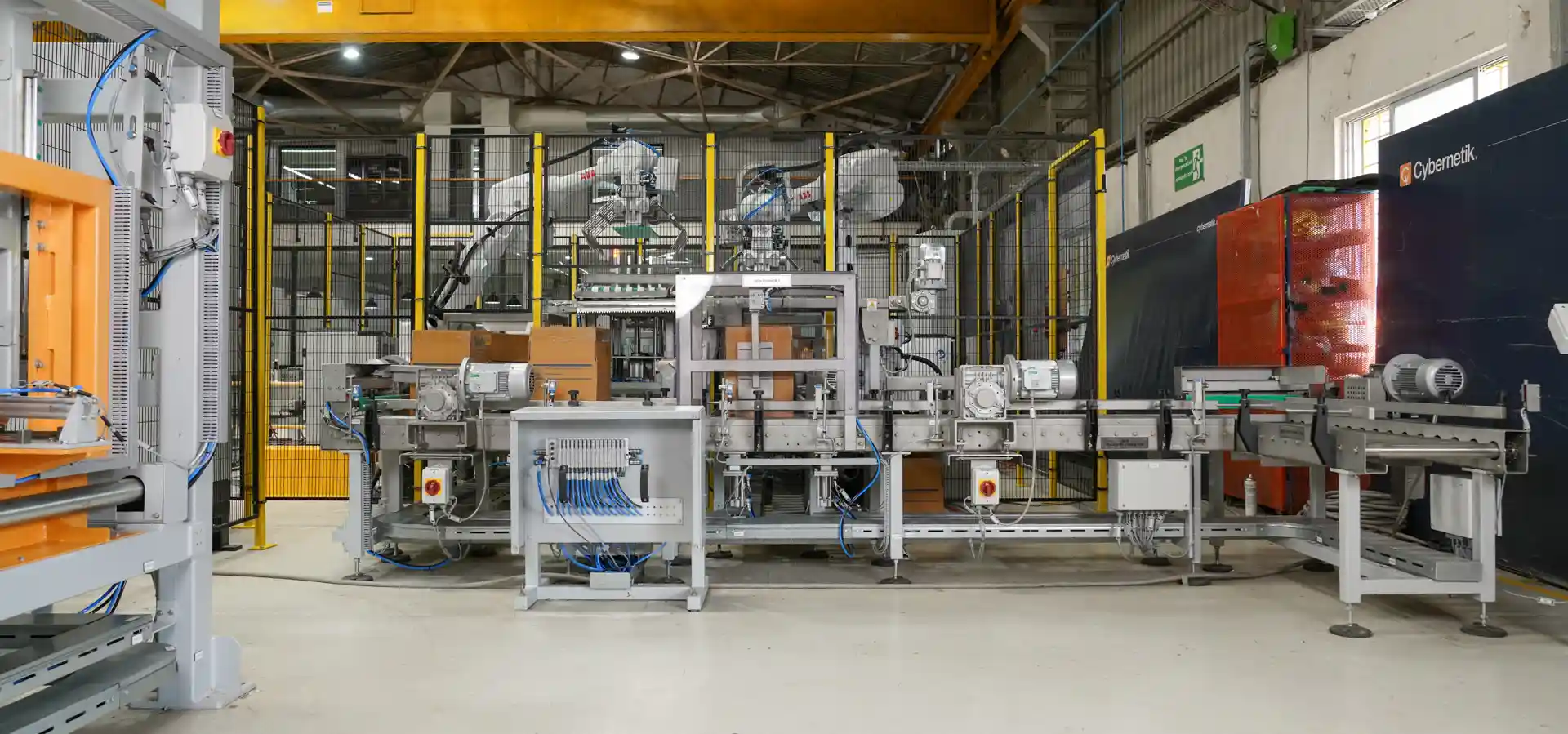
An automatic case packer is a piece of secondary packaging equipment that performs every step of the case packing cycle , case erecting, product collation, case loading, case sealing and transfer , under PLC control, without operator intervention beyond magazine refill and recipe selection. The distinction from semi-automatic equipment is the absence of operator-mediated handoffs between stages; the distinction from manual operation is that the operator no longer determines line cadence.
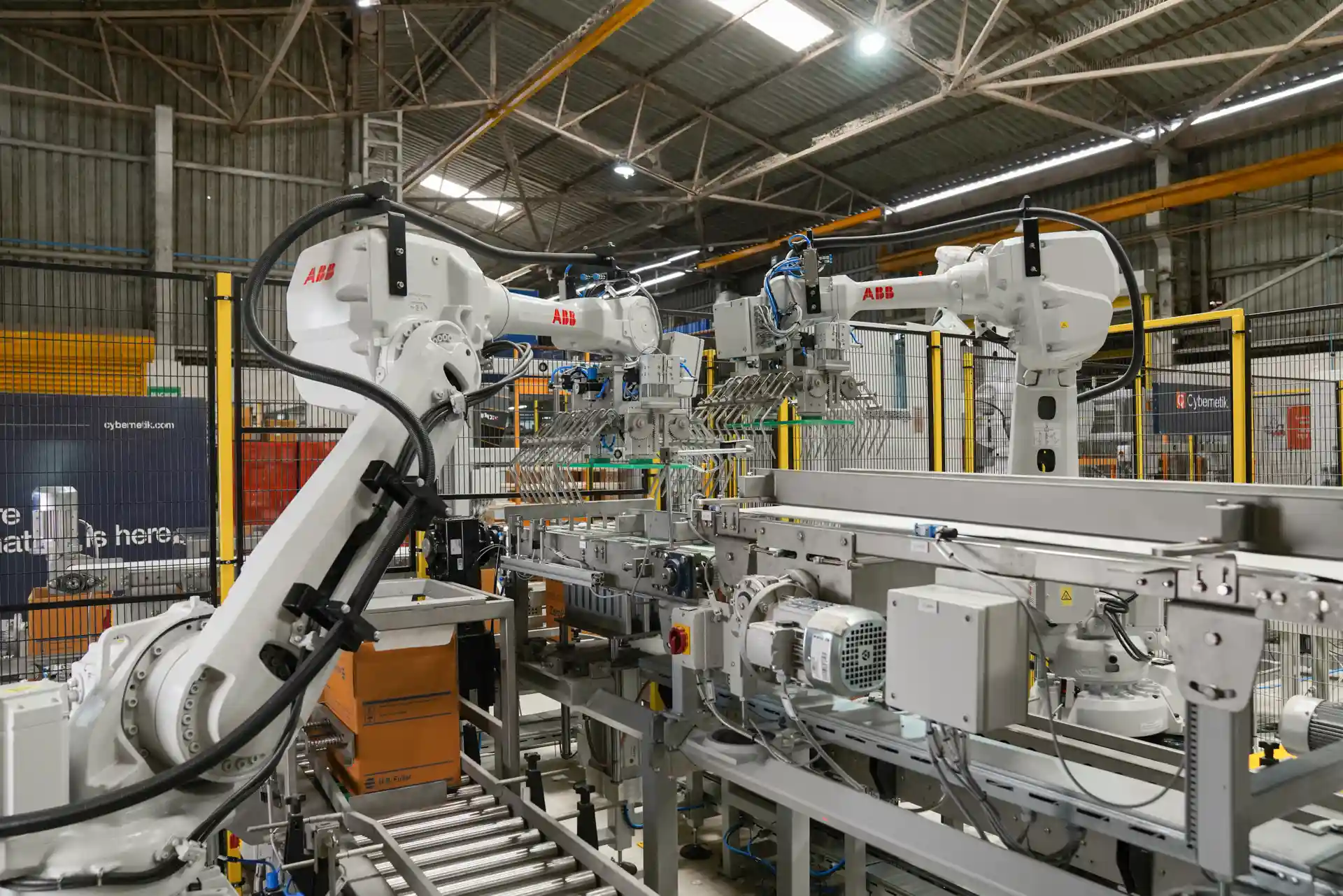
A typical automatic case packing machine combines several discrete stages into a coordinated whole: a carton erector that supplies cases from a magazine, a robotic or mechanical pickup station that collates and loads primary product, a case sealer that closes the top flaps, and a transfer conveyor that delivers loaded cases to the palletizer. All stages run from a single PLC and share a recipe library managed through the HMI.
Cybernetik builds automatic case packers across the maturity ladder: fully automatic SCARA pouch case packers running up to 40 pouches per minute, fully automatic six-axis bottle case packers running up to 120 bottles per minute, and semi-automatic configurations with operator-assisted stages for plants approaching full automation in phases. Each variant integrates with upstream primary packaging and downstream palletizing through a unified PLC + SCADA architecture.
Manual, Semi-Automatic and Fully Automatic Case Packing
Most plants do not jump from manual to fully automatic in one step. Understanding where each automation tier fits, particularly the role of a semi automatic case erector as an intermediate investment, helps map the right transition path.
Manual Case Packing
Operators hand-pick primary product from the line and place it into pre-erected cases, often also folding and sealing the cases by hand. Suitable only for very low volumes (under 5 cases per minute), prototype lines or extremely fragile premium products. Hidden costs include operator stamina, inconsistent pack quality and direct hygiene risk.
Semi-Automatic Case Packing with a Semi Automatic Case Erector
A semi automatic case erector forms and bottom-seals the cases automatically , typically the most time-consuming manual step, while operators perform pickup and loading by hand. Case sealing may also be automated. This is the standard intermediate step for plants approaching full automation, doubling typical throughput over fully manual operations.
Fully Automatic Case Packing
Every stage , erecting, collation, loading, sealing, transfer , runs under PLC control without operator intervention. Throughput reaches 30 to 120+ cases per minute on Cybernetik’s platform with sub-5-minute SKU changeover. Operators are required only for magazine refill, recipe selection and routine cleaning.
Side-by-Side Comparison
The table below compares the three automation tiers on the parameters that drive transition decisions.
| Specification | Manual | Semi-Automatic | Fully Automatic |
|---|---|---|---|
| Speed | Under 5 cases/min | 5–20 cases/min | 30–120+ cases/min |
| Operator Count | 3–5 per line | 1–2 per line | 1 (refill + recipe) |
| Changeover Time | Variable, untimed | 15–30 min | Under 5 min |
| Pack Consistency | Variable | Mid | High |
| Hygiene Compliance | Low | Mid | GMP-ready |
| Capex | Lowest | Mid | Highest |
| Best For | Prototype, premium | Single-SKU mid-vol | Multi-SKU high-vol |
Five Reasons Plants Are Moving from Manual to Automatic Case Packing
1. Output No Longer Decays Across the Shift
Manual case packing throughput is a function of operator stamina, which decays predictably across an eight-hour shift. Automatic case packers maintain rated cadence from shift start to shift end, indifferent to operator fatigue. The aggregate gain across a five-day week is typically larger than plant managers expect on first inspection.
2. SKU Changeover Drops from Hours to Minutes
On a manual or semi-automatic line, every SKU change requires reorientation of operators, retraining on the new format and physical reset of any mechanical guides. On a fully automatic case packing machine, SKU change is a recipe selection on the HMI , typically under five minutes within a format family.
3. Pack Consistency Becomes a Hard Specification
Pack consistency on a manual line varies operator to operator and hour to hour. An automatic case packer produces identical pack geometry, identical case orientation and identical sealing every cycle. Retail audits, transit damage claims and downstream rework all drop measurably as a result.
4. Operator Hands Come Off the Product
Direct operator contact with primary packed product is a hygiene risk in food, dairy and pharma. An automatic case packer with food-grade or pharma-grade end-of-arm tooling eliminates that contact entirely, removing a recurring audit finding and supporting GMP compliance without intervention.
5. End-of-Line Automation Investment Finally Pays Off
Plants that have automated palletizing but left case packing manual typically run their palletizer at half utilization because case-packing output cannot keep it fed. An automatic case packing machine resolves the starvation problem and lets the palletizer investment deliver its rated economics.
What an Automatic Case Packer Handles on a Cybernetik Line
Primary product types automated
Case erecting and forming
Sealing and transfer
 “An automatic case packer doesn’t just increase throughput; it removes the human limitations that prevent packaging lines from reaching their full potential.”

.
See it in action
The Cybernetik Automatic Case Packer Advantage
Industries Ready to Move to a Fully Automatic Case Packing Machine
Signs You Need to Move from Manual to Automatic Case Packing
Where two or more of the following appear together, the case for moving up the automation ladder to a fully automatic case packer is typically straightforward.
Where these conditions appear together, the Cybernetik automatic case packing machine typically delivers payback in twelve to twenty-four months on shift-stamina recovery, changeover savings, hygiene compliance and uptime gains.