
Key takeaways
Every carton packing machine spec sheet looks impressive at first read. Throughput numbers in bold, payload capability stated authoritatively, accuracy figures quoted to three decimal places, compliance certifications listed without context. The spec sheet is a marketing document dressed as an engineering one , and reading it as engineering is the most common reason buyers end up disappointed twelve months after commissioning. A throughput figure stated as ‘up to’ rather than ‘sustained’ carries no commitment. A payload figure quoted at maximum reach behaves very differently from the same figure at minimum reach.
This guide walks through what to actually look for on a carton packing machine spec sheet, the marketing conventions that distort the numbers, and the engineering load-bearing specifications that determine whether the machine will hold its quoted performance on your line. Cybernetik publishes spec sheets the same way it builds machines , every number is what the equipment delivers in your plant, not what it does in a controlled showroom. If your last carton packing machine purchase did not match its spec, the framework below explains why and what to look for next time.
What Is a Carton Packing Machine?
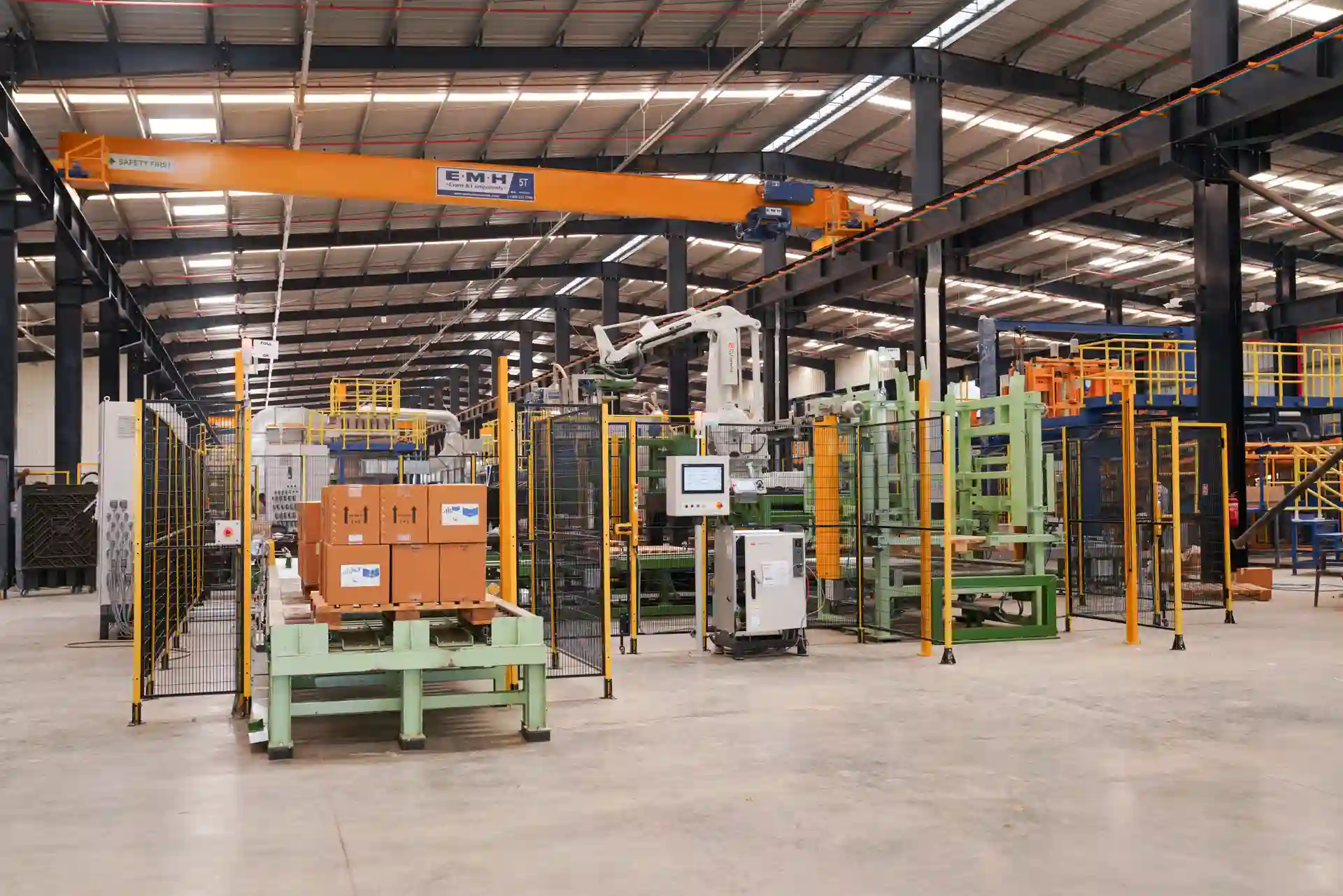
A carton packing machine is the equipment that performs carton packing , loading primary-packed product into corrugated cartons or display cases at the secondary packaging stage of the line. The category spans automatic carton erectors, robotic and mechanical case loaders, inline case sealers and integrated carton packing lines that combine all three stages under unified control.
What separates one carton packing machine from another at the specification level is not the headline throughput figure. It is the combination of sustained-throughput envelope, payload at working reach, changeover time within and across format families, end-of-arm tooling library, vision capability, compliance build standards and integration scope with upstream and downstream equipment. A spec sheet that names only the headline throughput is the spec sheet least likely to match plant performance.
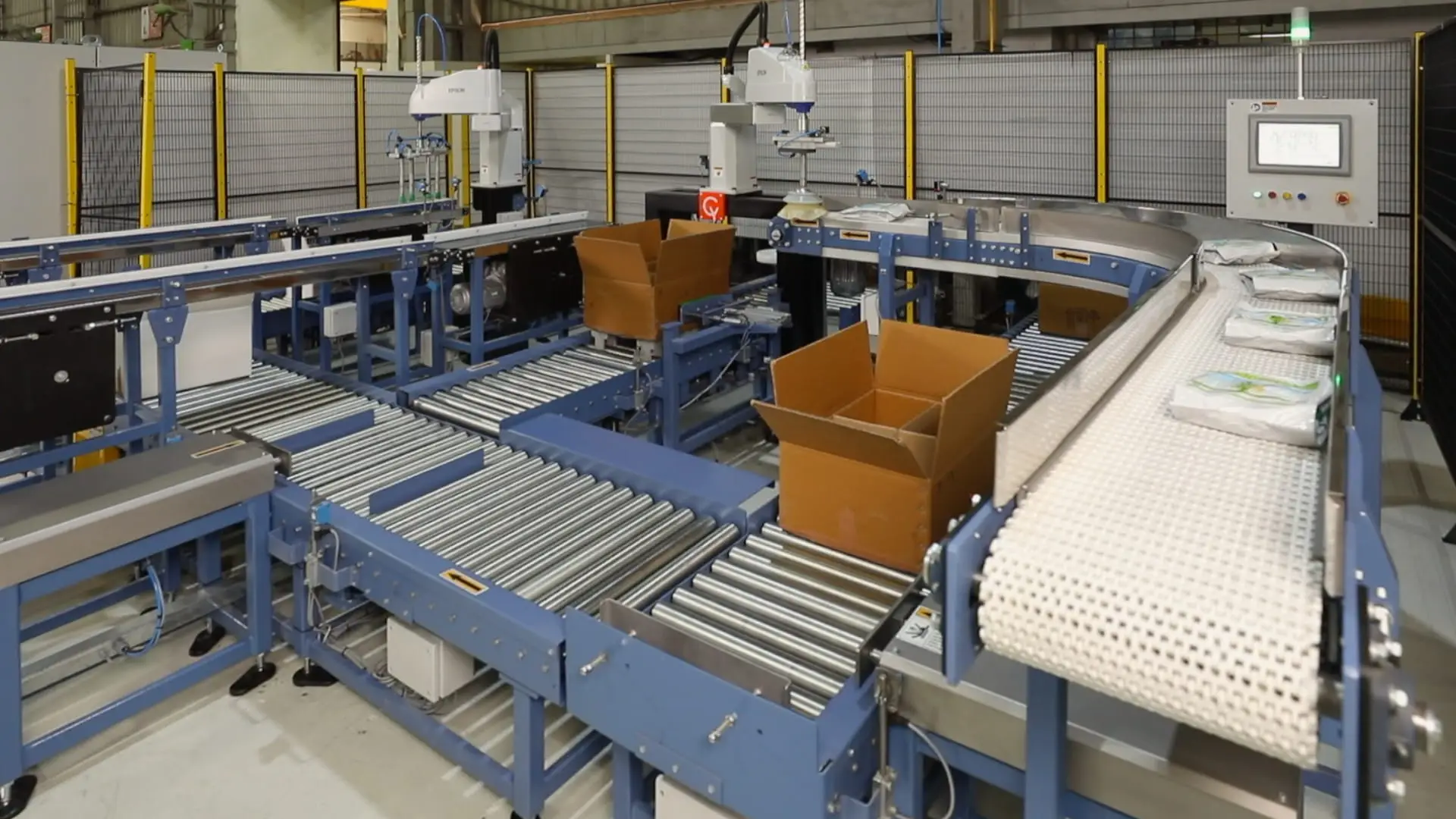
Cybernetik’s carton packing machine portfolio spans SCARA-based platforms for flexible packaging (up to 40 pouches per minute at 6 kg payload), six-axis platforms for rigid containers (up to 120 units per minute at 200 kg payload), industry-dedicated configurations for chocolate bar and similar formats, and carton erectors running at 15–30+ cartons per minute. Every published specification reflects sustained on-line performance, not showroom peak.
Five Specifications That Actually Matter on a Carton Packing Machine Spec Sheet
1. Sustained Throughput, Not Peak Throughput
Headline throughput figures are usually peak , what the machine hits in a controlled demonstration with optimal product, fresh tooling and no upstream variability. Sustained throughput is what the machine holds across an eight-hour shift with normal upstream variation. Cybernetik publishes both figures so buyers can size their line against the load-bearing number rather than the marketing one.
2. Payload at Working Reach, Not at Specification
Robotic carton packing machines have payload figures that depend on arm extension. A six-axis arm rated at 200 kg payload may carry that load near the base but less at full reach. The load-bearing payload number is what the arm carries at the working reach your line geometry requires , Cybernetik specifies this per project rather than quoting an unconditional maximum.
3. Changeover Time Within and Across Format Families
Most spec sheets quote changeover within a format family , different sizes of the same pouch type or bottle type. The harder number is changeover across format families (e.g. pouch to stick pack, or bottle to jar). Cybernetik specifies both: under 5 minutes within a family via HMI recipe, 15–30 minutes across families including end-of-arm tooling swap.
4. Vision Capability and Integration Depth
Many spec sheets mention vision systems without specifying integration depth. A bolted-on vision retrofit imposes dwell time on each cycle that caps throughput regardless of arm speed. A vision-native carton packing machine has the vision system co-designed with the motion path , Cybernetik’s specifications distinguish vision-native (standard) from vision-retrofit (avoided) configurations.
5. Compliance Build, Not Compliance Capability
GMP, FDA and CE compliance can mean ‘capable of compliance with modifications’ or ‘compliant as built and shipped.’ These are very different procurement realities. Cybernetik’s compliance specifications state which builds are GMP-as-built (standard pharma configuration), FDA-as-built (chocolate, dairy configuration) and which require optional add-ons. The distinction matters at audit time, not at quote time.
Three Tiers of Carton Packing Machine Specification
Carton packing machines fall into three specification tiers that determine where they fit on your line. The right tier depends on throughput, SKU mix and compliance environment , not on capex preference.
Entry-Tier Carton Packing Machines
Semi-automatic configurations with manual or assisted loading, automatic erecting and automatic sealing. Sustained throughput sits in the 5–20 cases per minute range; changeover typically 15–30 minutes; vision capability optional. Right for plants approaching full automation in phases or running predominantly single-SKU operations at moderate volume.
Mid-Tier Carton Packing Machines
Fully automatic robotic configurations on SCARA or six-axis platforms with recipe-driven changeover. Sustained throughput 30–80 cases per minute; changeover under 5 minutes within format family; vision-native pickup. Right for multi-SKU operations at moderate to high throughput with hygiene or compliance requirements. Cybernetik’s SCARA pouch packer and standard six-axis configurations sit in this tier.
High-Specification Carton Packing Machines
Fully automatic six-axis configurations with multi-array pickup, extensive recipe libraries, GMP or FDA-as-built compliance and full line PLC integration. Sustained throughput 80–120+ units per minute; changeover under 5 minutes; vision-native with integrity verification. Right for high-volume, multi-SKU, regulated-market operations.
Side-by-Side Comparison
The table below compares the three specification tiers on the spec sheet metrics that determine fit.
| Specification | Entry-Tier | Mid-Tier | High-Specification |
|---|---|---|---|
| Sustained Throughput | 5–20 cases/min | 30–80 cases/min | 80–120+ units/min |
| Payload at Reach | Up to 6 kg | Up to 50 kg | Up to 200 kg |
| Changeover Within Family | 15–30 min | Under 5 min | Under 5 min |
| Vision Integration | Optional retrofit | Vision-native | Vision-native with integrity QC |
| Compliance Build | Standard build | GMP optional | GMP or FDA as built |
| Recipe Library | Limited (typical 5) | Extensive (20+) | Full library (50+) |
| Typical Buyer | Mid-volume single-SKU | Multi-SKU food/FMCG | High-volume regulated |
Cybernetik’s Carton Packing Machine Portfolio at Specification Level
Specifications across the SCARA pouch case packer
Specifications across the six-axis bottle case packer
Specifications across the automatic carton box making machine
 “Modern carton packing transforms secondary packaging into a synchronized operation where automation, traceability, and efficiency work together to support long-term manufacturing success.”

See it in action
The Cybernetik Carton Packing Machine Specification Standard
Industries Where Specification Discipline Matters Most
When Your Current Carton Packing Machine Spec No Longer Matches Reality
Where two or more of the following describe your operation, the current carton packing machine specification has likely drifted from its delivered performance. Scoping replacement on a more honest spec basis becomes the right move.
Where these conditions cluster, scoping a Cybernetik carton packing machine on published-sustained-spec basis typically pays back in twelve to twenty-four months on throughput recovery, changeover savings and compliance closure combined.