
Key takeaways
Carton packing is the rare manufacturing function that is treated as both invisible and load-bearing. Invisible because no end customer ever sees it; load-bearing because every shipment that leaves the dock passes through it. Operations leaders who have spent careers in manufacturing have all seen the same pattern: a carton packing line that works gets ignored for years, and a carton packing line that doesn’t work consumes every quarterly review until something is done about it. The difference between those two outcomes is not equipment cost. It is operational discipline.
This guide walks through what makes carton packing an operational discipline rather than a one-time purchase decision, the metrics that distinguish lines that work from lines that drift, and the engineering choices Cybernetik makes when designing carton packing automation that survives quarterly budget pressure rather than becoming the next year’s problem. If carton packing has appeared on your operational risk register more than once, the analysis below points at the systemic fixes rather than the obvious ones.
What Is Carton Packing in Operational Terms?
Carton packing is the secondary packaging activity that takes primary-packed product from upstream and loads it into a carton , shipping case, display carton or specialty format , for transfer to palletizing and dispatch. The activity sits between the filler/wrapper and the palletizer; the equipment that performs it is generically called carton packing machinery or, in Indian and South Asian operations vocabulary, a carton packing line.
What separates carton packing from generic case packing in operational vocabulary is the emphasis on carton specifically , corrugated paper-based packaging , as opposed to plastic or wooden case formats. In Indian and global FMCG, beverage, dairy and pharma operations, carton packing is the dominant terminology because corrugated cartons are the dominant secondary packaging format. The activity is the same; the term reflects the regional and industry usage.
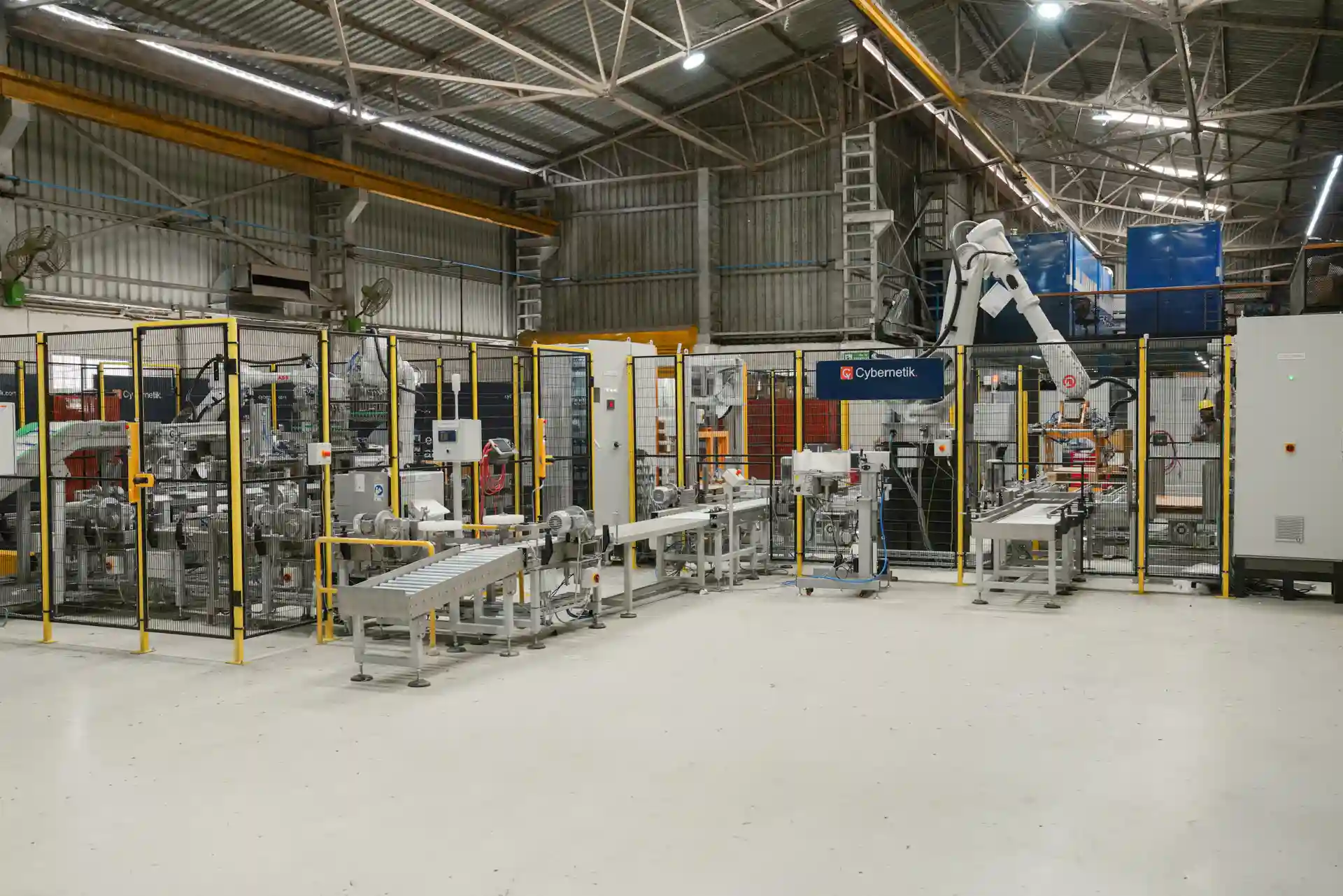
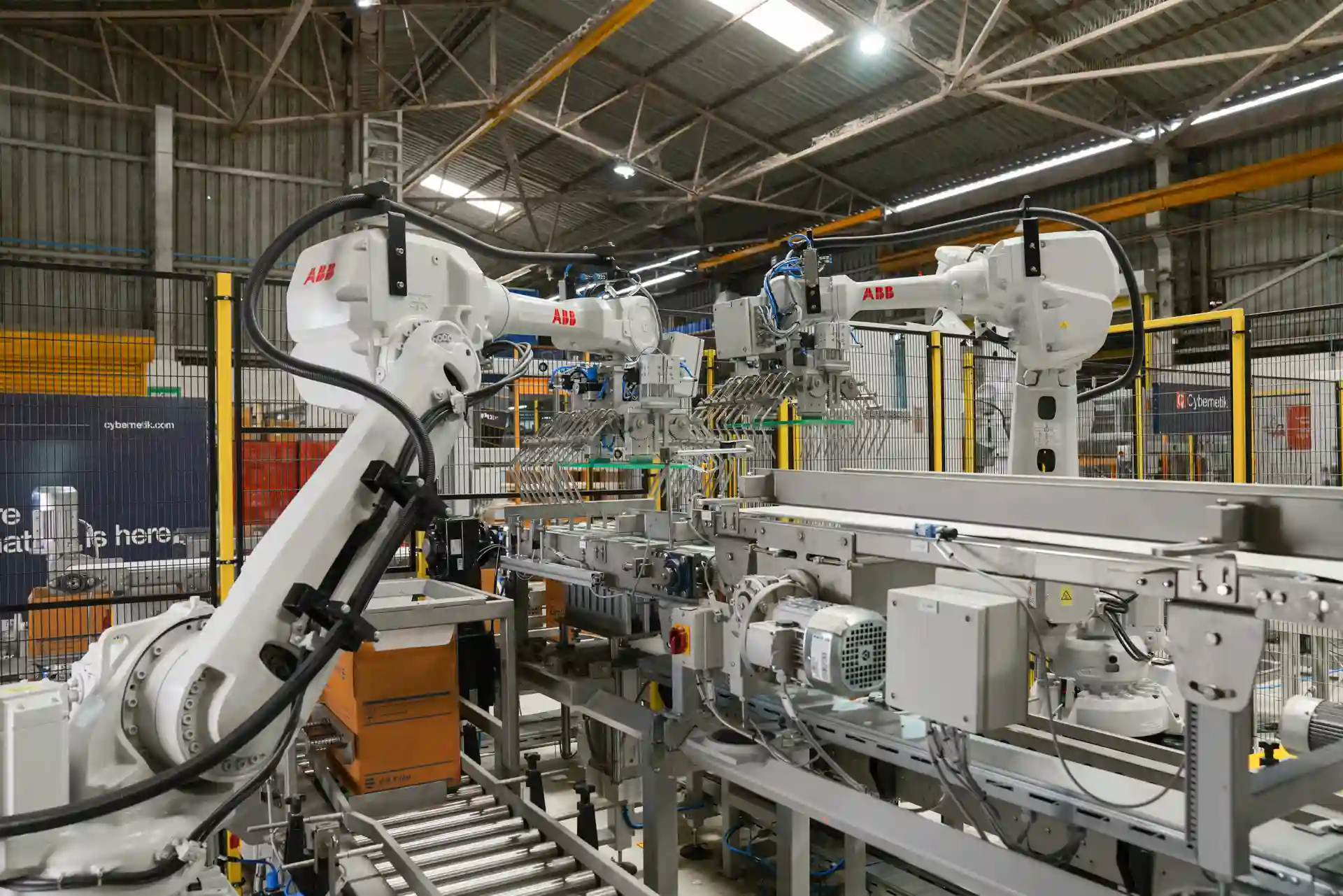
Cybernetik’s carton packing automation spans the full line: an automatic carton box making machine (case erector) at 15–30+ cartons per minute, a case packer matched to the upstream filler’s cadence, an inline case sealer with hot-melt or tape sealing, and a Robotic Carton Palletizer handling up to three cartons simultaneously at the outfeed. All stages tie into a unified PLC + SCADA architecture that lets the line be operated and managed as one piece of equipment rather than five.
Five Operational Metrics That Define a Carton Packing Line That Works
1. Sustained Throughput, Not Peak Throughput
The number that matters in carton packing is sustained throughput across an eight-hour shift, not the brochure peak. Lines that hit 50 cases per minute at start of shift and 30 cases per minute by mid-afternoon are running at the lower number, not the higher. Cybernetik’s automated carton packing line is engineered to hold cadence shift-long, no operator-stamina decay, no progressive jamming, no degraded changeover discipline.
2. Changeover Discipline Between SKUs
Multi-SKU operations live or die by changeover discipline. A line that nominally handles five SKUs but takes ninety minutes to switch is effectively a one-SKU line in production hours. Recipe-driven changeover on Cybernetik’s carton packing equipment runs under five minutes within a format family , preserving SKU flexibility as actual capacity rather than theoretical capability.
3. First-Pass Yield Through the Line
First-pass yield is the percentage of cases that exit the line sealed, labelled and ready to ship without manual intervention. Lines below 95 percent first-pass yield silently consume rework hours; lines above 99 percent run themselves. Vision-guided pickup, inline integrity checks and recipe-driven sealing on Cybernetik’s carton packing line target the 99+ percent first-pass envelope.
4. Operator Hours per 1,000 Cases
Operator hours per 1,000 cases is the single metric that captures whether the line is automation or pseudo-automation. Fully automated carton packing should sit under 0.5 operator hours per 1,000 cases (refill, recipe selection, routine cleaning). Lines above 2.0 are not truly automated regardless of equipment count , they are operator-augmented.
5. Audit Findings per Quarter
Hygiene, traceability and tamper-evident audit findings on the carton packing stage compound quarter over quarter if not addressed structurally. GMP-build construction, operator-free product contact and audit-grade traceability through unified PLC make the carton packing stage an audit asset rather than an audit liability.
Carton Packing Approaches by Operational Maturity
Carton packing operations sit at different maturity levels. The right next step depends on where the operation is today, not on what is theoretically optimal.
Manual Carton Packing
Operators hand-erect cartons, hand-load primary product and hand-seal. Throughput sits below 5 cases per minute per line; operator hours per 1,000 cases exceed 5; first-pass yield is highly variable. Suitable only for very low volume, prototype lines or extremely fragile products. The cost is hidden in operator hours, hygiene risk and quality variability.
Semi-Automatic Carton Packing
Carton erecting is automated (15+ cartons per minute), loading is manual or semi-automated, sealing is automated. Throughput reaches 5–20 cases per minute; operator hours per 1,000 cases drop to 1–2; first-pass yield improves to 95–98 percent. The intermediate step for plants approaching full automation in phases , Cybernetik’s semi automatic case erector is the typical entry point.
Fully Automated Carton Packing
Carton erecting, loading, sealing and transfer all run under PLC control. Throughput reaches 30–60+ cases per minute; operator hours per 1,000 cases drop under 0.5; first-pass yield reaches 99+ percent with vision QC. The target state for any high-volume, multi-SKU or compliance-sensitive operation.
Side-by-Side Comparison
The table below compares the three operational maturity levels on the metrics that define carton packing line performance.
| Metric | Manual | Semi-Automatic | Fully Automated |
|---|---|---|---|
| Sustained Throughput | Under 5 cases/min | 5–20 cases/min | 30–60+ cases/min |
| Changeover Time | Untimed, variable | 15–30 min | Under 5 min |
| First-Pass Yield | 85–95% | 95–98% | 99+% |
| Operator Hrs/1,000 Cases | Over 5 | 1–2 | Under 0.5 |
| Hygiene Exposure | Direct contact | Mid contact | Operator-free |
| Audit Profile | Liability | Manageable | Asset |
| Capex Profile | Lowest | Mid | Highest |
Carton Packing Line Equipment from Cybernetik
Carton erecting and forming
Carton packing (loading) configurations
Carton sealing, coding and palletizing
 “Modern carton packing transforms secondary packaging into a synchronized operation where automation, traceability, and efficiency work together to support long-term manufacturing success.”

See it in action
What Makes Cybernetik’s Carton Packing Discipline Different
Industries Where Carton Packing Discipline Drives Plant Economics
When Carton Packing Becomes a Quarterly Review Topic
Where two or more of the following are visible in your current operation, the carton packing line has crossed from operational background into operational risk. That is the moment to scope an upgrade.
Where these conditions appear together, the Cybernetik carton packing line investment typically self-funds within twelve to twenty-four months on throughput stability, changeover savings, audit closure and transit-damage elimination combined.