
Key takeaways
The trouble with searching for ‘case packers’ as a category is that the term collapses a dozen materially different machines into a single shopping basket. A SCARA pouch packer running 40 stand-up pouches per minute, a six-axis bottle packer lifting 200 kg of glass at 120 cycles per minute, a dedicated chocolate bar case packer feeding a confectionery line , all are case packers, all do something fundamentally different, and all answer to a different set of buyer concerns. Treating them as interchangeable is the single most common reason a packaging line ends up with the wrong machine on it.
This guide is a buyer’s map. It walks through the case packer configurations Cybernetik builds, the product, throughput and SKU-mix questions that determine which configuration is right for which line, and the integration choices that turn a standalone case packer into a working secondary packaging stage. If you are entering the market for case packers without a settled preference, this is the framework that orients the decision before the quote requests go out.
What Are Case Packers, as a Category?
Case packers are automated secondary packaging machines that take primary-packed product , pouches, bottles, flow-wrapped bars, blister packs, sachets, jars , from an upstream conveyor and load it into a corrugated case, display carton or shipping container in a defined arrangement. The output is a sealed, palletize-ready case; the input is whatever your filler, wrapper or bagger produces.
What makes case packers a category rather than a single machine is the breadth of product format, payload weight, throughput target and regulatory environment they have to serve. A case packer engineered for 6 kg pouch payloads at 40 cycles per minute and a case packer engineered for 200 kg bottle payloads at 120 cycles per minute share a name and almost nothing else mechanically , different arm topologies, different end-of-arm tooling, different pickup mechanics, different motion paths.
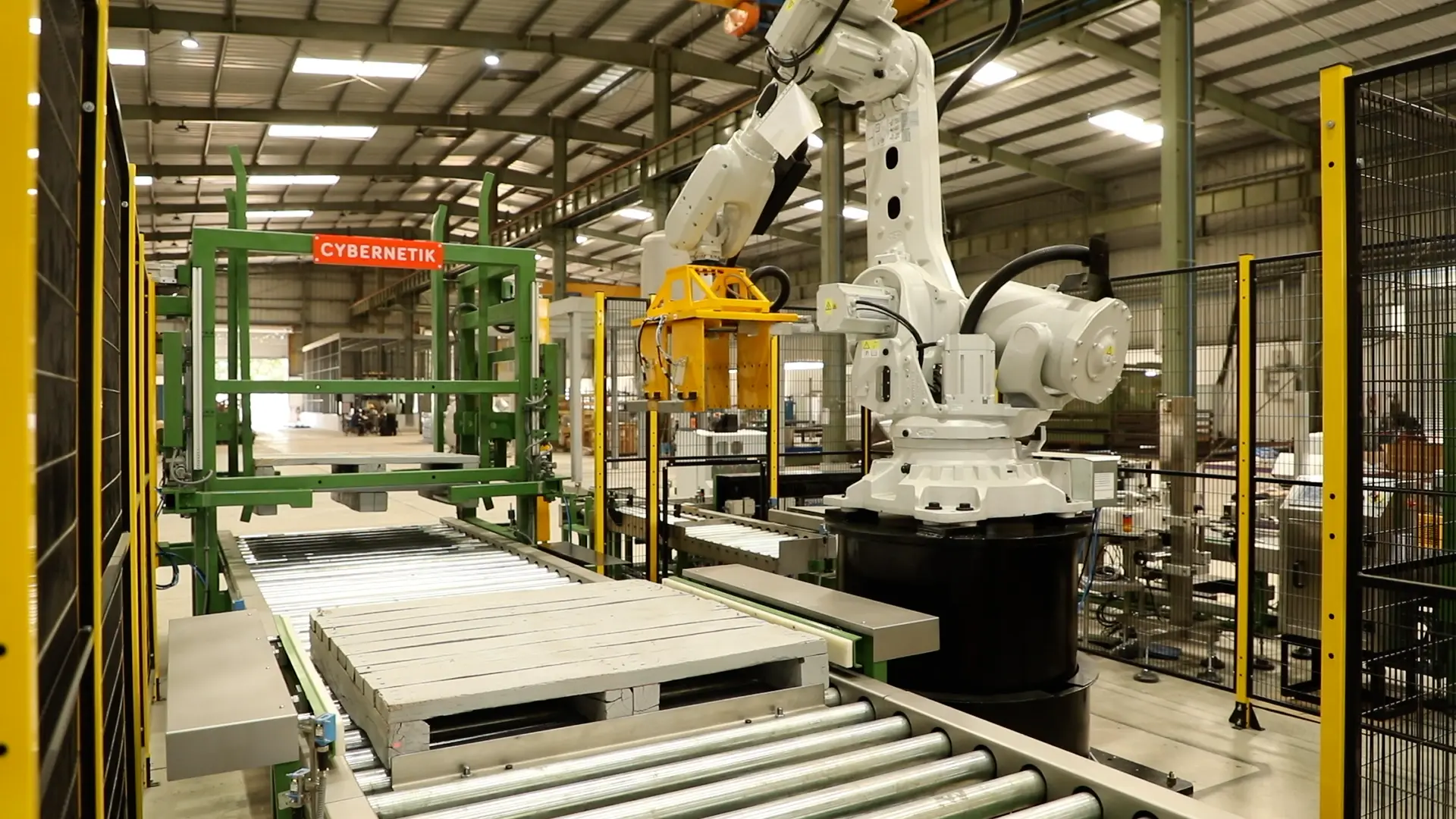
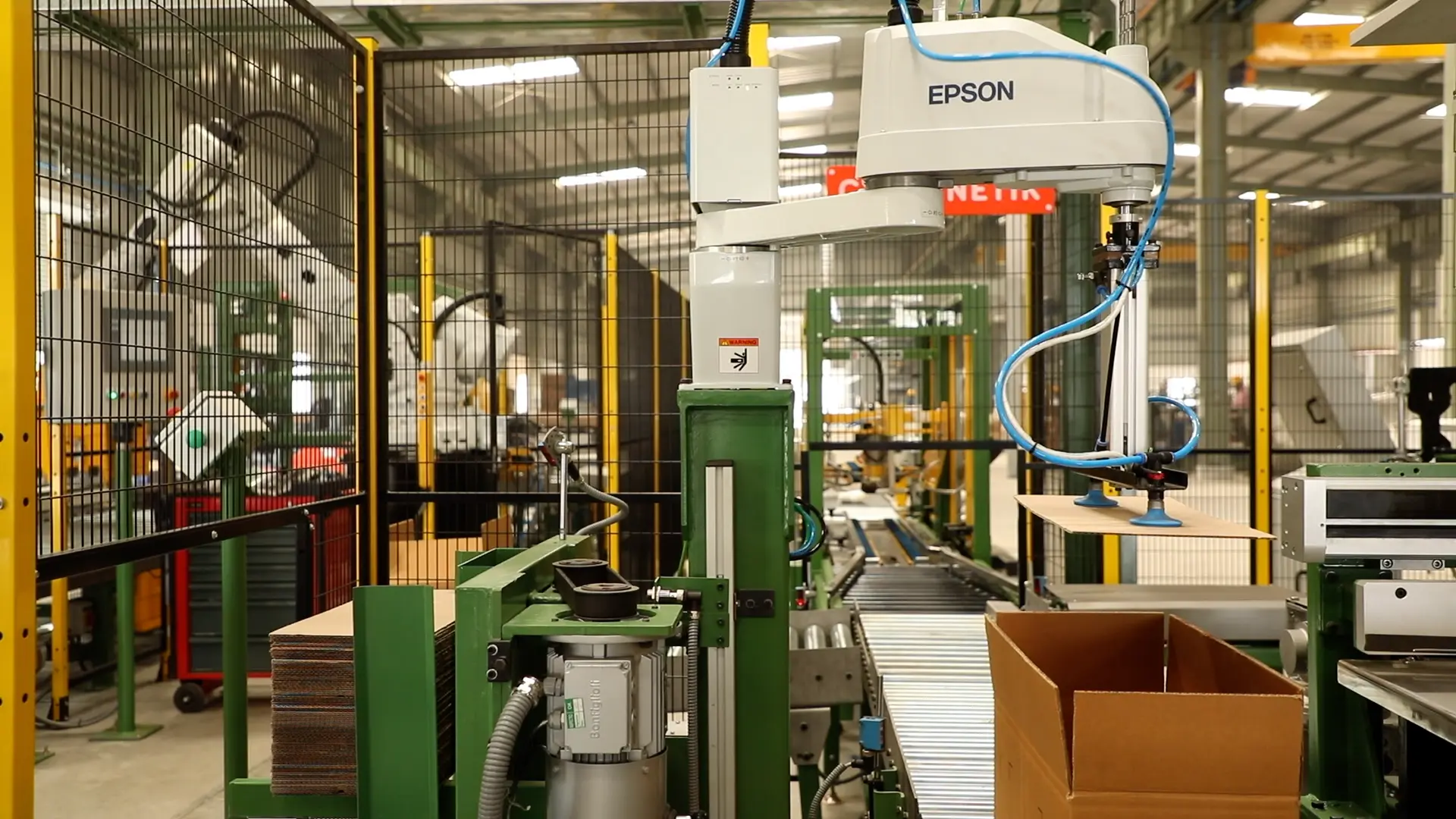
Cybernetik’s portfolio of case packers covers the major configurations on a common engineering platform: SCARA-based pouch case packers with proprietary staggered lifting for flexible packaging, six-axis robotic case packers for bottles and rigid containers, dedicated Chocolate Bar Case Packers for confectionery lines, automatic case packers paired with semi-automatic case erectors for plants automating in phases, and hybrid configurations for co-packers running mixed flexible and rigid SKUs.
Five Questions That Decide Which Case Packer Configuration Is Right
1. What Is the Dominant Product Format?
Pouches, bottles, flow-wrapped bars and blister packs each demand fundamentally different pickup mechanics. The dominant format on the line , by SKU count and by output volume , drives the arm topology choice. SCARA suits flexible packaging; six-axis suits heavy rigid; dedicated configurations suit confectionery bar formats. If two formats compete for dominance, a hybrid configuration may be the right answer.
2. What Is the Upstream Filler’s Rated Speed?
The case packer must keep pace with the filler at peak shift cadence, not at the brochure figure. A 100-bottle-per-minute filler demands a case packer that sustains 100 bottles per minute across an eight-hour shift , which typically means specifying a unit rated at 120 to allow headroom for variability. Undersizing the case packer caps the entire line at case-packer speed.
3. How Many SKUs Run on the Same Line?
Multi-SKU production rewards recipe-driven robotic case packers; single-SKU high-volume production rewards mechanical linear configurations. The threshold is roughly three to five active SKUs per line , below that, mechanical case packers can be capex-efficient; above that, the changeover cost of mechanical configurations erases the capex saving within a year.
4. What Is the Regulatory Environment?
GMP, FDA and CE compliance requirements drive build standards for case packers , stainless steel contact parts, food-grade or pharma-grade end-of-arm tooling, tamper-evident sealing integration, audit-grade traceability. Pharma, dairy and chocolate exporters cannot specify case packers that lack these as standard.
5. What Is the Downstream Palletizer Configuration?
The case packer hands off to the palletizer through shared PLC. If the palletizer is robotic and capable of multi-case picking , like Cybernetik’s Robotic Carton Palletizer handling up to three cartons simultaneously , the case packer must deliver cases at known cadence with known dimensions. If palletizing is still manual, the case packer’s outfeed becomes a buffer stage that needs separate design consideration.
Three Case Packer Categories in the Cybernetik Portfolio
Cybernetik’s case packers fall into three primary categories that map directly to product-format and throughput-band decisions.
Flexible Format Case Packers
SCARA-based case packers engineered for pouches, sachets and stick packs. Cybernetik’s SCARA pouch case packer delivers up to 40 pouches per minute with 6 kg payload and a proprietary staggered pouch lifting technique that maximizes case density without compressive loading. Best for food, pet food and pharma sachet applications.
Rigid Format Case Packers
Six-axis articulated robotic case packers for bottles, jars and rigid containers. Cybernetik’s six-axis bottle case packer delivers up to 120 bottles per minute with 200 kg payload, vision-guided multi-bottle array pickup and recipe-driven SKU changeover. Best for beverage, dairy, personal care and chemical bottling at scale.
Industry-Dedicated Case Packers
Dedicated case packers engineered for specific product categories , Cybernetik’s Chocolate Bar Case Packer for confectionery bar formats, integrated with flow wrapper feeding upstream and Robotic Carton Palletizer downstream. Best for chocolate bars, energy bars and confectionery requiring FDA-compliant build.
Side-by-Side Comparison
The table below maps the three case packer categories to the buying decisions that drive specification.
| Specification | Flexible Format | Rigid Format | Industry-Dedicated |
|---|---|---|---|
| Arm Topology | SCARA | Six-axis | Application-specific |
| Payload | Up to 6 kg | Up to 200 kg | Format-tuned |
| Throughput | Up to 40 units/min | Up to 120 units/min | Up to 400 parts/min (feeding) |
| Product Format | Pouches, sachets, sticks | Bottles, jars, rigid containers | Chocolate bars, confectionery |
| SKU Flexibility | High (recipe) | High (recipe) | Moderate (format-locked) |
| GMP Build | Available | Available | FDA standard |
| Typical Buyer | Food, pet food, pharma sachet | Beverage, dairy, FMCG bottling | Chocolate, confectionery, energy bars |
Products Cybernetik’s Case Packers Handle
Primary product types
Case and carton formats
Line integration scope
 “A case packer is more than a secondary packaging machine – it is an application-specific automation solution engineered to match your product, throughput, and production goals for long-term operational success.“

See it in action
Why Manufacturers Standardize on Cybernetik’s Case Packers
Industries Where Cybernetik’s Case Packers Are Specified
When to Update Your Case Packer Specification
Where two or more of the following appear together, evaluating Cybernetik’s case packers as a next-generation specification becomes the rational next step.
Where these conditions cluster, Cybernetik’s case packers typically deliver payback in twelve to twenty-four months on throughput recovery, changeover savings, scrap reduction and hygiene compliance combined.