
Key takeaways
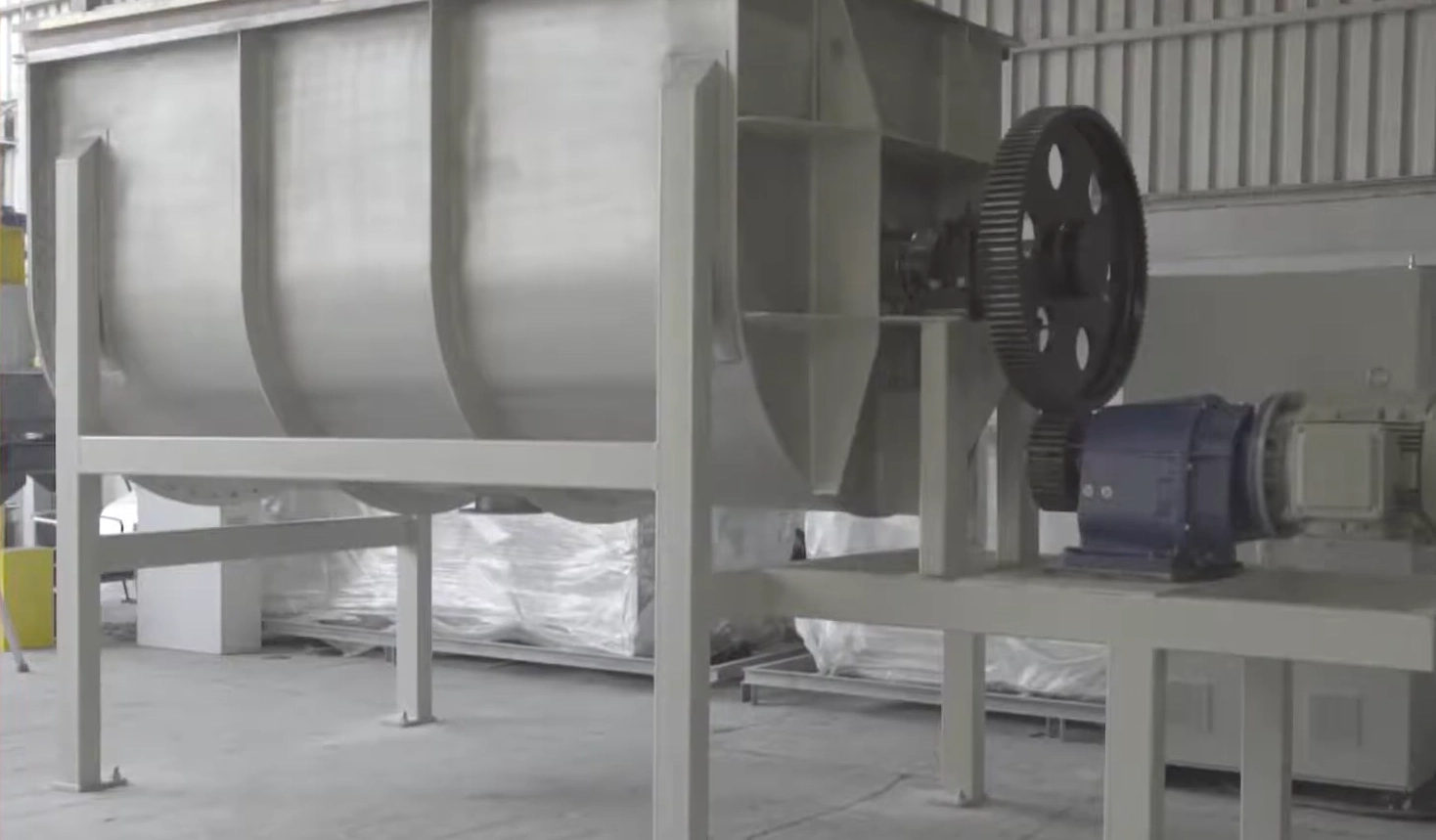
India has no shortage of ribbon blender makers. Search for one and you will find hundreds, from small workshops to large engineering companies, many showing similar photographs of a polished U-shaped trough with a double ribbon inside. On a quotation they can look almost identical. In a plant, two years later, they rarely are.
The best ribbon blender manufacturer in India for your plant is one that designs the blender around your powder and batch, builds it from certified stainless steel with consistent ribbon clearance and finish, proves it in a factory acceptance test, supplies the documents your industry needs, and can support it locally. Price matters, but only after those points are settled, because they decide how well the blender mixes and how long it lasts.
This guide explains how to tell manufacturers apart: the kinds of suppliers in the market, what to check in their workshop, the documents and tests to insist on, and how to compare a shortlist fairly.
Why the Manufacturer Matters More Than the Spec Sheet
A ribbon blender is a simple machine in principle. An outer ribbon moves material one way along the trough while an inner ribbon moves it back, and the two flows fold the batch together. Because the principle is simple, the differences between manufacturers come down to execution.
Ribbon pitch and profile, the gap between ribbon and trough, weld quality, surface finish, the shaft seal and the discharge valve all affect how evenly the blender mixes, how much product it leaves behind and how easy it is to clean. None of these show clearly on a specification sheet. Two quotes for a 1,000 liter SS316 blender can describe the same machine on paper and deliver very different results.
It is also worth confirming that a ribbon blender is the right machine before choosing who builds it. Fragile, cohesive or very fine materials sometimes suit other mixer types better, and the comparison is set out in the guide to industrial blenders.
Three Kinds of Ribbon Blender Suppliers
Most suppliers in India fall into one of three groups. None is wrong in itself, but each suits a different kind of buyer.
| Type of supplier | What they usually offer | What to watch for |
|---|---|---|
| Local fabricator | Low price, short lead time, builds to a drawing you supply | Little design input, limited documentation, uneven finish and clearances |
| Equipment manufacturer | Standard model range, own designs, documented materials and testing | May sell only the blender, leaving charging, discharge and controls to you |
| Process system supplier | Blender plus feeding, discharge, packing, controls and cleaning designed together | Higher scope means a longer specification stage and a clear scope document |
A local fabricator can be a sensible choice for a simple, non-critical application where the buyer has strong engineering in-house and supplies the design. For pharmaceutical, food and chemical plants where uniformity, hygiene and documentation matter, an established manufacturer or process system supplier is usually the safer route.
What to Check at the Manufacturer’s Workshop
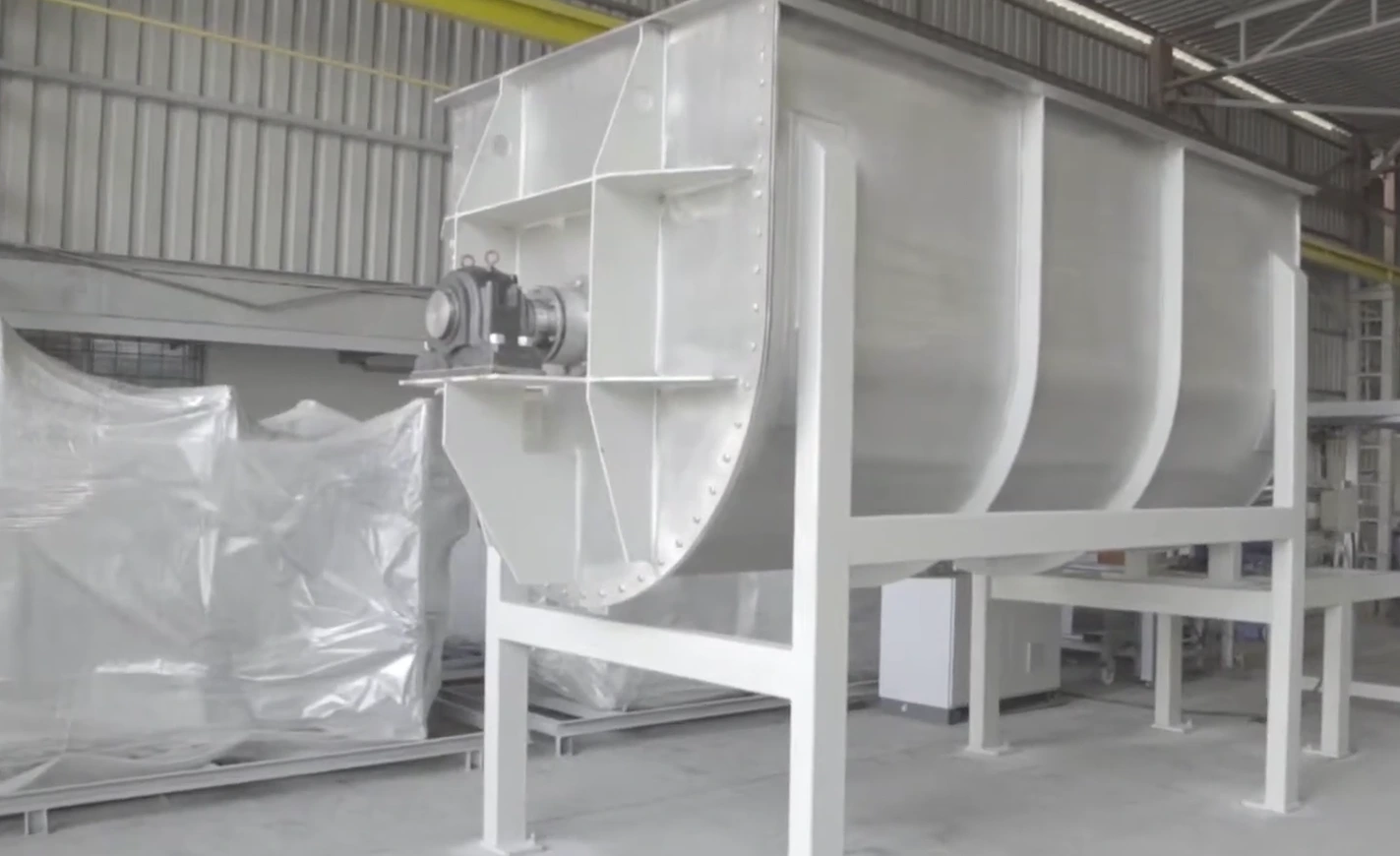
A factory visit tells you more than any brochure. You do not need to be a fabrication expert to learn a lot from an hour on the shop floor. Ask to see blenders in production, not just a finished showpiece.
| What to look at | What a good manufacturer shows you |
|---|---|
| Raw material | Stainless steel with mill test certificates, stored and marked so grade 304 and 316 cannot be mixed up |
| Ribbon fabrication | Fixtures or forming methods that give the same pitch and profile on every ribbon, not hand shaping |
| Clearance to the trough | A measured, recorded gap along the full length, since an uneven gap leaves product unmixed |
| Welding | Full penetration welds on product contact parts, ground smooth, with no crevices |
| Internal finish | A stated finish for contact surfaces, checked and recorded rather than judged by eye |
| Shaft seals and bearings | Seal type chosen for the product, with bearings mounted outside the product zone |
| Assembly and testing | Space and power to run the blender before dispatch, ideally with your material |
Questions worth asking on the visit
Documentation a Serious Manufacturer Provides
Paperwork is easy to overlook until an auditor or a breakdown makes it urgent. A manufacturer used to supplying regulated industries will offer most of these without being asked.
| Document | Why you need it |
|---|---|
| General arrangement drawing | Confirms dimensions, nozzle positions, discharge height and service access before fabrication starts |
| Material test certificates | Proves the grade of stainless steel in product contact parts |
| Factory acceptance test protocol and report | Shows what was tested before dispatch and what the results were |
| Qualification documents (DQ, IQ, OQ) | Needed by pharmaceutical and many food plants to validate equipment under GMP |
| Hazardous area documentation | Required when the blender handles flammable powders or solvents |
| Operation and maintenance manual | Gives operators and maintenance teams the procedures they will actually use |
| Recommended spares list | Lets you stock seals, bearings and wear parts before the first breakdown |
If a supplier cannot provide material certificates or a test protocol, that is a strong sign the blender has not been built to be checked. For plants that need equipment validation, missing documents can delay production long after the machine is installed.
Compliance in Indian Plants
Pharmaceuticals
Pharmaceutical plants work under Good Manufacturing Practice, and the revised Schedule M has raised expectations for Indian manufacturers. Blenders handling active ingredients and excipients need hygienic design with smooth, cleanable contact surfaces, no dead pockets, suitable materials of construction and qualification documents. Ask the manufacturer for examples of GMP blenders they have built and the validation support they provide.
Food
Food plants need hygienic construction that can be cleaned thoroughly between batches and products, particularly where allergens are involved. Discharge valves, seals and ribbon supports are the usual places where residue collects, so these deserve close attention in the design review.
Chemicals and flammable powders
Where a blender handles flammable powders or solvents, it must be built for hazardous areas. That affects the motor, electrical components, earthing and sealing. In India, flameproof electrical equipment is approved through PESO, and many manufacturers also build to ATEX for export or multinational plants. Confirm the zone classification with your safety team and make sure the manufacturer designs to it.
Range and Engineering Depth
A manufacturer with a wide standard range and the ability to customize gives you more room to choose the right size rather than the nearest one in stock. As an example of a full range, Cybernetik’s MIXG-RIBR ribbon blenders run from 100 to 10,000 liters per batch.
| Capacity (liters) | Power (hp) | Capacity (liters) | Power (hp) |
|---|---|---|---|
| 100 | 5 | 2,500 | 30 |
| 500 | 10 | 3,000 | 40 |
| 1,000 | 15 | 5,000 | 60 |
| 1,500 | 20 | 7,500 | 75 |
| 2,000 | 25 | 10,000 | 100 |
Range also matters across machine types. A manufacturer that builds only ribbon blenders will tend to recommend one. A supplier that also builds ploughshare, V and IBC blenders can suggest an alternative when your material needs it, such as a ploughshare mixer for products that need more intensive mixing.
Beyond the Blender: Integration
A blender rarely works alone. Bags or bulk bags have to be emptied into it, minor ingredients added, the batch discharged and sent on to packing, and the whole line cleaned. Each of those connections is a place where dust escapes, time is lost or product is wasted. A manufacturer that can design the material handling around the blender removes many of those problems before they reach your floor.
Cleaning is part of the same picture. In food and pharmaceutical plants, the time spent cleaning between products can matter as much as the mixing time. If you plan to automate cleaning, discuss it at the design stage, since nozzle positions and drainage are much easier to build in than to add later. The guide to choosing a CIP system covers what to plan for.
The Factory Acceptance Test
A factory acceptance test, or FAT, is your chance to see the blender work before it leaves the manufacturer. Agree the protocol when you place the order, not when the machine is ready, so both sides know what counts as a pass.
| Factory acceptance check | What it confirms |
|---|---|
| Dimensions and finish | The machine matches the approved drawing and the stated surface finish |
| Dry run | Drive, gearbox and bearings run smoothly at rated speed without abnormal noise or heat |
| Mixing trial with your material | The blend reaches your uniformity target in the expected time at your batch size |
| Discharge test | The batch empties fully, and the amount left behind is measured |
| Seal check | No product or dust escapes at the shaft seals during mixing |
| Safety interlocks | Covers, grids and emergency stops work as specified |
| Cleaning check | Contact parts can be reached and cleaned in the time your changeover allows |
Bring your own material if you can. A blender that performs well on a manufacturer’s test powder may behave differently with a cohesive or fine ingredient from your plant. If shipping material is difficult, agree a close substitute in advance.
 “The true value of a ribbon blender lies in its performance throughout its service life. Evaluating build quality, factory acceptance testing, documentation, and local service support helps manufacturers make informed investments beyond the initial purchase price.”

See it in action
Planning the Project Timeline
Delivery dates on quotes usually count from order and drawing approval, not from the first inquiry. A realistic plan allows time for each stage: agreeing the specification, approving the general arrangement drawing, fabrication, the factory acceptance test, any corrections found during the test, dispatch, installation and commissioning at site.
The stages that most often slip are on the buyer side. Drawing approval waits for comments from several departments, test material is not ready in time, or the site is not prepared when the blender arrives. Agreeing who approves what, and by when, at the start of the order keeps the manufacturer’s schedule meaningful.
For larger blenders, check access early as well. A 5,000 or 10,000 liter blender may not fit through an existing door or onto an upper floor without planning, and lifting points, foundations and platform access are much easier to agree on paper than on delivery day.
Service and Support in India
Every blender eventually needs seals, bearings or a gearbox overhaul. Downtime then depends on how far away the manufacturer’s engineers are and whether spares are in stock. Ask where service teams are based, which parts are held in India, and how quickly they commit to respond. A lower purchase price can disappear quickly if a simple seal replacement takes weeks.
Training matters too. A manufacturer that trains operators on loading order, fill level and cleaning helps the blender perform as it did during the factory test, rather than slowly drifting as habits form on the shop floor.
A Simple Scorecard for Your Shortlist
Once you have three or four candidates, scoring them against the same criteria makes the comparison clearer and easier to explain internally. The weights below are a starting point and can be adjusted to your industry.
| Criterion | Suggested weight | How to score it |
|---|---|---|
| Design and process understanding | 25 percent | Did they ask about your powder, batch, ingredients and process before quoting? |
| Build quality and documentation | 20 percent | Workshop visit, certificates, finish and FAT protocol |
| Compliance | 15 percent | GMP design, hazardous area construction and validation documents where needed |
| Integration scope | 15 percent | Can they supply charging, discharge, controls and cleaning, or will you integrate? |
| Service in India | 15 percent | Location of service teams, spares stock and response commitments |
| Price | 10 percent | Compared only after the scope of each quote has been matched |
Price comes last for a reason. Compare it only once each quote covers the same scope, materials, options, documents and testing. Otherwise the lowest number is often the one that leaves the most out.
Ribbon Blenders from Cybernetik
Cybernetik Technologies has been delivering turnkey automation since 1989. With more than 600 employees and over 6,000 projects installed, it designs and manufactures its equipment in India, with facilities in Pune, Kheda and Raigad and a design center in Pune, alongside offices in the USA and UAE. Its process division supplies turnkey process automation for powders, liquids and solids across pharmaceutical, chemical, food and agro industries.
Cybernetik’s ribbon blender range is built for uniform, gentle and quick blending with no pre-mixing required, handling materials from flour, sugar and spices to fertilizers, chemical powders and APIs.