
Key takeaways
CIP systems are usually specified by tank capacity, which is roughly like specifying a car by fuel tank size. It tells you something, but not the thing that determines whether the system will do its job.
What actually decides fitness is whether the system can deliver the required flow rate to your largest circuit, hold solution at temperature while doing it, and repeat that reliably across every product you run. A system that is correctly sized on paper and undersized on flow will clean poorly for its entire service life, and no amount of chemistry or cycle time will fix it.
This guide works through the specification in the order it should be done: map the circuits, size for flow, then make the configuration decisions, then compare suppliers on the points that matter.
Start With the Circuits, Not the Skid
Before any equipment discussion, three things need documenting for every circuit the system will clean.
Plants that skip this step almost always buy a system sized for the tank they thought about rather than for the circuit that turned out to be hardest.
Sizing the System
Flow rate
Flow is the primary sizing parameter. Cleaning depends on turbulent flow, which for most pipework means a velocity of at least 1.5 metres per second at the pipe wall. Required flow follows directly from the largest pipe diameter in the circuit.
- A 50 mm line at 1.5 m/s needs roughly 11 cubic metres per hour.
- A 75 mm line needs roughly 24 cubic metres per hour.
- A 100 mm line needs roughly 42 cubic metres per hour.
For vessels, the governing figure is spray device flow rather than pipe velocity, generally calculated from tank circumference. Whichever demand is higher across the circuits sets the supply pump duty. This is the number to fix first, because everything else follows from it.
Tank capacity
Solution tanks must hold enough volume to fill the circuit and keep the return leg supplied without the pump losing suction. A useful starting point is one and a half to two times the hold-up volume of the largest circuit. Oversizing wastes chemical and heating energy on every cycle; undersizing causes the pump to cavitate partway through recirculation, which is both a cleaning failure and a maintenance problem.
Heating load
Heating is the largest energy cost in the cycle and the most commonly underestimated line in a CIP specification. Raising 1,000 litres of water from 20 to 80 degrees Celsius takes roughly 70 kilowatt hours. Delivered over a 20 minute heat-up, that is around 210 kilowatts of heat duty. Confirm the plant’s steam or hot water capacity can actually supply that alongside production demand, because a system that heats slowly extends every cycle it runs.
Pump head
Supply pump head must overcome circuit friction losses, static lift and spray device pressure requirements at the design flow. Return pumps handle a different problem, moving a mixture of solution and entrained air out of the circuit, which is why return duty is specified separately rather than assumed to mirror supply.
The Five Configuration Decisions
1. Single-tank or multi-tank
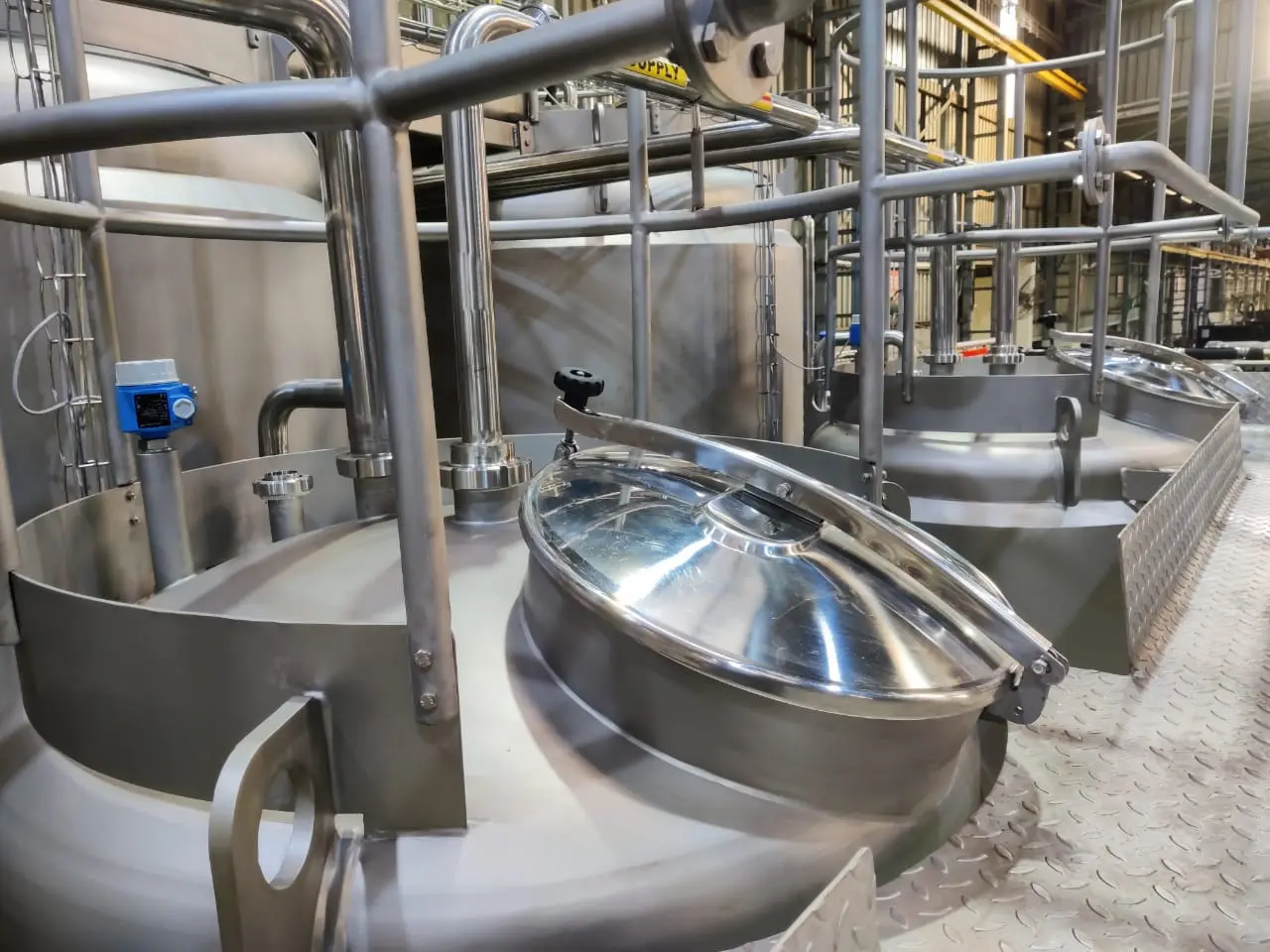
Single-tank systems are compact and lower cost, preparing each solution in turn in the same vessel. They suit smaller plants, infrequent cleaning and simple soil profiles. Multi-tank systems hold water, alkali, acid and recovered water separately, which allows solutions to be reused and cycles to run without reheating and remaking chemistry each time. As cleaning frequency rises, multi-tank pays back through chemical, water and energy savings. The configuration options are covered further on the CIP system page.
2. Single-use or reuse
Single-use sends every solution to drain after one pass, eliminating carryover risk entirely. It is the default in pharmaceutical work and in food plants handling allergens. Reuse recovers caustic and acid for many cycles and substantially reduces operating cost, at the price of needing concentration monitoring and solution condition management. The operational implications are discussed in the guide to the Clean-in-Place process.
3. Centralised or satellite
A single central system serving the whole plant through a distribution network is efficient on capital and simple to manage, but it creates long supply and return runs that hold significant solution volume and lose heat. Satellite units placed near their circuits shorten those runs and allow parallel cleaning of different areas, at higher total capital cost. Plant layout usually decides this more than preference does.
4. Automation and data level
The practical question is not whether the system is automated but what it records. Basic control runs a timed sequence. Capable control monitors temperature, flow, conductivity, chemical concentration and duration, and logs them against a batch record that can be exported and audited. If cleaning evidence will ever be requested by a customer or a regulator, specify the data layer at purchase, because retrofitting instrumentation to a running skid is expensive and usually incomplete.
5. Materials of construction
SS304 is adequate for most general food product contact. SS316 is specified where chlorides, acids or salty products are present, and throughout for pharmaceutical work. Surface finish matters alongside grade, with product contact surfaces typically polished to 0.8 micrometres Ra or better so residue has nothing to key into. Ask for material certificates and finish documentation rather than accepting a general statement of stainless construction.
Matching the System to Your Industry
Requirements diverge sharply by sector, and the configuration that is correct in one is wasteful or non compliant in another.
| Industry | What drives the requirement | Configuration this points to |
|---|---|---|
| General food processing | Frequent product changeovers, moderate soil variety, cost sensitivity | Multi-tank with recovery, SS304 product contact, recipe control per product family |
| Dairy | Protein and fat soils plus persistent mineral scale from milk | Multi-tank with a dedicated acid stage every cycle, higher temperature capability |
| Beverage | High circuit volumes, frequent short cycles, heavy water use | Reuse configuration with strong recovery, sized for large circuit flow rates |
| Pharmaceutical | Cleaning validation, carryover limits, full documentation | Single-use, SS316 throughout, purified water final rinse, audit grade data logging |
| Chemical and industrial | Aggressive residues, variable soils, corrosion exposure | SS316 construction, chemical resistant seals, flexible recipe range |
 “Choosing between single-tank, multi-tank, single-use, reuse, centralized, and satellite configurations requires understanding the plant’s circuits, cleaning frequency, product range, and compliance requirements.”

See it in action
Look at Total Cost, Not Capital Cost
CIP systems are frequently bought on capital price and paid for in operating cost. Five running costs matter, and all of them recur on every cycle.
Questions to Put to a Supplier
1. What flow rate and pressure will the system deliver to our largest circuit, and show the calculation behind it.
2. What is the tank volume relative to our largest circuit hold-up, and will suction be maintained throughout recirculation?
3. What heat duty is required, and have you confirmed our utilities can supply it during production hours?
4. How many recipes can be stored, how are they version controlled, and who can change them?
5. Which parameters are logged, at what interval, and in what exportable format?
6. Is chemical concentration controlled by conductivity feedback or dosed on a timer?
7. What water and chemical consumption per cycle should we expect at our conditions?
8. What material certificates, surface finish records and documentation come with the system?
The first question is the one that separates suppliers. A vendor who answers it with a calculation has engineered the system for your plant. A vendor who answers with a model number has not.
CIP Systems from Cybernetik
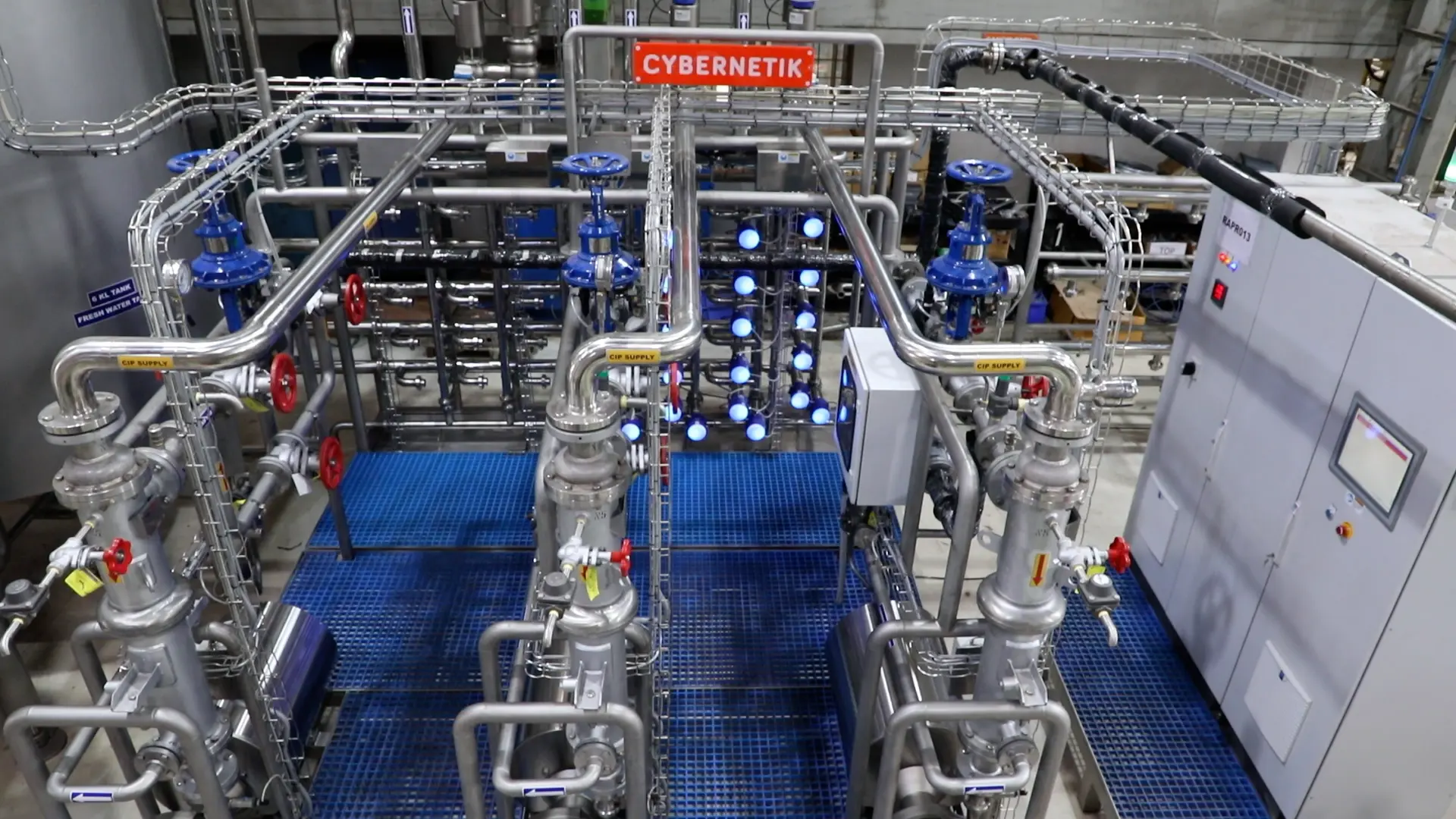
Cybernetik builds automated Clean-in-Place systems in single-tank and multi-tank configurations with capacities from 500 up to 8,000 litres, in SS304 and SS316 construction with GMP-compliant hygienic design for food and pharmaceutical manufacturing.
The company has operated for more than three decades, is headquartered in Pune with offices in the United States and the UAE, and has installed over 6,000 systems across 30 plus countries, including more than 400 custom automation solutions across food, pharmaceutical, chemical and industrial processing. Further background sits on the Cybernetik about page.