
Key takeaways
On a modern packaging line, every second of downtime translates into lost output, wasted film, and missed delivery windows. Yet for many manufacturers in food, confectionery, pharmaceuticals, and consumer goods, the weakest link is rarely the wrapping machine itself; it is the feeding stage that supplies it. Inconsistent product orientation, manual loading errors, mis-aligned wrappers, and infeed surges are the real causes of stoppages , and they are exactly what an engineered wrapper feeding system is built to eliminate.
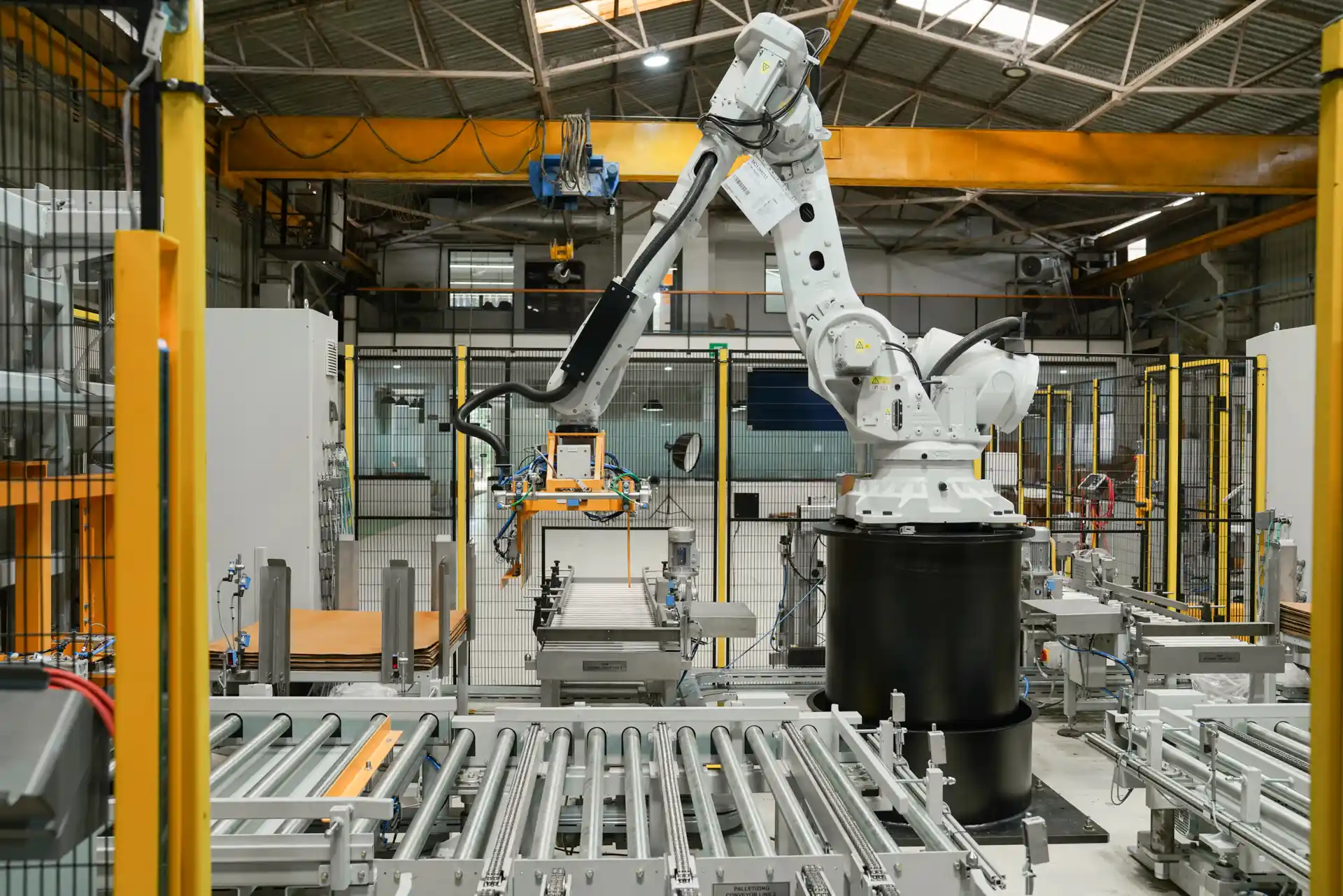
This guide explains what wrapper feeding actually does, why it matters for high-speed lines, and how Cybernetik’s two purpose-built configurations , Conveyorized Flow Wrapper Feeding and Robotic Flow Wrapper Feeding , deliver up to 400 to 480 parts per minute under GMP, food-grade conditions. Whether you are packaging enrobed chocolates, biscuits, energy bars, soaps, or pharmaceutical units, the right wrapper feeding architecture decides whether your line runs at rated capacity or limps at 60 percent.
What Is Wrapper Feeding (and Why Manual Loading Caps Your Output)
Wrapper feeding is the controlled supply of naked products into a flow wrapper at the right pitch, orientation, and rate so that each unit arrives in the wrapping film exactly when the sealing jaws are ready. It sits between your producing line, an enrober, oven, extruder, or filler, and the wrapping machine, and its job is to absorb upstream variability so the wrapper itself never starves or jams.
In a hand-fed setup, an operator places products into the infeed flights manually. That works at low speeds, but three problems compound as you scale:
Cybernetik’s Flow Wrappers Feeder line was engineered specifically to solve these failure modes. Hygienic build, ergonomic access, dedicated motors per moving section, and integrated quality control replace the operator with an in-line system that runs the wrapping machine at its rated speed, not at human-feeding speed.
How Wrapper Feeding Eliminates the Five Most Common Bottlenecks
1. Continuous, Pitched Material Flow
Both the conveyorized and the robotic configuration feed product to the wrapping film with synchronized timing. The conveyorized system uses a counter and an infeed conveyor to record presence and number of products before they enter the un-winder rollers; the robotic system uses real-time vision to guide delta robots to place products into the longitudinal slot on the outfeed conveyor. Either way, the wrapping film never waits and never receives an empty slot.
2. Vision-Guided Alignment for Random Infeed
On enrober or cooling-tunnel discharge, products arrive distributed across the belt width with no consistent orientation. The Robotic Flow Wrapper Feeding system uses a vision system that analyzes products on the infeed conveyor, rejects out-of-shape and broken units, and instructs the delta robot to pick and place only accepted products. Result: the downstream wrapper sees a perfectly oriented, perfectly pitched stream.
3. Empty- and Double-Pack Rejection
Post-wrapping quality control is built into both Cybernetik configurations. The line detects and rejects empty pouches (where no product entered the slot) and double packs (where two products entered the same slot). This is the single biggest source of pack-weight non-compliance and customer rejection on high-speed lines, and automating it removes the dependency on visual inspection by operators.
4. Reduced Manual Intervention and Lower Bacterial Load
For food and pharmaceutical applications, the GMP-built contact parts (stainless steel, food-grade belts, food-grade grippers) and minimal human involvement directly address one of the toughest specifications in the industry: keeping bacterial load low during primary packaging. Recalls in food are profitability killers, and the largest contamination risks sit at the human-handling stages , exactly the stages that wrapper feeding automates away.
5. Smooth Hand-Off to Downstream Automation
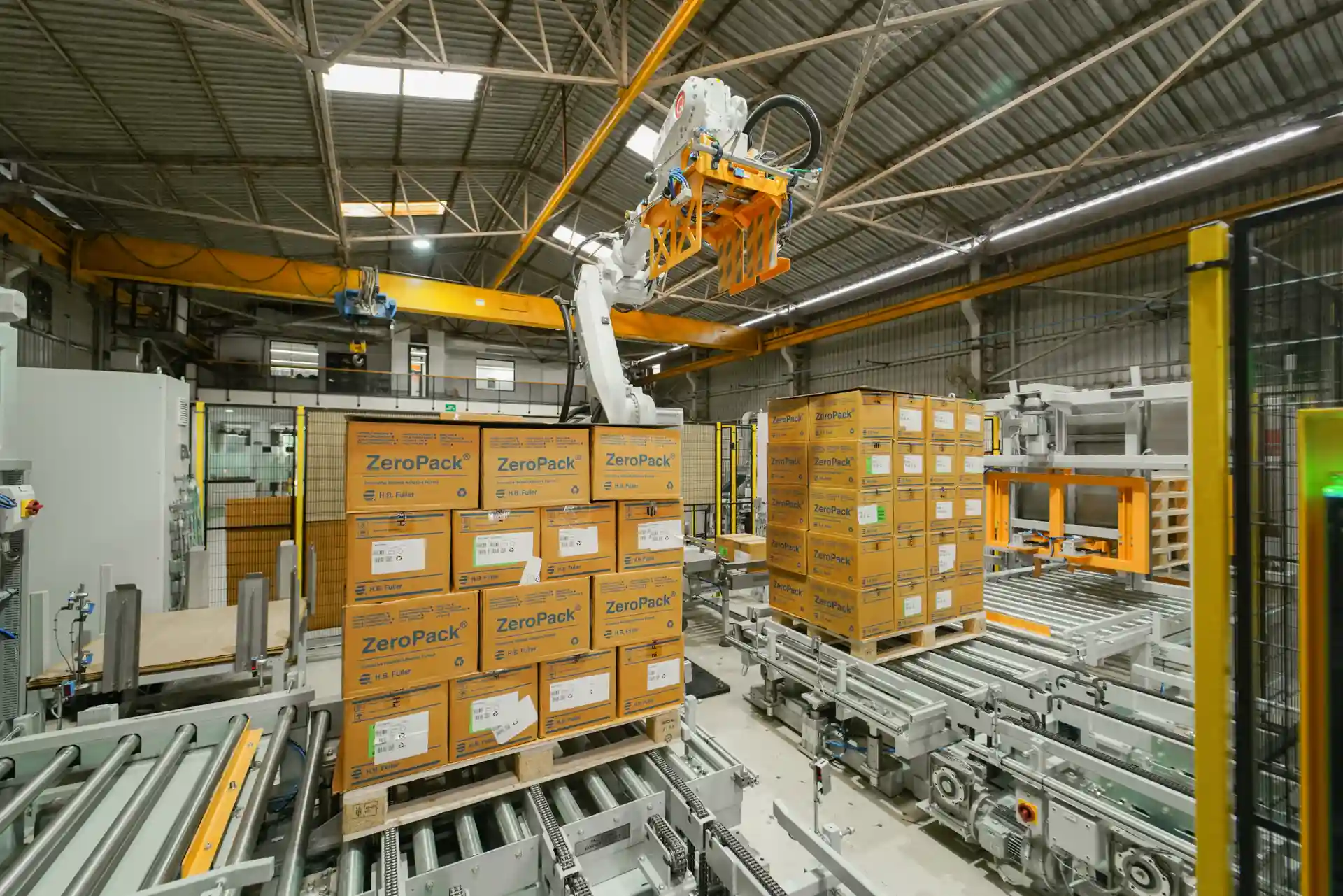
A flow wrapper does not run in isolation. It typically feeds a case packer, a cartoner, or a palletizer further down the line. Cybernetik’s Flow Wrappers Feeder is designed for upstream and downstream integration , meaning the same engineering team can stitch the feeding stage to your case packer and palletizer with a single PLC architecture, single SCADA recipe selection, and a single safety interlock chain.
Conveyorized vs Robotic Flow Wrapper Feeding: Which Configuration Fits Your Line?
Cybernetik builds two distinct wrapper feeding configurations on a common engineering platform. Both are GMP-built and food-grade compatible; the right choice depends on how products arrive at the feeding stage.
Conveyorized Flow Wrapper Feeding
Direct-contact packaging automation that wraps in-transit naked products at high speeds, designed for products that already arrive oriented on the infeed conveyor. Ideal for cookies, biscuits, energy bars, soaps, toffees, and similar regular-shape items where upstream singulation is reliable. Operations begin with the product arriving on the infeed conveyor; a counter records presence and numbers; multiple rollers on the un-winder feed the film, which is wrapped longitudinally and sealed with transverse cuts to complete the wrap. Quality control rejects defective pouches at the outfeed.
Robotic Flow Wrapper Feeding
Vision-guided delta-robot pick-and-place primary packaging for products that arrive randomly distributed and randomly oriented along the belt width , the typical condition after enrobing, panning, or cooling tunnels. The Cybernetik Robotic High Speed Pick and Place System for Enrobed Chocolate, for example, combines two vision systems and four delta robots to reach speeds of up to 480 parts per minute, with main PLC + SCADA control for recipe selection and FDA-compliant build for international markets.
Side-by-Side Specifications
The table below compares the two configurations on the parameters that matter most for a packaging engineer or plant head evaluating a line investment.
| Specification | Conveyorized Flow Wrapper | Robotic Flow Wrapper |
|---|---|---|
| Speed | Up to 400 parts/min | 100 parts/min per robot (up to 480 parts/min in 4-robot pick & place line) |
| Material of Construction | SS (contact), CS (non-contact), food-grade belts | SS (contact), CS (non-contact), food-grade belts |
| Sound Level | Up to 80 dB | Under 80 dB |
| Footprint | 3.5 x 1 x 2 m | 5 x 2 x 4 m (full line) |
| Best For | In-transit, oriented naked products | Random orientation; vision-guided pick & place |
| Typical Application | Cookies, biscuits, energy bars | Enrobed chocolates, candies, soft confectionery |
| Quality Control | Empty + double pack rejection | Vision rejects broken/out-of-shape; empty + double pack rejection |
| Hygiene | GMP-built, food-grade contact parts | GMP-built, food-grade grippers |
Products and Wrapper Types Cybernetik’s Wrapper Feeding Line Handles
The platform is application-agnostic within the food, confectionery, pharma, and FMCG segments. Across installed lines globally, the same engineering platform has been configured for:
Products handled
Wrapper types compatible
 “A wrapper feeding system doesn’t just supply products to a flow wrapper; it synchronizes product flow, precision handling, and automation to eliminate bottlenecks and maximize packaging performance.”
See it in action
The Cybernetik Advantage: Engineering Decisions That Make the Difference
Across more than 30 countries and four manufacturing facilities, Cybernetik has refined a set of build standards that translate directly into uptime and total cost of ownership for the customer:
When Should You Move from Manual or Semi-Automatic to a Full Wrapper Feeding System?
If your line shows any combination of the symptoms below, a full wrapper feeding system will pay back faster than incremental fixes:
Where two or more of these are true simultaneously, the business case for a Cybernetik wrapper feeding line is typically self-funding within 12 to 24 months on labor, yield, and uptime savings alone.