
Key takeaways
When a packaging line is designed or upgraded, the investment conversation almost always centres on the filling machine, the primary wrapper, or the palletizer. The case erector , the machine that forms the corrugated case before any of this product goes into it , rarely gets the same attention. This is a costly oversight.
A high-speed robotic case packer running at 120 bottles per minute requires five formed, base-sealed cases delivered to the loading station every minute. If those cases are formed manually, an operator is sustaining 4 – 8 cases per minute , a rate that either starves the loading station or forces the case packer to idle between cycles.
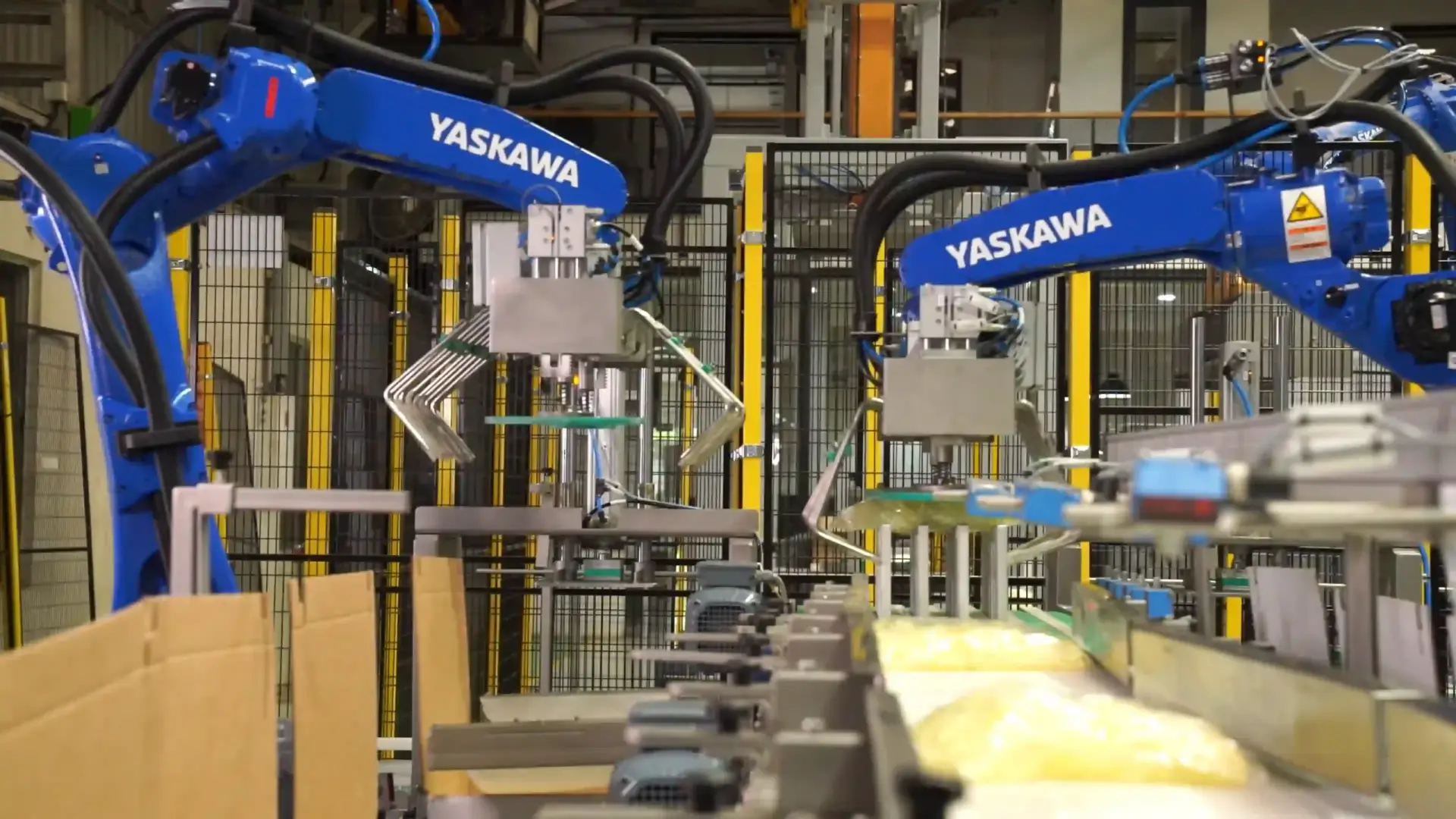
The robotic case erector is the machine that closes this gap. By forming, squaring, and base-sealing corrugated cases at the speed the downstream case packer demands, it transforms case supply from a manual bottleneck into a synchronised, automated input.
What Is a Robotic Case Erector?
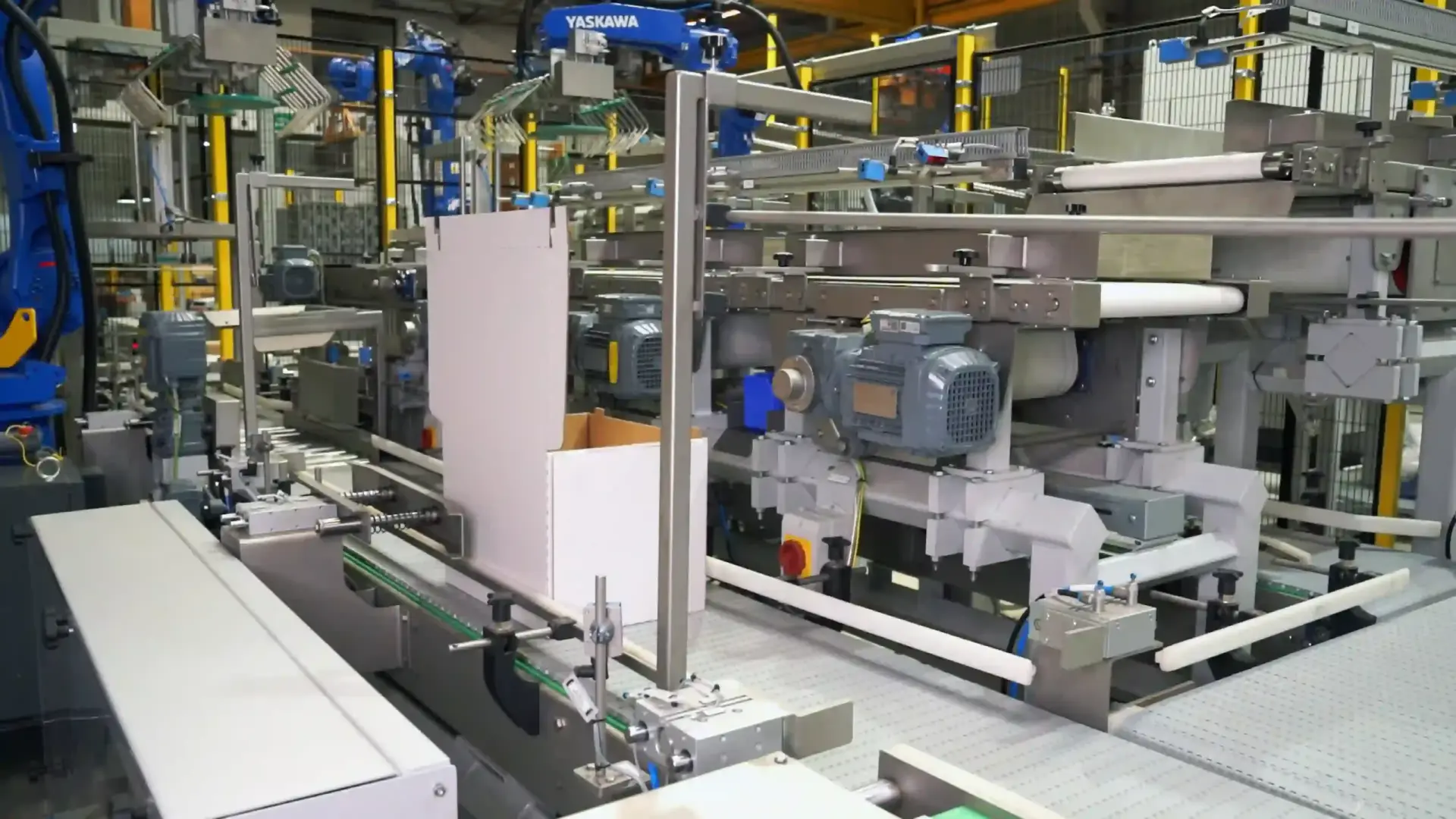
A robotic case erector is an automated machine that takes flat corrugated blanks from a magazine, unfolds them using vacuum or mechanical grippers, squares the corners under controlled tension, and seals the base, either with hot-melt adhesive or pressure-sensitive tape, before conveying the formed case to the loading station.
| Type | Throughput | Operation |
|---|---|---|
| Manual case forming | 4–8 cases/min | Operator forms by hand, variable quality |
| Semi-automatic erector | 8–15 cases/min | Machine squares, operator confirms |
| Robotic case erector (fully automatic) | Matched to case packer demand | Unattended , synchronised with downstream |
How a Robotic Case Erector Works: The Five-Stage Sequence
Step 1. Blank Magazine and Feed
Flat corrugated blanks are stacked in a magazine hopper. The erector draws one blank at a time using vacuum cups or mechanical grippers. Consistent, jam-free blank feed at high cycle rates is the most mechanically demanding aspect of case erection.
Stage 2. Opening and Squaring
The blank is folded along its pre-scored lines and opened into a rectangular profile. Servo-controlled squaring plates apply controlled pressure to all four corners simultaneously, ensuring the case is perfectly rectangular before base sealing.
Stage 3. Base Flap Folding
The base flaps are folded inward in the correct sequence, minor flaps first, then major flaps, by mechanical folders operating in synchronised sequence.
Stage 4. Base Sealing
For adhesive sealing: hot-melt glue is applied to the base flaps in a controlled bead pattern. For tape sealing: pressure-sensitive tape is applied across the base flap junction in a single pass. Adhesive provides faster cycle times and higher seal strength; tape provides cleaner opening at the distribution centre.
Stage 5. Case Discharge
The formed, sealed case is conveyed to the loading station and positioned below the case packer’s carton guide funnels, held in reference position by mechanical stops, ready for the robot to place the product matrix.
Why Robotic Case Erectors Are Central to Modern Packaging
1. Synchronised Speed , Eliminating the Starvation Risk
On a robotic case packing line, the loading station’s productivity is determined by the slowest upstream input. A robotic case erector synchronised to the downstream case packer eliminates case supply as the limiting factor. The loading station operates at its mechanical maximum.
2. Consistent Base Seal Quality
Robotic adhesive application produces the same bead pattern, coverage, and set time on every cycle. The result is a consistent, repeatable base seal that holds under the full dynamic load of stacked pallets. Manually taped cases vary in seal overlap, tape tension, and corner coverage.
3. Recipe-Driven Multi-Format Capability
On a recipe-driven robotic case erector, a format change is executed at the HMI , the servo-controlled squaring plates and fold guides adjust automatically to the new case dimensions. When the case erector operates under the same PLC architecture as the downstream case packer, a single recipe selection updates both machines simultaneously.
4. Removing Open-Case Contamination Risk
A robotic case erector removes direct manual contact from the inside of open cases. The blank magazine is loaded by an operator , an indirect contact , and the entire forming, sealing, and conveyance sequence is completed without human hands entering the case interior. For food-grade secondary packaging, this is a compliance requirement, not just an efficiency consideration.
5. Magazine Capacity as a Run-Time Multiplier
A magazine holding 200 blanks on a line running at 5 cases/min provides 40 minutes of unattended operation per refill. This is the time window that allows a single operator to manage multiple case packing systems simultaneously.
 “A robotic case erector doesn’t just form cartons; it eliminates the upstream bottleneck that limits the performance of the entire packaging line.”

See it in action
Industries That Benefit Most From Robotic Case Erectors
| Industry | Key Benefit |
|---|---|
| Beverages | 5 cases/min at 120 bottles/min – erector must never stall the loading station |
| Food & Confectionery | GMP-compatible, no case interior contact – mandatory for food-grade lines |
| Personal Care | Recipe-driven multi-format – switch between 12 and 24-bottle case sizes in under 5 min |
| Pharmaceuticals | cGMP construction, contamination-free, documented compliance for audit |
| Chemicals | Adhesive base sealing provides structural integrity under heavy pallet stacking loads |
Specification Checklist
| Parameter | What to Confirm |
|---|---|
| Erection speed (cases/min) | Matches downstream case packer with 15–20% headroom |
| Blank format range | All active case sizes with recipe-driven adjustment |
| Base sealing method | Adhesive vs. tape – driven by downstream handling requirements |
| Magazine capacity | Sufficient unattended run time between refills |
| Control architecture | Shared PLC/SCADA with downstream case packer and palletizer |
| Format changeover method | Recipe-driven HMI – no manual mechanical adjustment |
| Hygiene compliance | GMP-compatible contact surfaces |