
Key takeaways
In secondary packaging, the case packer gets most of the attention. But walk back one step from the case packer on any high-speed line and you find the machine that actually controls whether the case packer can run at its rated output: the case erector. Without a correctly formed, consistently squared case arriving at the right rate, the case packer stalls, the robot reaches for an empty or mis-shaped case, and the whole secondary line stops.
A case erector takes flat-packed corrugated cases from a magazine, opens them, seals the bottom flaps, and presents a properly formed case to the infeed of the case packer , at the exact rate the packer needs, without human involvement. It is the machine that removes case forming from the operator’s hands and replaces it with a controlled, repeatable, auditable process that scales with the rest of the secondary packaging line.
This guide explains exactly what a case erector does, how it connects to the case packer and the rest of the secondary line, where Cybernetik integrates case erectors into its bottle, shrink-pack, and confectionery packaging systems, and when investing in a case erector is the right decision for your secondary packaging stage. Understanding the case erector is foundational to understanding how a modern case packer line actually works.
What Does a Case Erector Actually Do?
A case erector performs four sequential operations:
- Magazine feed, flat-packed corrugated cases are loaded into a magazine hopper. The erector pulls one flat case at a time from the magazine.
- Case opening, the flat case is mechanically or pneumatically popped open into its three-dimensional box shape.
- Bottom flap folding and sealing, the bottom flaps are folded in the correct sequence and sealed with hot-melt glue or pressure-sensitive tape to form a secure base.
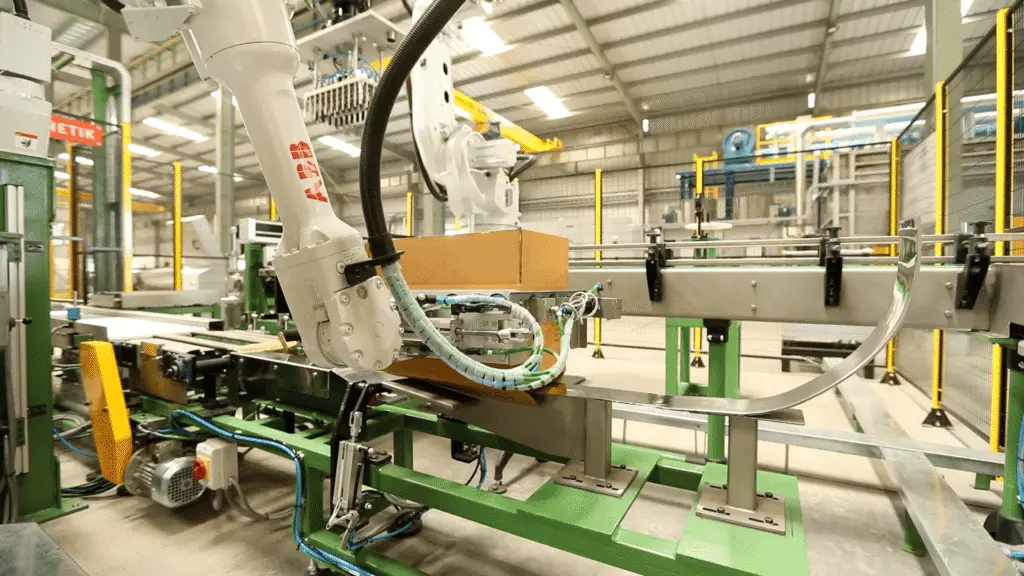
- Case presentation, the formed, sealed, squared case is conveyed to the infeed of the case packer, precisely positioned for robot pick-up or conveyor loading.
Every case the case packer receives has been formed by the erector to the same internal dimensions, with the same base-seal integrity, and with the same squareness. This consistency is what allows the case packer to run at rated speed without manual re-squaring, re-positioning, or case rejection.
Integrated Secondary & Tertiary Bottle Packing System
Why a Case Erector Is Critical for High-Speed Lines
The Manual Case-Forming Bottleneck
On a low-throughput line running 10 to 15 cases per hour, manual case forming is manageable. An operator opens each case, folds the bottom flaps, tapes the base, and passes it to the packing station. This works until the line speed increases , which it always does as production volume grows.
At 20 to 30 cases per minute, manual forming is physically impossible for a single operator and inconsistent across a team. Mis-formed cases arrive at the case packer out of square, which causes the robot gripper to misplace product, which creates jams and rejects. The case packer , however capable , runs at a fraction of its rated output because the case supply is the constraint.
The Case Erector Solves the Supply Problem
A case erector running in synchronization with the case packer ensures the case supply never lags the packing speed. In Cybernetik’s bottle case packer, for example, the operation explicitly starts with the carton erector unfolding and forming flexible cartons before the matrix station assembles the bottle matrix and before the pick-and-place robot loads the bottles. Remove the erector and that entire sequence stalls at step one.
Consistency That Protects Packing Quality
Beyond speed, a case erector protects the consistency of the cases the packer receives. Hot-melt base sealing creates a uniform, consistent bond that manual taping cannot replicate across shifts. Squared cases with consistent internal dimensions allow the robot to place the exact matrix without adjustment. Consistent base integrity means cases survive the palletizer and the transport chain without base failures.
How a Case Erector Integrates with the Case Packer and the Full Secondary Line
A modern secondary packaging line runs as a connected system , not as isolated machines. The case erector is the first station in that system and its output rate sets the ceiling for everything downstream. The integration architecture looks like this:
In Cybernetik’s shrink-pack case packer, an optional case erector can be added upstream to further automate the process, and adding a case top and bottom taping system followed by a case palletizer at the downstream makes this an end-to-end automated setup. In Cybernetik’s turnkey confectionery line, a robotic case erector is specified alongside robotic palletizing as part of a complete SS304, FDA-approved line.
The key integration requirement is that the case erector, case packer, and downstream equipment share a single PLC and safety interlock chain. This allows the control system to stop all stations simultaneously when any one station detects a fault , protecting product integrity and operator safety across the full line.
 “Automating case erection removes one of the last manual bottlenecks in secondary packaging and creates a stable foundation for end-of-line efficiency. “

See it in action
Where Cybernetik Integrates Case Erectors in Its Secondary Packaging Lines
Bottle Case Packer Line
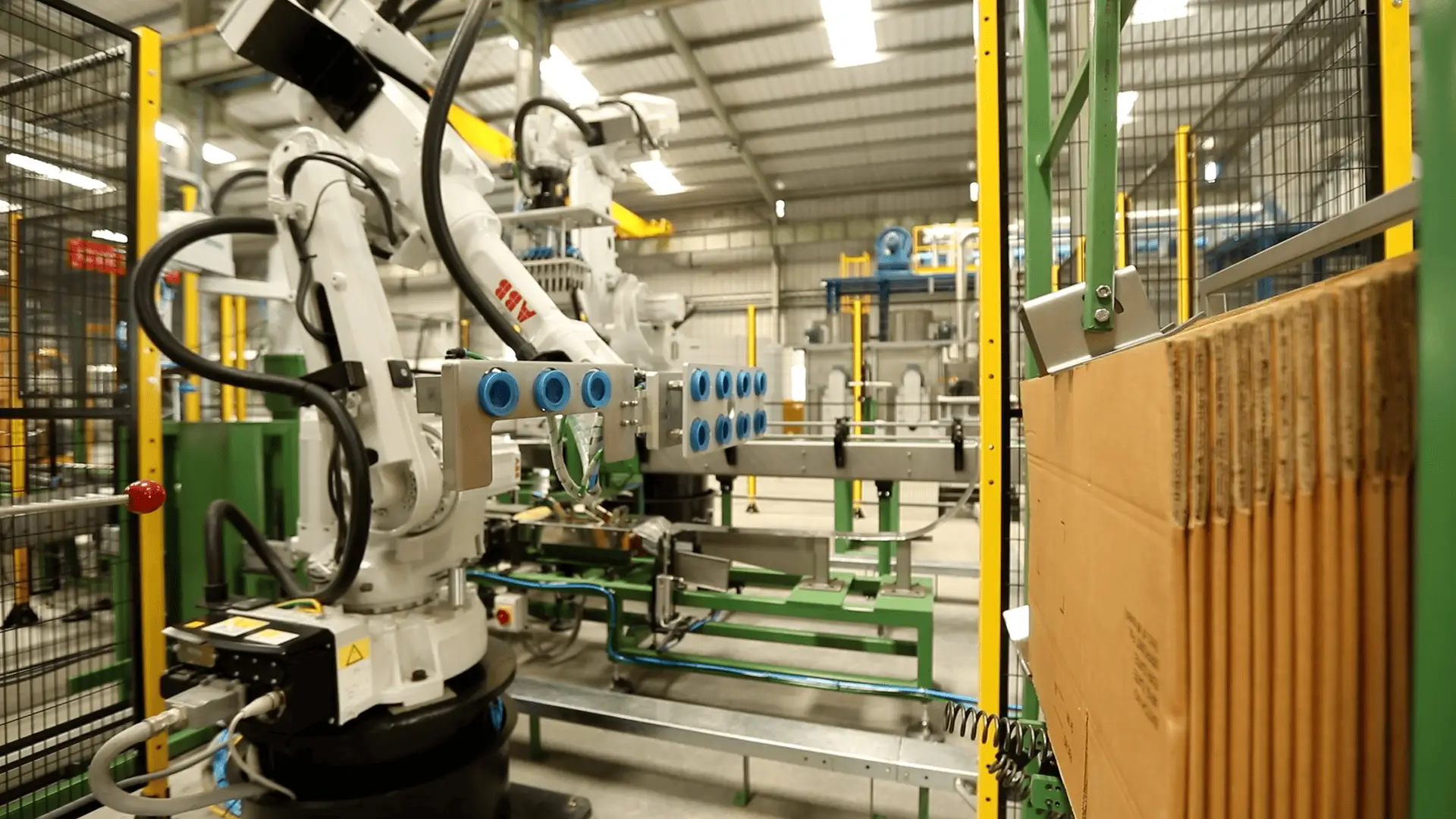
In Cybernetik’s Case Packer for Bottles, the carton erector is the first operational stage. It unfolds and forms flexible cartons before the matrix formation station assembles the bottle matrix and before the pick-and-place robot , with servo or pneumatic grippers , lifts the matrix into the formed case. The vision system then checks for defective bottles and cartons before the case moves downstream. The automatic tool changer on the robot enables rapid switching between bottle variants without stopping the erector.
Shrink-Pack Case Packer Line
In Cybernetik’s Case Packer for Shrink Packs, a case erector is available as an optional upstream addition. The erector upstream plus a case top and bottom taping system and case palletizer downstream creates an end-to-end automated setup. The shrink pack case packer serves carbonated drinks, energy drinks, juices, functional beverages, and flavoured water lines.
Confectionery and Chocolate Turnkey Lines
Cybernetik’s turnkey confectionery line , complete SS304, FDA-approved construction for chocolate manufacturing , includes a robotic case erector alongside metal detectors, wrappers, multi-head weighers, pouch packing, check weighers, secondary packing, and robotic palletizing. In this configuration, the case erector is part of a single integrated line with a main PLC panel and HMI for recipe selection.
When to Invest in a Case Erector
The business case for adding a case erector to your secondary packaging line is clear when two or more of the following are true: