
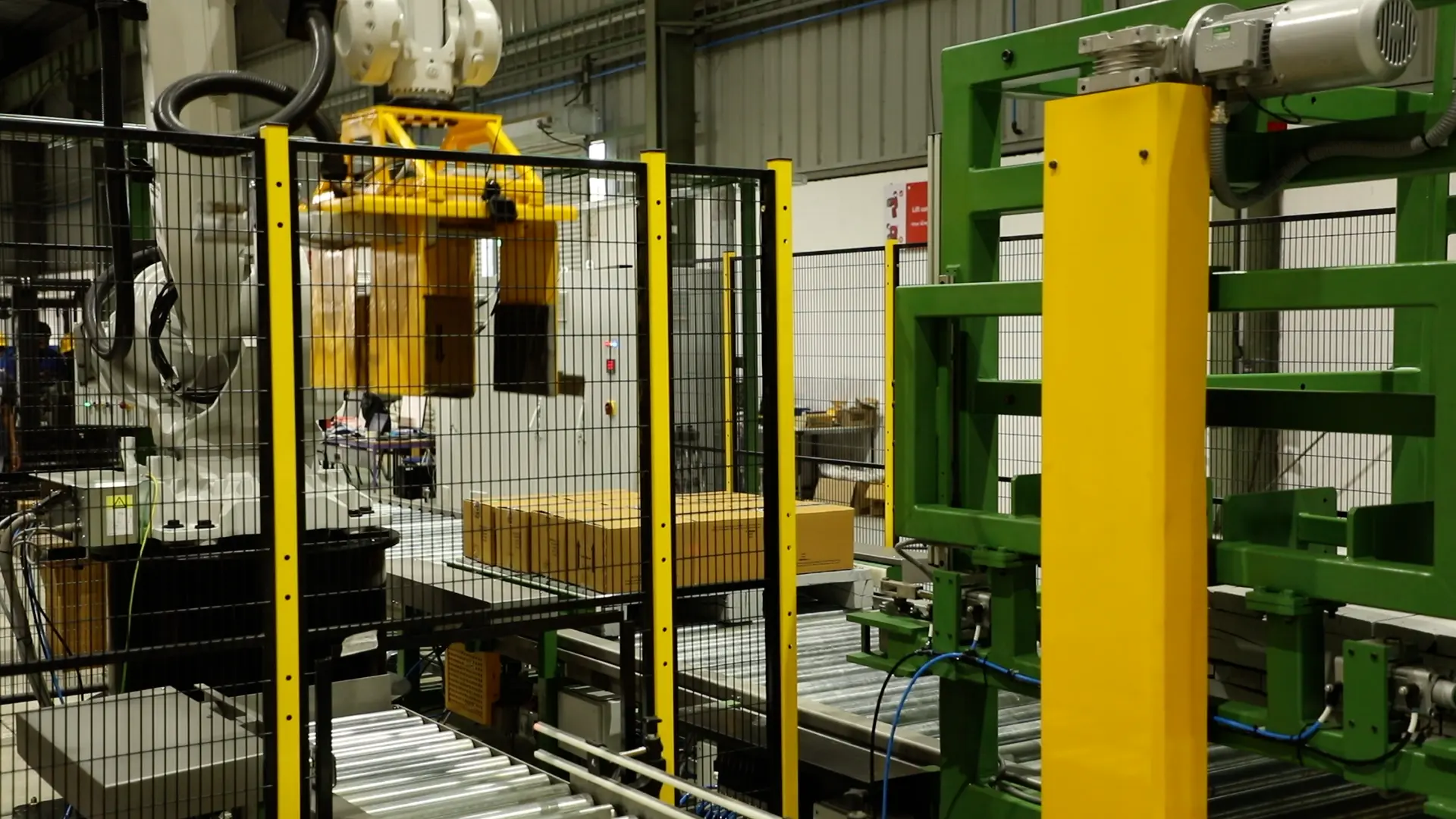
Key takeaways
A case packer is a long-term capital investment. A well-specified system from a capable manufacturer will run reliably for 10–15 years, sustaining throughput targets, enabling format changes efficiently, and supporting the quality control obligations the line must meet.
A poorly specified system, or a well-specified system from a manufacturer without the after-sales capability to support it, becomes an ongoing production liability within 18 months.
Evaluating case packer manufacturers correctly before purchase is the single most important decision in the case packing investment process. This guide covers eight criteria that separate genuinely capable case packing manufacturers from commodity suppliers.
Criterion 1, Technical Capability and Throughput Honesty
The first question to ask any case packer manufacturer is: what is the rated throughput of this system at our specific product weight, case format, and product type?
The distinction is important. Manufacturers routinely publish peak throughput figures. The number that matters for your investment decision is the sustained throughput at your product weight, at your fill variation tolerance, at your heaviest case format , across an 8-hour shift, not during a 10-minute demonstration.
Cybernetik’s Case Packers are rated at up to 40 pouches/min (SCARA, up to 6 kg payload) and up to 120 bottles/min (Six Axis, 200 kg payload) , with sustained performance across full shifts validated through the installed base across 30+ countries.
Criterion 2, Product and Format Handling Range
The best case packer manufacturers build product-specific systems, with end-of-arm tooling designed for the actual product geometry, not adapted from a catalogue gripper.
Cybernetik builds four distinct configurations for pouches, bottles, shrink packs, and dual-mode shrink packs & bottles , each with purpose-engineered subsystems rather than adapted generic architecture.
Criterion 3, Integration Architecture and PLC Compatibility
A case packer from any manufacturer must integrate with your upstream primary packaging line and your downstream palletizer. The integration architecture determines whether this is a smooth commissioning process or a six-month fault-finding exercise after go-live.
Cybernetik’s case packers and all palletizer configurations operate under shared PLC/SCADA architecture , a single recipe selection updates matrix formation and palletizing pattern simultaneously.
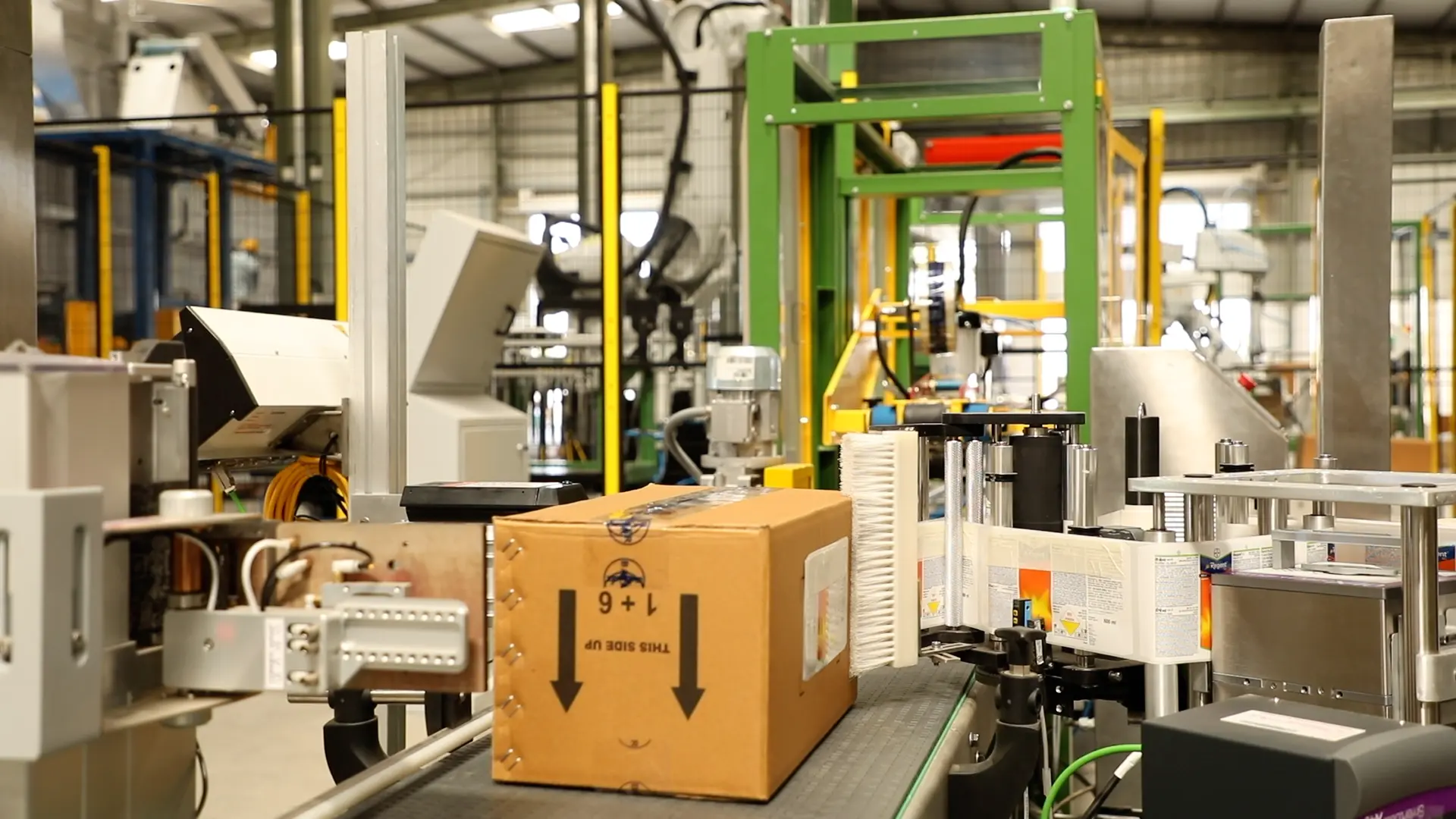
Credits:
Criterion 4, Quality Control Features
Quality control features on a case packer are not optional enhancements, for food, beverage, and pharmaceutical manufacturers they are commercial and regulatory necessities.
| QC Feature | Why It Must Be Standard | Risk If Absent |
| Missing unit detection (pre-seal) | Confirms every matrix cell occupied before sealing | Short-count cases reach retailer , chargeback + compliance incident |
| Vision inspection | Detects defective products and misformed cartons | Defective cases sealed and shipped |
| Track and trace | Case-level data linking to production batch | Cannot meet retail/pharma traceability requirements |
Criterion 5, Changeover Capability and Time
For a multi-SKU line, changeover time is a direct determinant of weekly productive capacity. A case packer that requires 35 minutes of manual reconfiguration for a format change on a line performing 4 changes per week loses 120+ hours of productive capacity annually.
Target: under 10 minutes total changeover time for any active format pair, including case packer, carton erector, and downstream palletizer.
Criterion 6, Compliance Certifications
| Certification | Required For |
|---|---|
| CE marking | Europe and most international markets |
| GMP-compatible construction | Food applications – surface materials and cleanability |
| cGMP compliance documentation | Pharmaceutical applications |
| ATEX (if applicable) | Applications involving flammable dusts or solvents |
| FDA-compatible construction | US food and pharmaceutical export markets |
| ISO 12100 risk assessment | Safety – required for valid CE marking |
Ask for documentation, not just verbal assurance. Cybernetik’s case packers are CE-certified with food-grade contact surfaces and documented GMP/cGMP compliance, with ISO 12100 risk assessments provided at commissioning
Criterion 7, Installed Base, References, and Industry Experience
Cybernetik has delivered case packing and end-of-line automation systems across 30+ countries. Project videos are available on the Cybernetik YouTube channel , showing systems running at rated speed in production environments.
 “The right case packer is only as reliable as the manufacturer behind it; engineering expertise, integration capability, and long-term support ultimately determine the success of the investment.”

Cybernetik packaging engineering team
See it in action
Criterion 8, After-Sales Support Coverage
Cybernetik operates from four manufacturing facilities with global sales offices , providing local sales and service support across all geographies where its systems are installed.
Case Packer Machine Price: The Correct Frame
| Cost Category | Manual/Semi-Auto | Automatic Robotic |
|---|---|---|
| Capital cost | Lower | Higher |
| Annual labor cost (loading operators) | High (2 ops × 3 shifts × 250 days) | Minimal (monitoring only) |
| Annual changeover time cost | High (30–45 min × changes/week × 52) | Low (under 10 min × changes/week × 52) |
| Annual quality failure cost | Higher (missing units, defective cases) | Lower (automated detection) |
| 5-year total | Often 2–3× capital cost higher | Often 30–40% lower than semi-automatic |
Cybernetik provides ROI modelling as part of the consultation process , comparing your current secondary packaging cost against the projected 5-year total cost of ownership for an automated case packing system.