
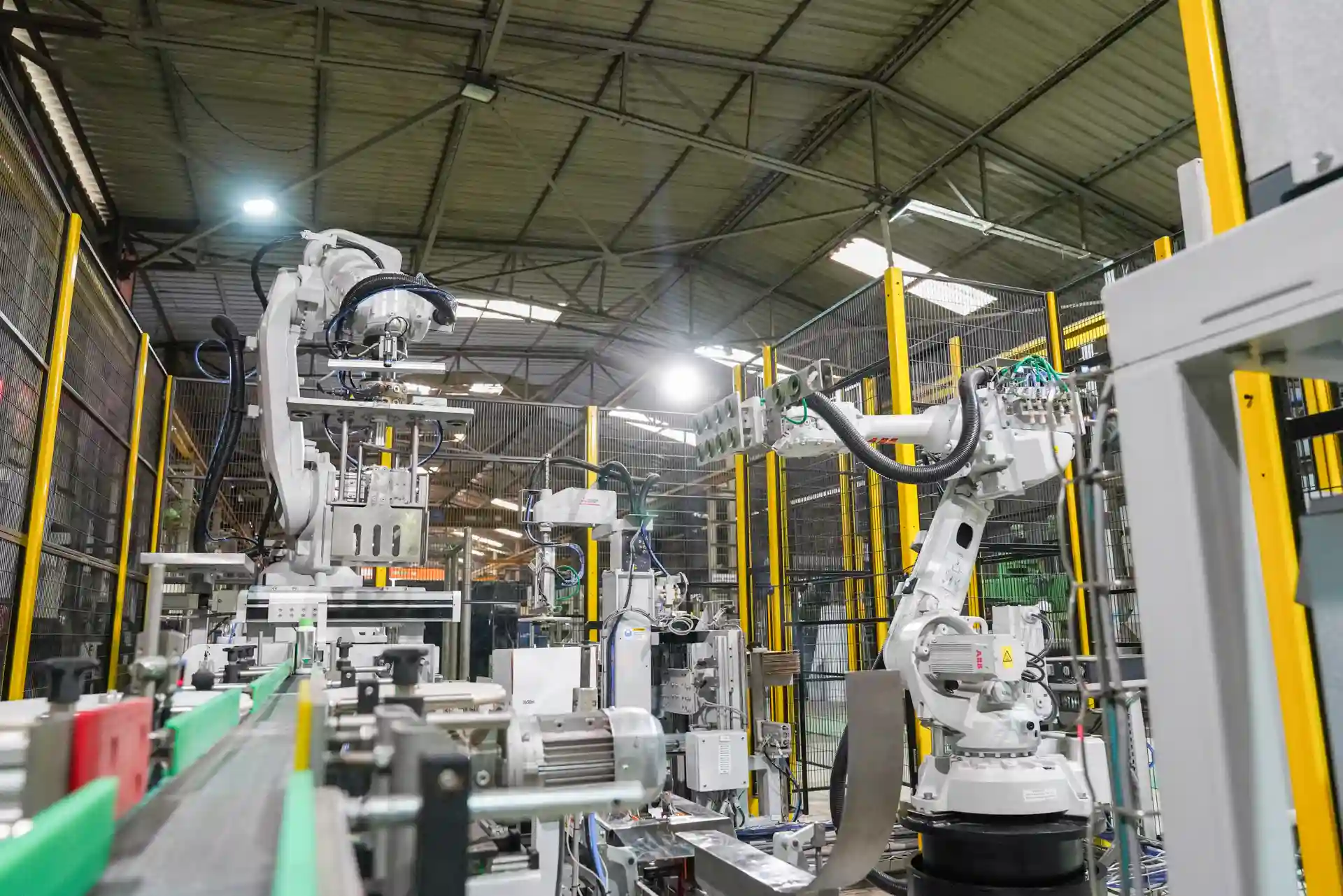
Key takeaways
Bottle packaging equipment covers the full sequence of machines that take a filled, capped bottle off the production line and turn it into a sealed, labelled, palletized shipping unit ready for distribution. Each machine in that sequence has a specific function, and each one is a potential throughput constraint or quality failure point if it is undersized, mismatched to the line speed, or not integrated correctly with the machines upstream and downstream.
Understanding the main types of bottle packaging equipment , what each machine does, where it sits in the line, and what specifications matter at each stage , is the foundation for making a sound investment in secondary and end-of-line automation. This guide covers the five main categories of bottle packaging equipment used across food, beverage, pharmaceutical, and personal care manufacturing, with Cybernetik’s specific configurations used as the technical reference throughout.
Whether you are specifying a complete new line, upgrading an existing secondary stage, or evaluating which bottle packaging equipment category is the right next investment for your operation, this guide gives you the technical context to make that decision with confidence.
The Five Types of Bottle Packaging Equipment in the Secondary and End-of-Line Stage
Type 1: Case Erector, Forming the Outer Case
The first piece of secondary bottle packaging equipment on any automated line is the case erector. It takes flat-packed corrugated cases from a magazine hopper, opens them into their three-dimensional shape, seals the bottom flaps with hot-melt glue or tape, and presents a correctly formed, squared case at the infeed of the case packer. Without a case erector, manual case forming becomes the throughput ceiling on the secondary line.
In Cybernetik’s bottle case packer system, the operation starts with the carton erector unfolding and forming flexible cartons before any other secondary packaging step occurs. The case erector and case packer share a single PLC and safety interlock chain, so the erector speed automatically matches the packer’s cycle rate.
Type 2: Case Packer for Bottles, Loading Bottles into Cases
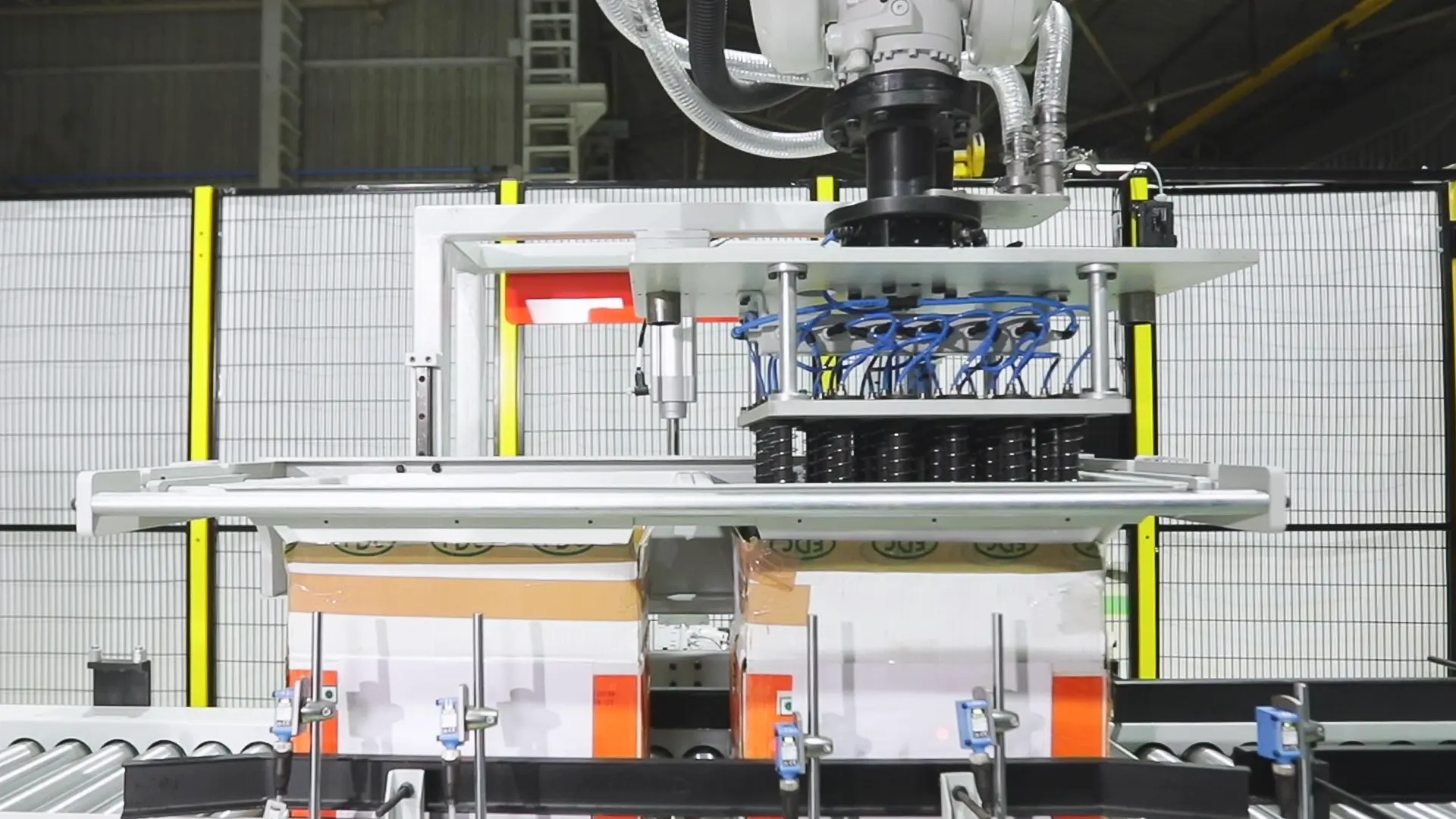
The case packer for bottles is the core of the secondary bottle packaging stage. It picks finished bottles from a matrix formation station and loads them into the formed case in the required arrangement. Cybernetik’s Case Packer for Bottles is a flexible system for packing bottles of multiple types at high speed in customizable matrix formations.
Key specifications at this stage: the robot type and payload (Cybernetik’s Six-Axis configuration reaches up to 120 bottles per minute with a 200 kg payload), the automatic tool changer that enables rapid switching between bottle variants, servo and pneumatic end-of-arm grippers that handle different bottle diameters and neck geometries, and the vision system that inspects every bottle and carton for defects before the case is sealed.
Type 3: Case Packer for Shrink Packs , Loading Multi-Pack Formats
For beverage lines that run both individual bottles and shrink-wrapped multipacks, a 6-pack or 24-pack shrink format, a case packer for shrink packs is the secondary packaging equipment at the outer case loading stage. Cybernetik’s Case Packer for Shrink Packs uses a single pick-and-place robot with dynamic gripper sizing for simultaneous loading of two shrink packs. Carton guide funnels descend with the gripper during the last part of the placing process for last-mile placement accuracy.
Beverage applications include carbonated drinks, energy and sports drinks, wellness beverages, juices, functional beverages, and flavoured water. The same line can be configured with an optional case erector upstream and a case palletizer downstream for full end-to-end automation.
Type 4: Combo Bottle and Shrink Pack Case Packer, Flexibility Across Formats
Cybernetik’s Case Packer for Shrink Pack and Bottles is bottle packaging equipment that handles both individual bottles and shrink pack formats on the same line with an automatic tool changer, rapidly switching between formats without stopping the line. 3D Point Cloud technology scans for missing bottles to improve matrix accuracy. Matrix formation for both bottles and shrink packs is customizable, and changeover of the carton guide funnel is rapid and ergonomic.
This configuration is the right answer for beverage and dairy lines running mixed format portfolios, where the same production floor alternates between individual bottle SKUs and shrink multipack SKUs across the same shift.
Type 5: Palletizers, Stacking Cases for Dispatch
The final category of bottle packaging equipment is the palletizer. After the case packer fills and seals the outer case, the case moves through taping and printing before reaching the palletizer, which stacks cases onto pallets in the required formation for transport. Cybernetik’s palletizer range for bottle case packer lines includes the Robotic Carton Palletizer (high-performance, custom-built for cartons, rigid boxes, and corrugated cases), the Cobot Palletizer & Case Printer (prints batch labels before palletizing), and the Multiple Line Carton Palletizer (one robot handling multiple production lines simultaneously).
How to Match Bottle Packaging Equipment to Your Line Speed
The most common bottle packaging equipment specification error is selecting machines based on average throughput rather than peak throughput. A beverage line running at an average of 60 bottles per minute can surge to 90 during a shift peak. A case packer rated to 60 will jam at 90. A palletizer rated to 60 will accumulate a backlog that stops the case packer, which stops the filling line.
The industry standard is to specify each piece of secondary bottle packaging equipment to 20 to 30 percent above the primary line’s peak throughput, not its average. For Cybernetik’s bottle case packer, that means using the Six-Axis configuration rated to 120 bottles per minute even if the current filling line peaks at 80, because the packaging equipment will still be running when the filling line is upgraded next year.
Quality Control Built into Bottle Packaging Equipment
Every stage of the secondary bottle packaging sequence is a quality control checkpoint. A well-specified bottle packaging equipment set integrates these control points:
 “Every piece of bottle packaging equipment has a specific role, but the greatest value comes when all stages operate as one integrated system.“

See it in action
Industries That Use Bottle Packaging Equipment
Where two or more of these are true simultaneously, the business case for Cybernetik’s automatic case packing is typically self-funding within 12 to 24 months on labor, scrap and uptime savings alone.