
Key takeaways
Nobody publishes bottle packing machine prices, and there is a reason. The same procurement enquiry , ‘we need a bottle packing machine’, can generate quotes that vary by a factor of ten depending on what the asker actually meant. A semi-automatic bottle packer for a 30-bottle-per-minute line and a six-axis robotic bottle case packer for a 120-bottle-per-minute compliance-grade pharma line are both legitimately bottle packing machines. They are also legitimately ten times apart on the price tag. Headline price comparison without specification context is therefore worse than useless, it actively misleads procurement.
This guide is the engineering view of bottle packing machine price. It walks through what actually drives the number on the quote, how throughput, payload, vision capability, compliance build and SKU library each move the figure, and how to evaluate total cost of ownership instead of headline capex. If you are at the point of comparing bottle packing machine prices across vendors, the framework below ensures you are comparing equivalent specifications rather than equivalent vocabulary.
What Is a Bottle Packing Machine, in Pricing Terms?
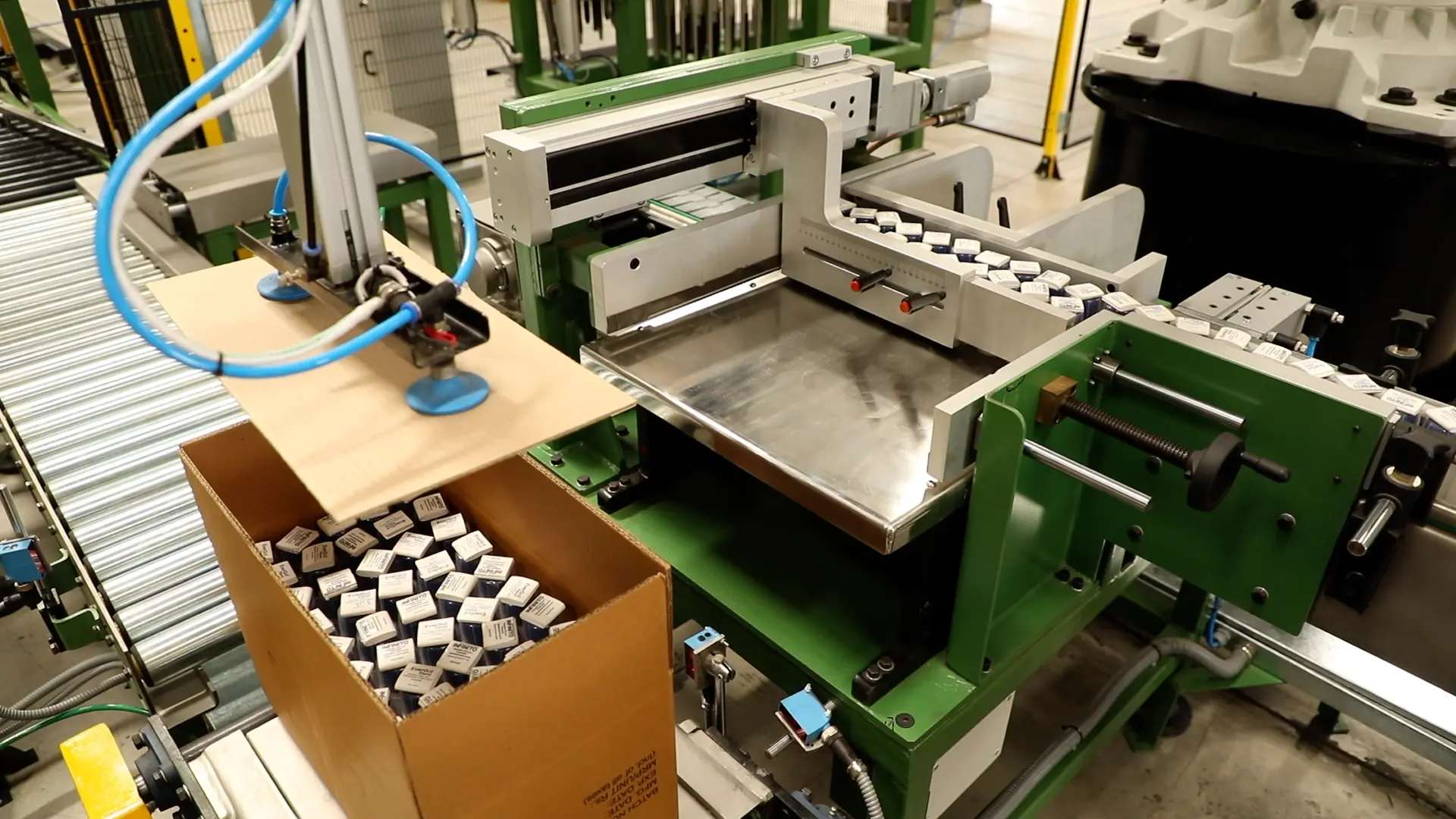
A bottle packing machine is the equipment that takes filled, capped and labelled bottles from the upstream labeller and loads them into a corrugated case, display carton or shipping container in a defined arrangement. The same physical category covers semi-automatic units at the entry of the price scale, mid-tier fully-automatic SCARA configurations, six-axis robotic units at the top of the standard range, and high-specification GMP or FDA-built systems beyond that.
What separates one bottle packing machine price from another at the bid stage is the combination of throughput target, payload class, vision integration depth, compliance build standard, recipe library size and line integration scope. A bottle packing machine priced cheaply but specified inadequately will cost more across its operating life than a correctly-specified unit priced higher upfront, total cost of ownership is the load-bearing pricing metric, not headline capex.
Cybernetik’s bottle packing machine portfolio is priced across the specification spectrum. Entry-tier semi-automatic configurations serve plants approaching automation in phases. Mid-tier fully-automatic SCARA bottle packers serve light-payload pharma and condiment applications. The six-axis robotic bottle case packer at up to 120 bottles per minute and 200 kg payload serves high-volume bottling at scale, with GMP and FDA build available for regulated international markets. Pricing follows specification, every quote details what the buyer gets at the proposed price.
Five Factors That Move the Bottle Packing Machine Price
1. Throughput Target Drives the Mechanical Class
Throughput is the first cost driver because it determines the mechanical class. A 30-bottle-per-minute requirement opens semi-automatic and SCARA options; a 60-bottle-per-minute requirement narrows to mid-tier robotic; a 120-bottle-per-minute requirement requires six-axis with multi-bottle array picking and 200 kg payload. Each step up the throughput ladder is a step up the mechanical class and a step up the price.
2. Payload Capability at Working Reach
Payload determines whether the machine can pick multi-bottle arrays per cycle (high-throughput) or only single bottles (low-throughput). The six-axis 200 kg payload class is materially more expensive than the 50 kg pharma class, but enables throughput the pharma class cannot reach. Specifying payload below need caps throughput; specifying above need over-pays.
3. Vision Integration Depth
Vision-native bottle packing machines (vision designed into motion path from day one) carry a higher capex than vision-retrofit configurations (vision bolted on after). The vision-native premium pays back through throughput preservation, retrofitted vision imposes cycle dwell that caps speed regardless of arm capability. Cybernetik’s bottle packing machines are vision-native as standard.
4. Compliance Build Standards
GMP-as-built bottle packing machines (stainless steel, pharma-grade EOAT, audit-grade traceability) carry a meaningful capex premium over standard food-grade builds. FDA-as-built for North American and European pharma export adds further. Compliance build is non-negotiable in pharma; it is unnecessary in many FMCG applications. Right-sizing compliance to actual regulatory environment is a major TCO lever.
5. Line Integration Scope
A bottle packing machine quoted standalone is cheaper than one quoted as part of an integrated line (erector + packer + sealer + palletizer + unified PLC). The integration scope changes the price materially, but plants that buy standalone machines often spend the saving plus more on integration consulting downstream. Single-vendor integration scope is typically the lower TCO path even at higher headline capex.
Three Bottle Packing Machine Price Tiers
Bottle packing machine prices cluster into three tiers that map to throughput, payload and compliance class. Naming the tiers without naming numbers, both because pricing is highly project-specific and because honest comparison requires specification matching, helps frame the discussion.
Entry-Tier Bottle Packing Machine Price
Semi-automatic bottle packing units with manual or assisted loading, automatic case erecting and automatic case sealing. Throughput sits in the 10–30 bottles per minute range; payload is low; vision is optional; compliance is standard food-grade. The right tier for plants approaching automation in phases or running predominantly single-SKU operations at moderate volume. Cybernetik supplies entry-tier configurations as the first step in a phased automation roadmap.
Mid-Tier Bottle Packing Machine Price
Fully-automatic SCARA or light six-axis bottle case packers with recipe-driven changeover. Throughput sits in the 30 – 80 bottles per minute range; payload is mid-class; vision is native; GMP build is available. The right tier for multi-SKU mid-volume bottling operations across pharma, condiment, sauce and personal care. Cybernetik’s SCARA bottle packer and pharma six-axis configurations sit in this tier.
High-Specification Bottle Packing Machine Price
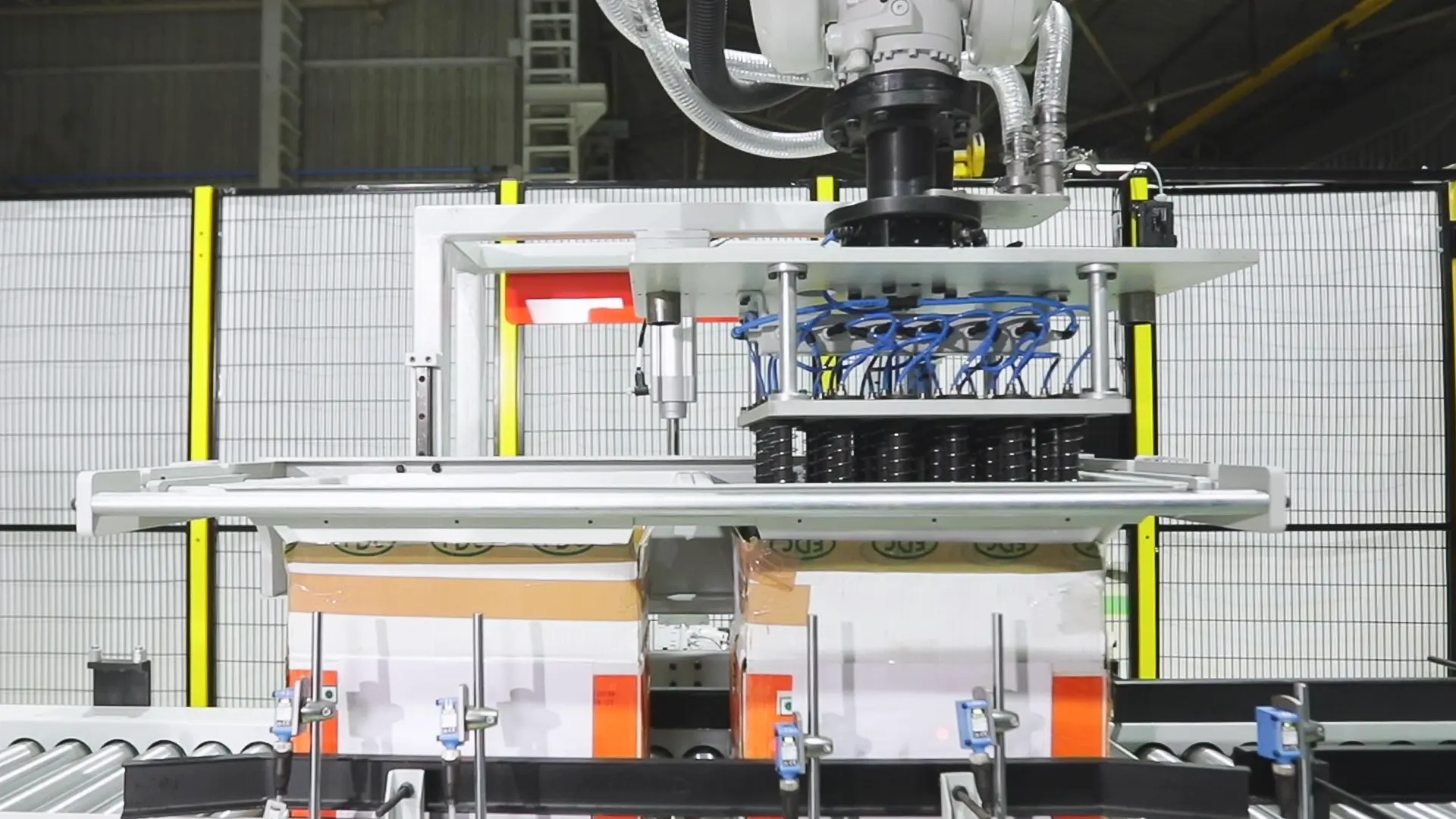
Full six-axis robotic bottle case packer with multi-bottle array picking, 200 kg payload, vision-native pickup, GMP or FDA-as-built compliance and full line PLC integration. Throughput reaches 120 bottles per minute; recipe library supports 50+ SKUs. The right tier for high-volume regulated beverage, dairy and pharma bottling. Cybernetik’s flagship six-axis robotic bottle case packer sits in this tier.
Side-by-Side Comparison
The table below maps the price tiers to the specification drivers that determine the position on the price spectrum.
| Price Driver | Entry-Tier | Mid-Tier | High-Specification |
|---|---|---|---|
| Throughput | 10 – 30 bottles/min | 30 – 80 bottles/min | 80 – 120+ bottles/min |
| Payload Class | Up to 6 kg | Up to 50 kg | Up to 200 kg |
| Vision Integration | Optional retrofit | Vision-native | Vision-native with integrity QC |
| Compliance Build | Food-grade standard | GMP available | GMP or FDA as built |
| Recipe Library | Limited (5) | Extensive (20+) | Full (50+) |
| Line Integration | Standalone | Optional full line | Full line standard |
| TCO Profile | Low capex, mid opex | Balanced | High capex, low opex |
What You Get at Each Bottle Packing Machine Price Point
Entry-tier inclusions
Mid-tier inclusions
High-specification inclusions
 “Investing in the right bottle packing machine means choosing application-specific engineering that reduces operating costs while maximizing productivity and scalability.“

See it in action
The Cybernetik Advantage in Bottle Packing Machine TCO
Industries Where Bottle Packing Machine Price Right-Sizing Matters Most
When to Re-Evaluate Your Bottle Packing Machine Investment Profile
Where two or more of the following describe your current operation, the bottle packing machine specification (and its price tier) has likely drifted from what your line actually needs.
Where these conditions appear together, scoping a Cybernetik bottle packing machine on right-sized specification rather than headline price typically delivers payback in twelve to twenty-four months on operating cost recovery, throughput recovery and compliance closure combined.