
Key takeaways
The EU battery passport has one fixed point and a lot of moving parts. The fixed point is the date: from 18 February 2027, electric vehicle batteries, light means of transport batteries and industrial batteries above 2 kWh need a digital passport to be sold in the EU. The moving parts are nearly everything that sits underneath that date, from how carbon footprints are calculated to who is allowed to see which data.
That combination causes a particular kind of paralysis. Plants see details still changing and conclude it is safer to wait. The deadline does not move while they wait.
This article sets out what the passport is, what is settled and what is not, and what it actually asks of a manufacturing plant, which turns out to be more specific than most summaries suggest.
What the Passport Is
The passport is a digital record for each individual battery, reached through a QR code printed or engraved on the battery itself. It gives regulators, recyclers, repairers and the public access to information about that battery, with different groups seeing different levels of detail.
Two features matter most for a plant. It is per battery, not per model, so every unit needs its own identity. And it lives for the life of the battery, so some of its contents are expected to be updated after the battery leaves the factory.
The wider shift this represents, from traceability as good practice to traceability as a condition of market access, is covered in the piece on smart battery manufacturing. This article stays on the rules themselves and what they require on the floor.
Who Carries the Obligation
The regulation applies to anyone placing a battery on the EU market, whether a manufacturer, an importer or an authorized representative, regardless of where the company is based. It is directly applicable across all EU member states, with no national version to wait for.
For a manufacturer outside the EU, that can create a false sense of distance. The legal obligation may technically sit with an importer or representative, but they cannot create the data themselves. Identity, build details, test results and site-level carbon figures all originate in the plant that built the battery. Whoever carries the legal responsibility will need that plant to supply the data, reliably, for every unit.
What Goes In It
| Passport content | Where the data comes from | The plant’s role |
|---|---|---|
| Identity and technical specifications | The pack manufacturer | Creates the identifier and links it to chemistry, capacity, voltage and model |
| Carbon footprint | Manufacturing site, batch and supply chain | Measures energy and emissions at site and batch level, and gathers supplier figures |
| Recycled content | Material and cell suppliers | Collects and verifies supplier declarations and ties them to what was built |
| Due diligence on raw materials | The supply chain | Holds supplier evidence and links it to the batteries it covers |
| State of health | The battery management system in service | Makes sure the BMS is paired to the pack so in-service data can attach to it |
| Conformity and manufacturer details | The manufacturer | Maintains declarations and technical documentation per battery model |
| Dismantling and end-of-life information | Design and engineering | Keeps the information current for the configuration actually shipped |
Reading down the right-hand column shows the plant’s real job. For some items it creates the data. For others it gathers data from suppliers. For the state of health it makes a link that lets data added later attach to the right battery. In every case the plant is the point where the pieces come together around a single identity.
It is worth knowing that the first version is lighter than the full list. Guidance on the initial 2027 passport indicates that basic identification, type, model and key technical characteristics are what is required at the first stage, with further performance and durability data expected to follow through later rules. That does not make the rest optional. It means the foundation has to be right first, because everything added later attaches to it.
What Is Settled and What Is Not
| Item | Status | What it means for a plant |
|---|---|---|
| Battery passport | Mandatory from 18 February 2027 for EV, light means of transport and industrial batteries above 2 kWh | A fixed date to build toward |
| Labeling and QR code | Labeling requirements phasing in, with the QR code arriving ahead of full passport data | Marking capability on the line is needed early |
| Carbon footprint declaration | Nominal dates set, but application tied to methodology and format acts not yet in force | Start measuring now; exact method may still shift |
| Access rights for non-public data | Implementing act running behind its legal deadline | Who sees what may be clarified late |
| Due diligence obligations | Postponed to August 2027 | Supplier evidence still has to be gathered in advance |
| Recycled content minimums | Minimum targets from 2031 onward | Declarations now, thresholds later |
The pattern in that table is the key to reading the situation correctly. The obligations on industry have largely held their dates. Several of the detailed rules the EU itself was due to publish have slipped. Recent reporting noted the Commission was set to miss its own August 2026 deadline on access rights, while the February 2027 passport mandate stayed fixed.
The practical conclusion is to build the parts that are clear and design the rest to adapt. Identity, marking, data capture and supplier data collection are needed whatever the final details turn out to be.
Carbon Footprint Comes Down to the Plant
This is the requirement most likely to surprise a manufacturing team, because it reaches directly into operations.
The carbon footprint is expected to be specific to the manufacturing site and to the battery batch, not a generic industry average. Its application date is tied to a methodology rule and a format rule that were still not in force at the time of writing, so the exact method may yet change. What is unlikely to change is that it will depend on real figures from the plant that built the battery.
That has a concrete implication. A plant that cannot say how much energy went into a particular batch cannot produce a batch-specific footprint. Energy metering at line or area level, recorded against production batches, turns from an efficiency project into a compliance requirement. Plants that start measuring now will have a baseline and a working method by the time the rules settle. Plants that wait will be trying to reconstruct numbers they never recorded.
The QR Code Starts on the Line
Every in-scope battery needs a readable code on it that leads to its passport. That code has to be applied during manufacture, match the identity used in every other record, and survive the life of the battery.
In practice that means a marking step on the line, usually laser marking or a durable label, applied at the right point in the sequence. The right point is after testing, so that only batteries that have passed carry an identity that allows them to ship. Marking earlier creates the risk of a failed battery carrying a valid-looking passport link.
Reports on the labeling rules make a useful point here: the QR code arrives before the full passport data. Plants that treat the labeling work and the passport as one system build it once. Plants that treat them as separate projects often end up building the marking now and rebuilding the data behind it later.
State of Health Needs the BMS Link
For electric vehicle batteries, state of health is meant to be available and updatable through the battery’s working life. That information comes from the battery management system in service, not from the factory.
The plant’s contribution is making sure that link exists. If the BMS is not paired to the pack identity at build, the in-service data has nothing to attach to. That pairing step is covered in the article on BMS integration on the assembly line.
Supplier Data Is Half the Work
Recycled content, raw material due diligence and much of the carbon footprint depend on information from cell and material suppliers. A pack plant cannot generate those figures itself. It has to collect them, check them and connect them to the batteries they apply to.
That is where many plants will find the effort concentrated. Supplier contracts may need data-sharing terms added, declarations need a consistent format, and each shipment of cells or materials needs to be linked to the batteries it ended up in. The due diligence postponement to August 2027 gives more time, but reporting on the delay has stressed that it happened because verification bodies were not ready, not because the underlying supply chain work became less necessary.
Traceability Is the Foundation
Almost every passport item depends on being able to say exactly which cells, materials and processes went into a specific battery. That is traceability in the full sense: identity at every level and genealogy linking them. How that works on the line is covered in the article on battery pack traceability and MES integration.
A plant with solid traceability is most of the way to passport readiness, because the passport is largely a structured view of data the plant should already hold. A plant without it faces the passport as a large new project on a fixed deadline.
What It Means for Indian Manufacturers
Light means of transport batteries are in scope, which covers e-bikes and e-scooters. Any Indian manufacturer exporting those batteries, or vehicles containing them, to the EU is affected from February 2027.
Many Indian pack makers build for two and three wheelers, the segment covered in the piece on two-wheeler and e-rickshaw battery pack assembly. For those serving only the domestic market, the passport is not a legal requirement today, but it is a strong signal of where expectations are heading, and domestic rules already push toward documented testing and records per pack.
There is also a practical point about supply chains. Many Indian pack assemblers use imported cells. The passport still expects data about those cells, so supplier data arrangements have to reach back to the cell maker as well as forward to any EU importer.
 “Traceability is no longer simply good manufacturing practice; it is becoming the foundation for proving what went into every battery placed on the EU market.”

See it in action
A Readiness Sequence for Plants
For a plant working out where to start, a sensible order looks like this.
First, identity. Give every battery a unique identifier at the start of its build and carry it through every station, with a durable mark applied after testing. Nothing else in the passport works without this.
Second, capture at the station. Record test results, process data and consumed materials against that identity as the battery is built, rather than reconstructing them later.
Third, energy metering. Measure energy use at a level that can be tied to production batches, so a site- and batch-specific carbon footprint becomes possible.
Fourth, supplier data. Put data-sharing terms and consistent declaration formats in place with cell and material suppliers, and link each delivery to the batteries it goes into.
Fifth, the BMS link. Pair every BMS to its pack so in-service data can attach later.
Finally, integration with whichever passport platform the business chooses. It comes last because a platform can only publish data the plant has actually captured.
How Cybernetik Lines Support This
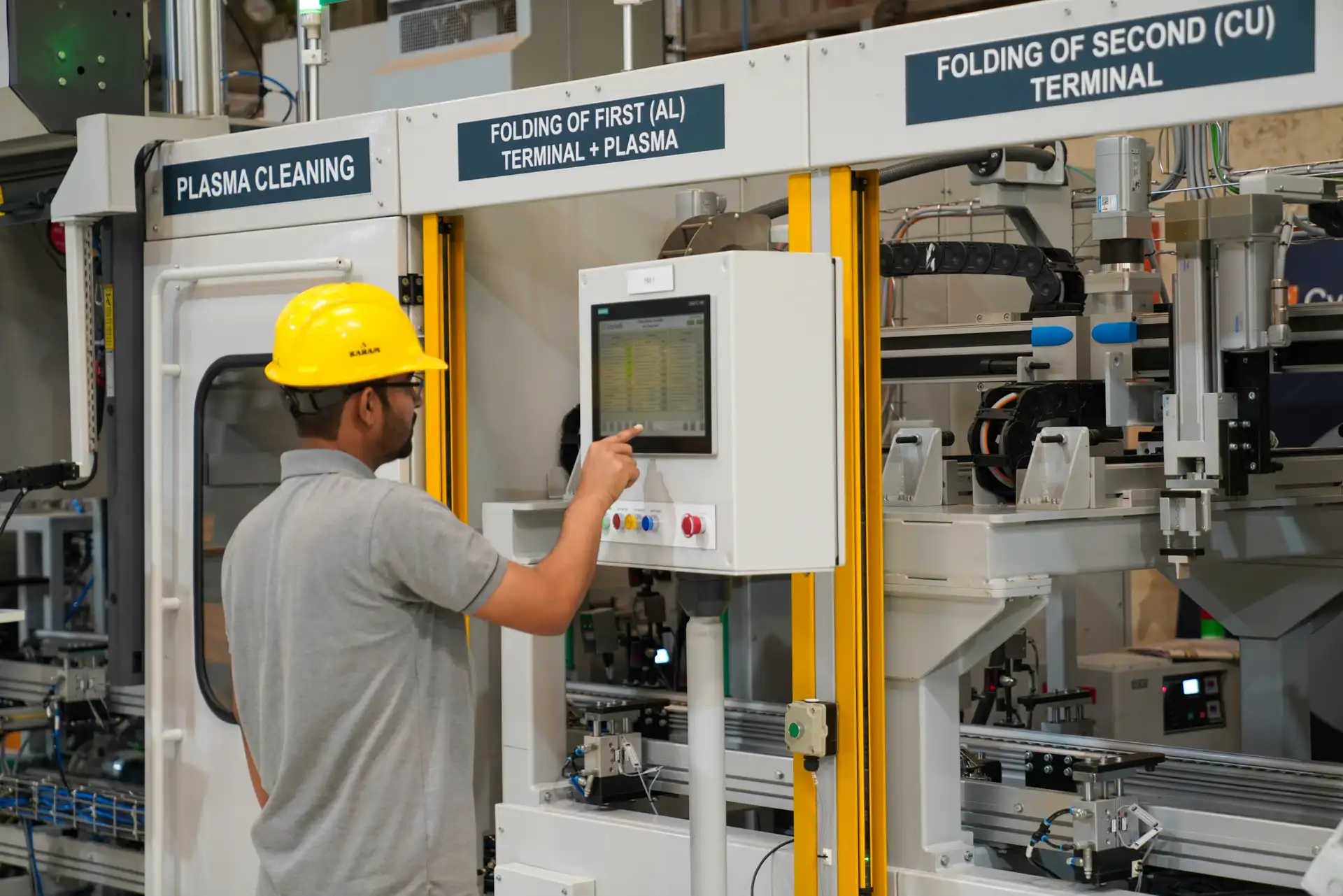
Cybernetik builds identity and data capture into battery pack assembly automation from the first station, which covers the plant-side foundations the passport depends on.
| Cybernetik capability relevant to passport readiness | Specification |
|---|---|
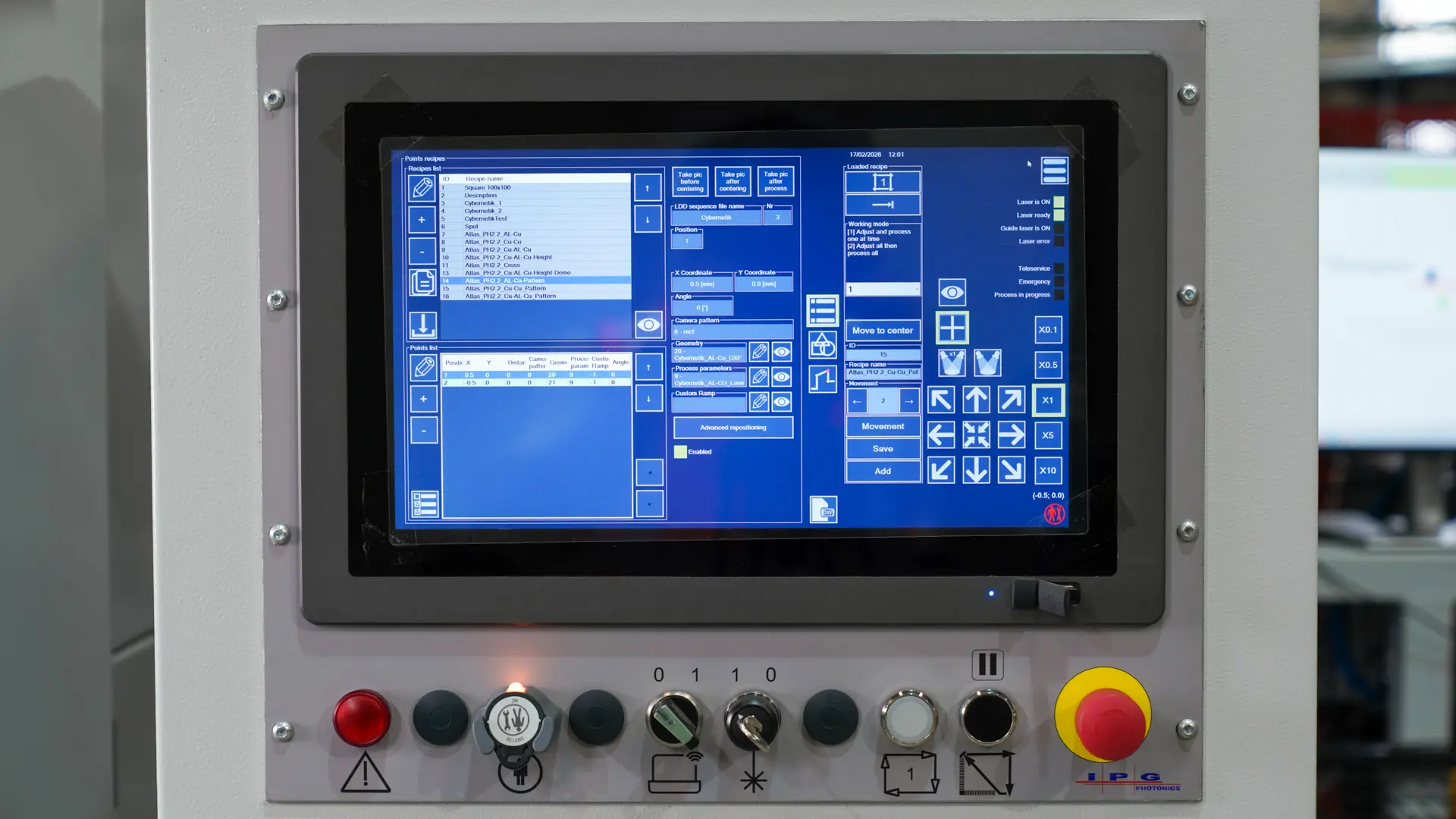
| Identity marking | Laser marking of the pack after electrical and leak testing pass |
| Identity capture | Barcode reading at cell entry, with RFID through assembly |
| Cell records | OCV, IR and ACIR results written against each cell identifier |
| Joint records | Weld integrity results for every joint on both module faces |
| Electronics pairing | BMS programming and TCU mounting and testing tied to the pack |
| System connectivity | MES connectivity with process logging across stations |
| Control architecture | Unified PLC and SCADA across all stages |
| Cell formats | Cylindrical 18650, 21700 and 32140, plus prismatic, pouch and blade |
Three parts of that line up directly with the readiness sequence. Identity is captured as each cell enters and carried through assembly. Test and joint results are written against that identity rather than kept inside individual machines. And laser marking happens only after testing passes, so a battery that failed never carries a mark that could lead to a valid passport.
Cybernetik has been building automation for more than three decades. It is headquartered in Pune with facilities in Gujarat and Raigad and offices in the United States and UAE, and has installed over 6,000 systems in more than 30 countries, including over 400 custom robotic solutions. Battery work has been delivered for manufacturers including Hero MotoCorp, TVS Motor, Livguard and Matter. More background is on the Cybernetik about page.