
Key takeaways
Modern packaging lines are only as fast as their slowest stage. For most manufacturers, that slowest stage is not the filling machine, the flow wrapper, or even the palletizer. It is the hand-off zone between primary packaging and the shipping case , the point where individual pouches, bottles, or jars must be counted, oriented, and loaded into cartons at line speed. A purpose-built carton case packer eliminates this bottleneck permanently.
This guide explains what a carton case packer does, how robotic automation transforms secondary packaging performance, and what to look for when specifying a system for your facility.
What Is a Carton Case Packer?
A carton case packer is an automated secondary packaging machine that receives finished primary packs , pouches, bottles, bags, jars, shrink-wrapped units, or loose cartons , and loads them into corrugated cases or cartons in a defined, repeatable matrix formation. The packed case is then sealed and conveyed downstream to palletizing.
In a manual setup, operators pick products from a takeaway belt and place them into open cases by hand. This approach works at low volumes, but three problems compound as throughput targets increase:
Speed limits – A skilled operator can sustain roughly 15–20 units per minute per hand. A robotic case packer runs at 40 pouches or 120 bottles per minute without fatigue , every minute, every shift.
Orientation errors – Pouches, bottles, and jars that arrive at random angles cause improper matrix formation, poor case density, and lid-closure failures downstream. Automated vision systems eliminate this entirely.
Labor and compliance cost – Manual case packing is labor-intensive, injury-prone (repetitive strain), and , in food and pharmaceutical environments , a contamination risk at the open-case stage. Automated cartoning reduces headcount requirements and meets cGMP standards.
How a Carton Case Packer Works
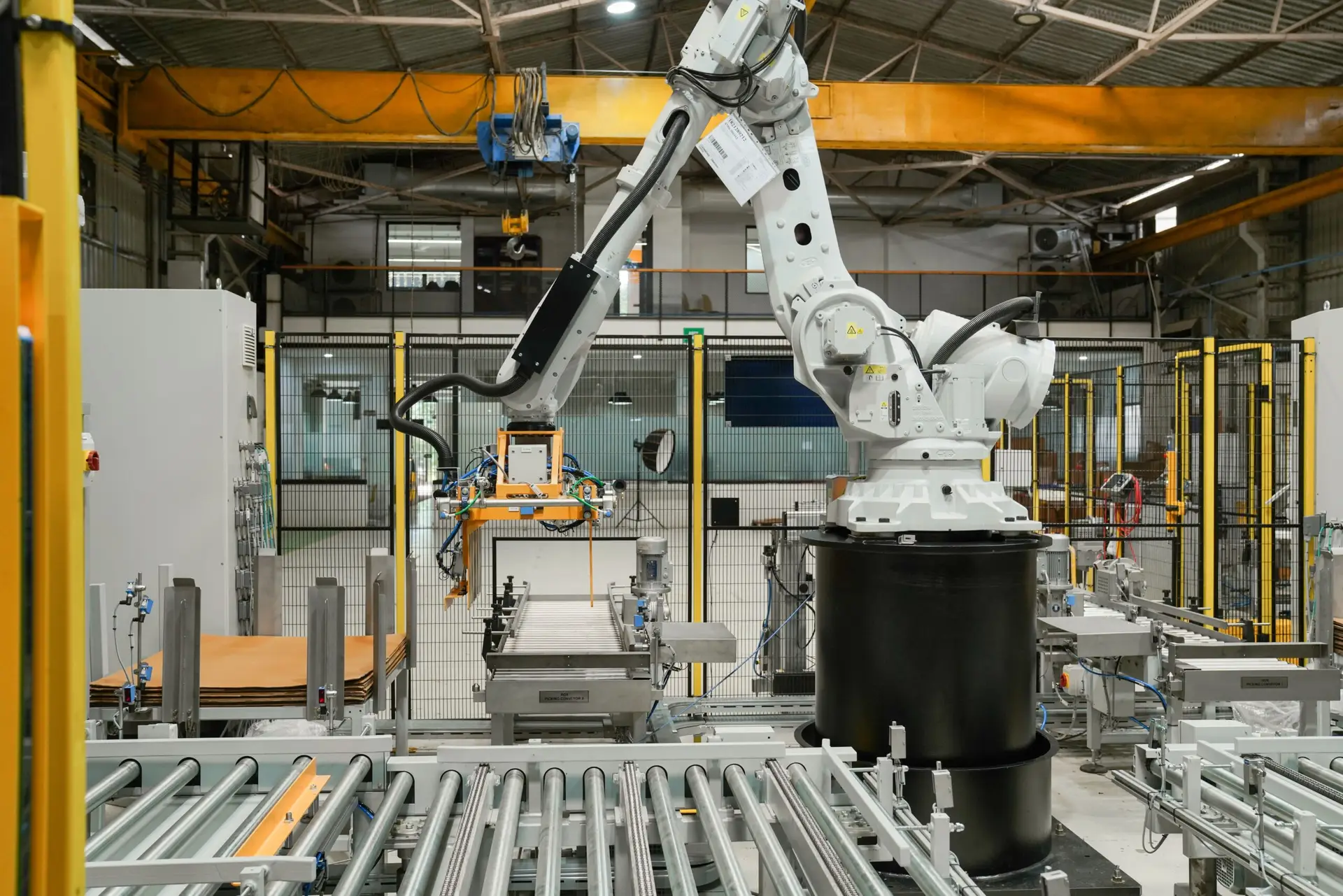
Cybernetik builds two primary robotic configurations for case packing: Six Axis robots for high-payload, multi-SKU applications, and SCARA robots for high-speed, lighter-payload lines. Both operate on the same principle.
Step 1: Product Infeed and Orientation Products arrive from upstream on a takeaway conveyor. A vision system inspects each unit, confirms orientation, and passes pick coordinates to the robot controller. Defective or misaligned units are rejected before entering the packing zone.
Step 2: Matrix Formation A dedicated matrix formation station accumulates products in the required row-and-column pattern. For bottle lines, the matrix station creates the formation before the robot picks the entire group simultaneously , dramatically increasing throughput vs. one-at-a-time picking.
Step 3: Pick and Place into Case The robot, fitted with servo or pneumatic end-of-arm grippers customised for the product geometry, lifts the matrix and places it precisely into the erected case. Guide funnels ensure accurate seating, eliminating product damage and misloads.
Step 4: Quality Control and Case Closure After loading, a missing-unit detection system confirms every cell in the case is occupied. Empty or short-count cases are rejected before they enter the sealing stage. Accepted cases proceed to the case sealer and, from there, to downstream palletizing.
Case Packer & Case Palletizer
Cybernetik’s Case Packer Range: Specifications That Matter
Cybernetik’s Case Packers are engineered for high-speed, multi-SKU secondary packaging across food, FMCG, chemical, and pharmaceutical industries. The two configurations cover the full range of packaging line requirements.
Six Axis Robotic Case Packer
The Six Axis configuration is designed for applications demanding high payload, multi-product flexibility, and fast automatic tool changeover. Key specifications:
SCARA Robotic Case Packer
The SCARA configuration is optimised for lighter products at very high cycle rates, particularly in food and confectionery applications:
How Carton Case Packers Eliminate the Five Biggest End-of-Line Bottlenecks
1. Consistent, High-Speed Loading
Manual loading creates variable dwell times that force case sealers and palletizers to run below their rated capacity. A robotic carton case packer feeds cases at a fixed, servo-controlled rate , removing variability from the entire downstream train. Lines that previously ran at 60–70% OEE routinely reach 80–85% OEE or higher after automated case packing is introduced.
2. Accurate Matrix Formation for Maximum Case Density
Poorly formed product matrices mean under-filled cases, poor pallet stability, and transit damage. Cybernetik’s matrix formation station , combined with the robot’s servo-controlled pick-and-place , delivers the exact row-and-column configuration required for the case format, maximising cube efficiency and eliminating customer complaints about product movement in transit.
3. Missing Unit Detection Before the Case Is Sealed
Every incorrectly packed case that reaches the retailer represents a compliance failure, a customer complaint, and potential recall liability. Cybernetik’s inspection system detects missing products inside the case after loading but before sealing. Short-count or mislaid cases are diverted, not sealed and shipped.
4. Rapid Multi-SKU Changeovers
For plants running multiple product variants on the same line, the hidden cost of manual case packing is changeover time. Changing from a 24-pouch case to a 12-pouch case manually can take 30–45 minutes of mechanical adjustment. Recipe-driven control on Cybernetik’s robotic case packers drops this to under 10 minutes via HMI , a decisive advantage on lines managing four to eight active SKUs.
5. Seamless Integration with the Full Packaging Line
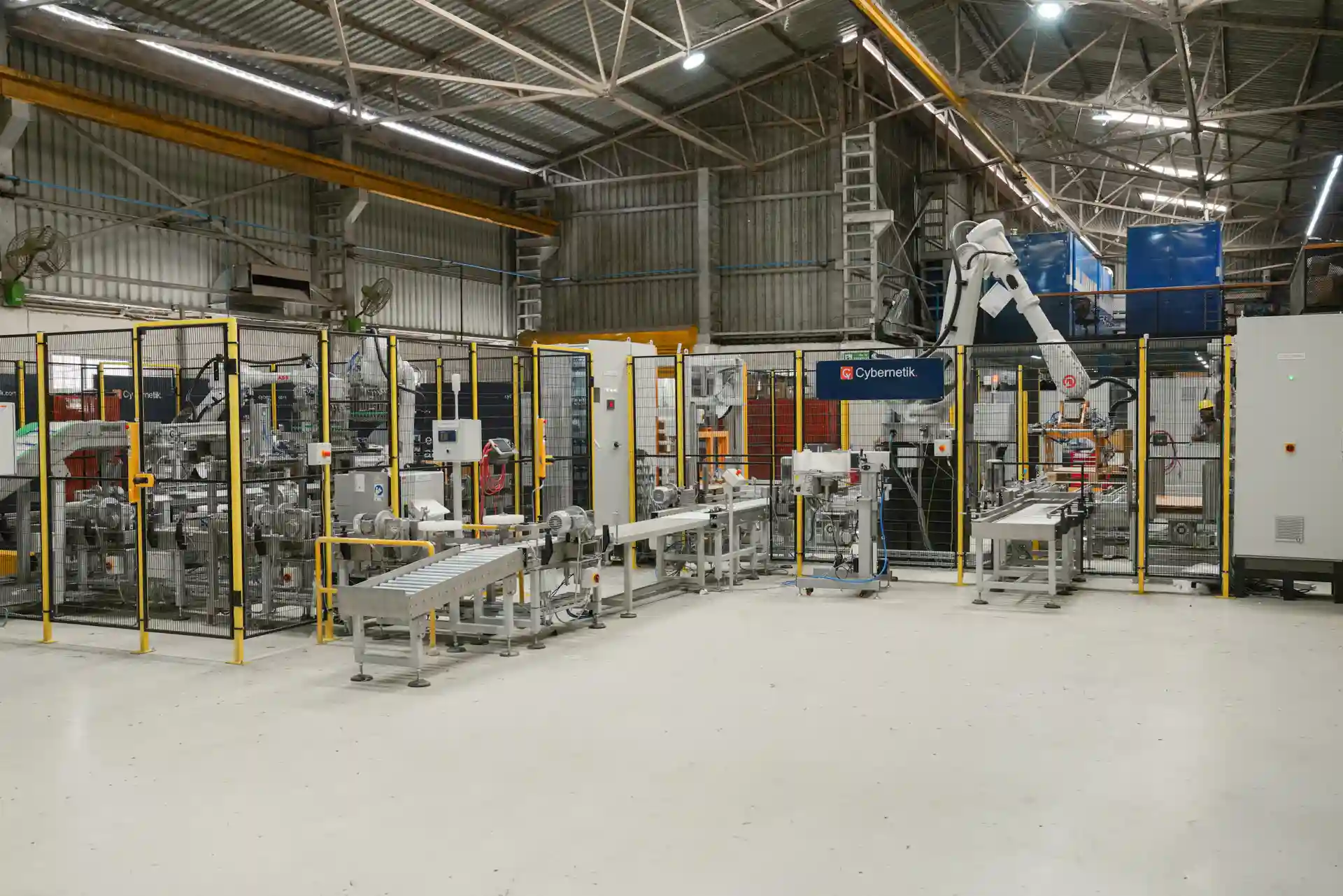
A carton case packer does not run in isolation. It receives product from upstream primary packaging , a flow wrapper feeder, bagging machine, or filler , and hands cases to downstream palletizers. Cybernetik designs all case packing systems for full upstream and downstream integration under a unified PLC and SCADA architecture, so recipe changes propagate across the entire line from a single operator interface.
Integrating a Carton Case Packer into Your Complete Packaging Line
A carton case packer is one stage in a fully connected end-of-line architecture. The efficiency gains from automating case packing multiply when the machine is integrated with the stages upstream and downstream.
Upstream: Products arriving from a Flow Wrapper Feeding system or primary Bagging System are already pitched and oriented , making the infeed to the case packer predictable and consistent.
Downstream: Packed and sealed cases are conveyed directly to Cybernetik’s Robotic Palletizers , available in Six Axis, cobot, high-level, and gantry configurations, for automated stacking and pallet formation. The same PLC and SCADA layer controls both the case packing and palletizing stages, allowing recipe changes to propagate across the entire end-of-line with a single operator command.
This single-architecture approach eliminates the integration risk that comes from sourcing case packers and palletizers from different suppliers , different communication protocols, different electrical standards, and different safety interlock chains.
 A carton case packer doesn’t just automate packing; it removes the bottleneck that limits the performance of the entire end-of-line.

.
See it in action
Industries That Benefit Most From Automated Carton Case Packing
Food and Confectionery – High-volume, low-margin products demand maximum throughput. Automated carton case packing with inline missing-unit detection prevents short-weight cases from reaching retailers and triggering compliance issues.
Beverage and Personal Care – Bottle lines running multiple SKUs in the same shift benefit directly from automatic tool changers and recipe-driven format changes that turn a 40-minute changeover into under 10 minutes.
Chemical and Paints – Heavy, rigid containers require high-payload robotic grippers that manual operators cannot safely sustain at production speed. Six Axis case packers with 200 kg payload handle drums, pails, and cans without ergonomic risk.
Pharmaceutical – cGMP-compliant builds, track and trace integration, and missing-unit detection are mandatory in pharma secondary packaging. Robotic case packers provide the audit trail and contamination-free handling the industry requires.
The Cybernetik Advantage in Carton Case Packing
Cybernetik has delivered packaging automation across 30+ countries from four manufacturing facilities. The build standards that distinguish Cybernetik’s case packers from commodity alternatives are: