
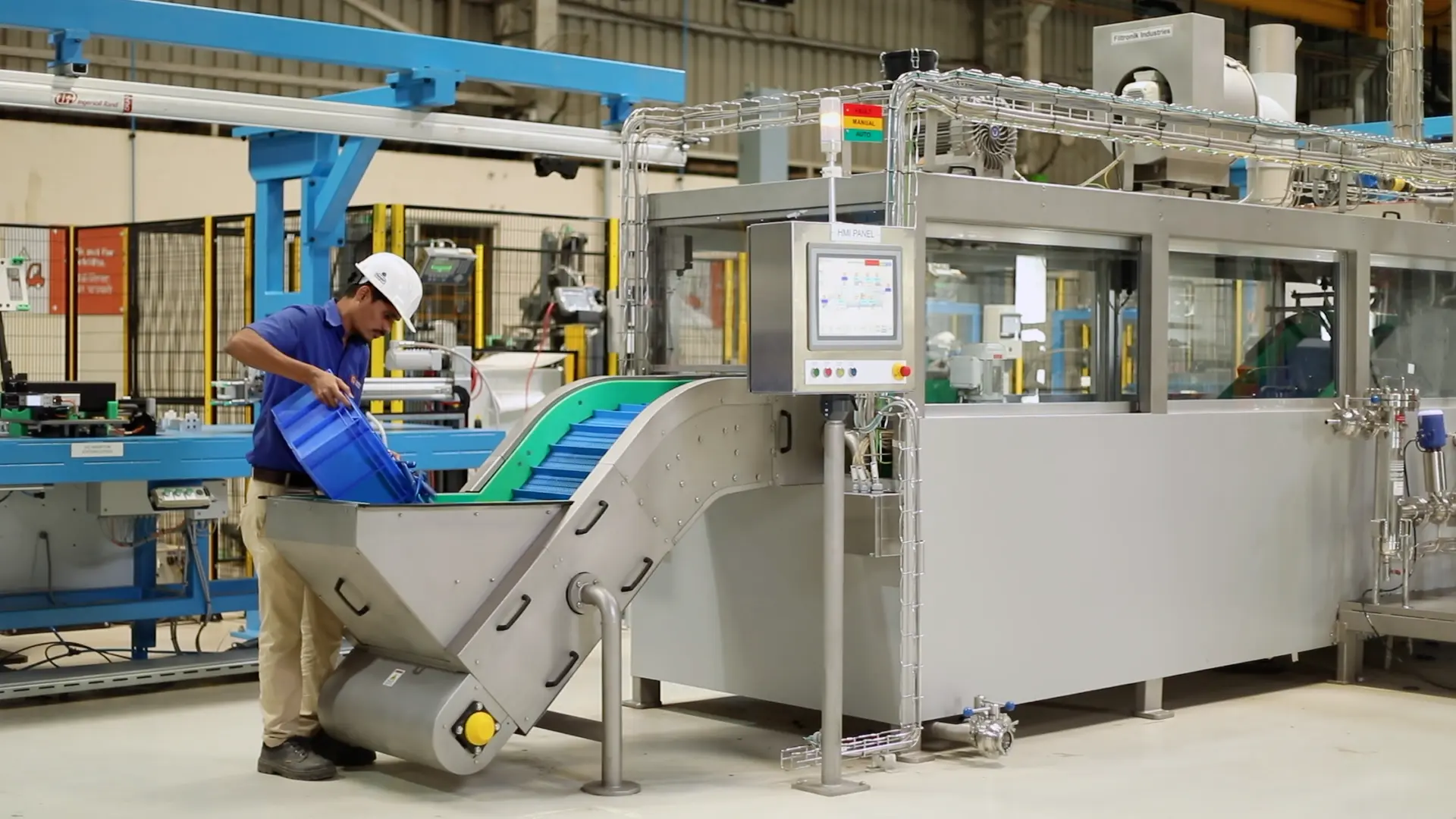
Key takeaways
Walk through a modern factory and much of what you see was designed by automation engineers: the robot stacking bags, the conveyor feeding a packing machine, the control screen an operator uses to start a batch. Behind each one is a team of mechanical designers, controls programmers, robotics specialists and site engineers who turned a production problem into a working system.
A career in industrial automation means designing, programming, installing and supporting the machines and control systems that run factories. Common roles include mechanical design engineer, PLC and controls engineer, robotics engineer, process engineer, commissioning engineer, service engineer and project manager. Most start with a degree or diploma in mechanical, electrical, electronics, instrumentation or mechatronics engineering, and grow through hands-on project experience.
This guide explains the main roles, the skills that matter, how careers typically progress and what to look for in an automation employer, with a closer look at Pune, one of India’s leading automation centers.
Why Automation Is a Strong Career Choice
Manufacturers automate to deal with labor shortages, improve quality, meet hygiene and safety rules and raise output. That demand runs across almost every industry, from food and pharmaceuticals to chemicals, packaging, automotive and clean energy such as battery and wind manufacturing. Automation engineers are needed wherever things are made.
The work is also varied. One month you may be designing a hygienic powder transfer system for a food plant; the next, debugging a robot cell or commissioning a line at a customer’s site. Engineers who enjoy seeing their designs move and produce something real tend to find the field rewarding.
There is also a clear link between the work and its results. When an automation project succeeds, a plant makes more product, workers are spared heavy or repetitive tasks, and quality becomes more consistent. Few engineering fields let you see the effect of your work so directly, and that sense of purpose is one reason many engineers spend their whole careers in automation.
The skills also travel well. An engineer who understands machines, controls and processes can move between industries, from food to chemicals to clean energy, because the fundamentals stay the same even when the products change.
Main Roles in Industrial Automation
Automation companies combine several disciplines on every project. These are the roles you will see most often.
| Role | What the work involves | Typical background |
|---|---|---|
| Mechanical design engineer | Designing machines, frames, conveyors, hoppers and grippers in 3D CAD, and producing manufacturing drawings | BE/BTech or diploma in mechanical or production engineering |
| Controls and PLC engineer | Writing PLC logic, designing panels, setting up drives and sensors, and building HMI screens | Electrical, electronics, instrumentation or mechatronics |
| Robotics engineer | Programming robots, designing cell layouts, setting up vision and grippers, and tuning cycle times | Mechatronics, electronics or mechanical with robotics training |
| Process engineer | Understanding the customer’s material and process, and sizing mixers, dryers, conveyors and valves around it | Chemical, food technology or mechanical engineering |
| Commissioning engineer | Installing, starting up and proving equipment at customer sites | Electrical, mechanical or mechatronics, with willingness to travel |
| Service engineer | Troubleshooting, maintenance and upgrades on installed systems | Diploma or degree with hands-on fault-finding skills |
| Project manager | Running schedules, budgets and customer communication from order to handover | Engineering degree with several years of project experience |
| Application and sales engineer | Understanding customer needs and proposing the right technical solution | Engineering degree with strong communication skills |
Smaller companies often combine these roles, so one engineer may design, program and commission. Larger companies separate them, which allows deeper specialization. Neither is better in itself; early in a career, broad exposure is valuable, and specialization usually follows once you know which work you enjoy.
Skills That Matter
| Skill area | What employers look for |
|---|---|
| CAD and design | Confident 3D modeling, drawing standards, tolerances and design for manufacture |
| PLC and controls | Ladder logic and structured text, I/O design, drives, safety circuits and panel wiring |
| HMI and SCADA | Screen design, alarms, recipes and data logging that operators can actually use |
| Robotics | Robot programming, path teaching, end effectors, vision and safety zones |
| Pneumatics and hydraulics | Reading circuits, sizing cylinders and valves, and fault-finding |
| Process knowledge | How powders, liquids and products behave in real equipment |
| Site skills | Safe working practice, commissioning discipline and calm problem-solving under pressure |
| Communication | Clear reports, customer conversations and teamwork across mechanical, electrical and software teams |
Technical skills get you hired, but the engineers who progress fastest usually combine them with ownership and communication. Automation projects involve many people, from customers and suppliers to colleagues in other disciplines, and the ability to explain a problem clearly and follow it through to a fix is valued everywhere.
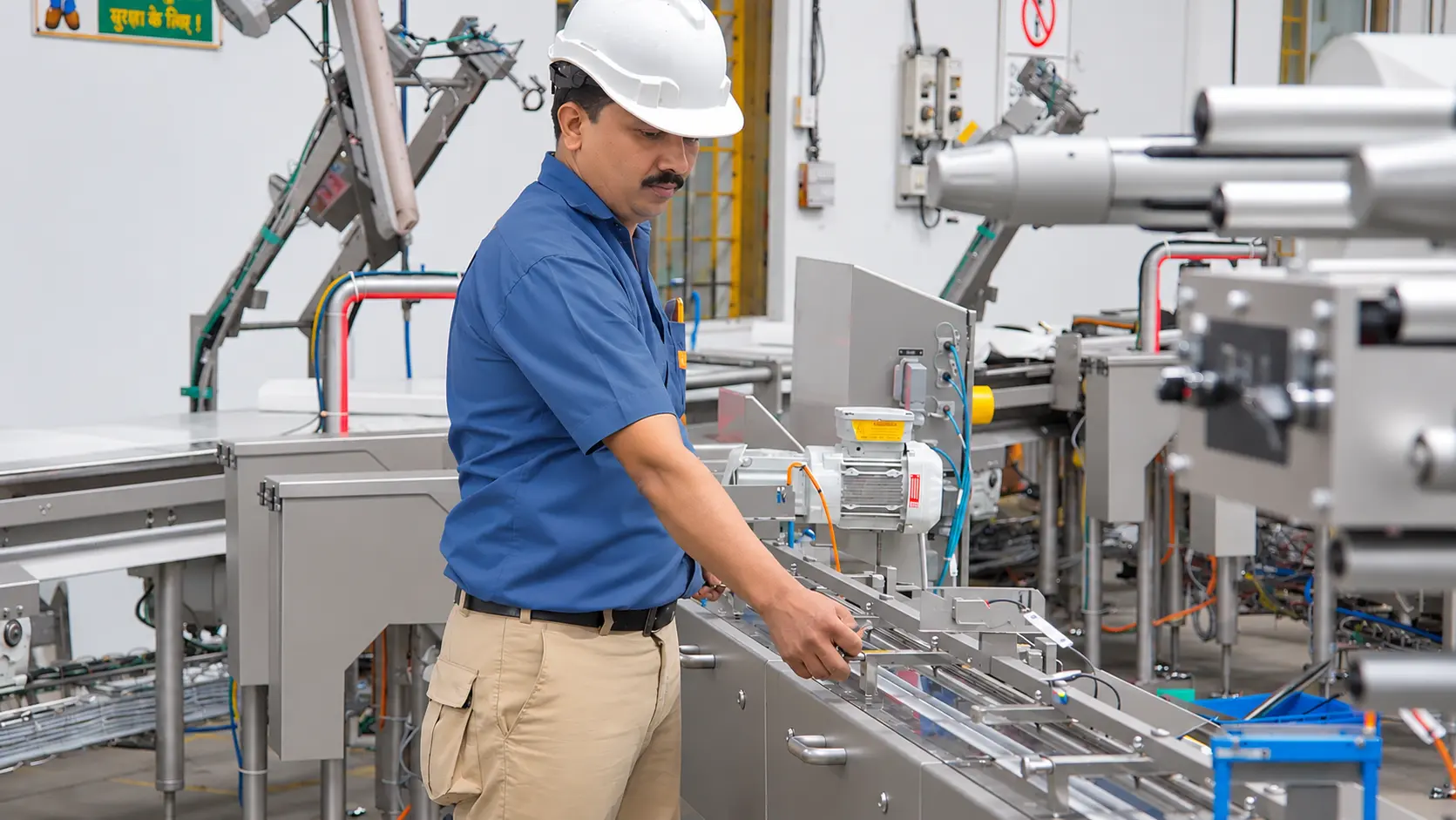
Skills you can build while studying
A Day in Two Automation Roles
Design engineer
A design engineer’s day often starts with a review of a customer’s requirement: the product, the output, the space available and any hygiene or safety rules. From there the work moves into 3D CAD, laying out a machine or a section of a line, checking how parts fit and how operators and maintenance staff will reach them. Later in the day there may be a design review with controls and project colleagues, questions from the workshop about a drawing, or a call with a customer to confirm a detail.
The satisfaction comes weeks later, when the parts arrive from fabrication, the machine is assembled and it runs the way it was drawn. Good designers learn from every build, noticing what was easy to assemble and what was not.
Commissioning engineer
A commissioning engineer’s day is spent at the customer’s plant. The morning may start with checking wiring and sensors on newly installed equipment, followed by running sections of the line empty, then with product. Problems are normal at this stage: a sensor in the wrong position, a conveyor speed that needs adjusting, a sequence that does not suit how operators work. The job is to find and fix them calmly, keep the customer informed and leave the line running to its agreed performance.
Commissioning is demanding, but it is also where engineers learn fastest. Seeing how real materials, people and plants behave gives a practical understanding that shapes every design afterward.
Automation in Newer Industries
Automation careers are no longer limited to automotive and traditional manufacturing. Battery pack assembly, energy storage, wind blade production and emission control lines all rely on automation, often with demanding requirements for precision, traceability and safety. Engineers who build experience in these areas develop skills in vision inspection, data systems and robotics that are in growing demand.
Food and pharmaceutical automation is growing too, driven by hygiene rules, labor shortages and the move from batch to continuous production. Engineers who understand both machines and materials are particularly valuable here.
Preparing for an Automation Interview
Education and Entry Routes
Most automation engineers come from mechanical, production, electrical, electronics, instrumentation or mechatronics backgrounds. Chemical and food technology graduates often move into process automation, where understanding how materials behave matters as much as machine design.
Diploma holders are valued in assembly, wiring, commissioning and service roles, where practical skill counts most, and many progress into design or project roles with experience. Graduates usually enter as trainee or graduate engineers and spend their first year or two learning company standards and working alongside experienced colleagues.
Design-focused graduates may also find routes into product development, where new machines and products are taken from concept to production. The article on product engineering services describes how that work is organized.
Training and Certifications
Formal training helps, especially early on. Major PLC and drive makers such as Siemens and Rockwell Automation, and robot makers such as ABB, FANUC and KUKA, run training programs on their platforms, often through authorized centers. Short courses in safety standards, pneumatics and industrial networks are also useful.
Certificates are most valuable when combined with project work. Employers look for evidence that you have applied what you learned on real equipment, so treat training as a starting point and look for chances to use it on live projects as soon as possible.
Mistakes to Avoid Early On
How Careers Grow
| Stage | What it usually looks like |
|---|---|
| Trainee or graduate engineer | Learning standards, tools and products under supervision; working on parts of real projects |
| Engineer | Owning designs, programs or site work for defined sections of a project |
| Senior engineer | Leading complex sections, reviewing others’ work and handling difficult customer problems |
| Lead or specialist | Becoming the go-to expert in a technology such as robotics, controls or a process area |
| Manager | Leading teams, projects or departments, with responsibility for delivery and people |
Progress in automation tends to follow responsibility. Engineers who take ownership of a section of a project, solve problems on site and learn from each commissioning usually move up quickly. Exposure to different industries also helps, because each one teaches something new about materials, hygiene, safety or speed.
Some engineers stay technical and become specialists in robotics, controls or a particular process. Others move into project management, sales engineering or leadership. Understanding how a whole plant fits together, covered in the guide to process automation, is useful on either path.
 “A successful automation career is built not just on software skills, but on understanding how machines, materials and people work together.”

See it in action
Working in Automation in Pune
Pune has one of India’s densest concentrations of automation work. Automotive and component plants, engineering companies, food and pharmaceutical manufacturers and a strong base of automation suppliers create steady demand for engineers. The city’s engineering colleges supply graduates every year, and the industrial areas around Chakan, Pimpri-Chinchwad, Talegaon and Ranjangaon give engineers plenty of plants to learn from.
For job seekers searching for automation engineer jobs in Pune, that density is an advantage. It means more choice of employers and more chances to move between industries and roles without relocating.
What to Look for in an Automation Employer
Careers at Cybernetik
Cybernetik Technologies is an industrial automation company headquartered in Pune, delivering automation since 1989. With more than 600 employees and over 6,000 systems installed worldwide, it designs and builds robotic and non-robotic automation across six divisions: Process Automation, Packaging Automation, CleanTech, Extraction, Cybernetik Labs and Defence. More about the company is on the Cybernetik website.
Cybernetik describes itself as a technology-driven company focused on continuous innovation across engineering, administration, product and project management and other roles. It is an equal opportunity employer that aims to recruit, retain and develop talent from a range of backgrounds.
The company has two factories in Pune, one in Raigad and one in Nadiad in Gujarat, with sales offices in Pune, Chennai, New Delhi, Summerville in the USA and Sharjah in the UAE. Its work spans powder and liquid processing, packaging and palletizing, EV battery and catalytic converter lines, wind blade machining and defence manufacturing.
For engineers interested in research and new technology, Cybernetik Labs develops custom robotic and process solutions from concept to production scaleup, through automation R&D, special equipment design and prototyping. More is on the Cybernetik Labs website.
Its leadership includes technology heads for automation and robotics, food and agro processing, and machine intelligence, alongside design, controls and instrumentation, projects and sales teams, as listed on the about page.