
Key takeaways
Every case packing machine RFQ that goes out to multiple vendors comes back as a fundamentally different document for each vendor. One quote leads with throughput; another with payload; a third with compliance certifications; a fourth with line integration scope. Comparing them side by side is an exercise in spreadsheet engineering, finding equivalent rows in non-equivalent documents. The result is that most case packing machine purchasing decisions are made on whichever specification the procurement team learned to weight, not on the specification that matters most for the actual line.
This guide is the evaluation framework that makes RFQ comparison meaningful. It walks through the five dimensions on which case packing machines actually differ- throughput, payload, vision, compliance, integration, and explains how to weight each against your line’s specific requirements. The same framework Cybernetik uses internally to scope its own quotes. If your last case packing machine selection felt more like luck than engineering, the structure below replaces guesswork with rigor.
What Is a Case Packing Machine?
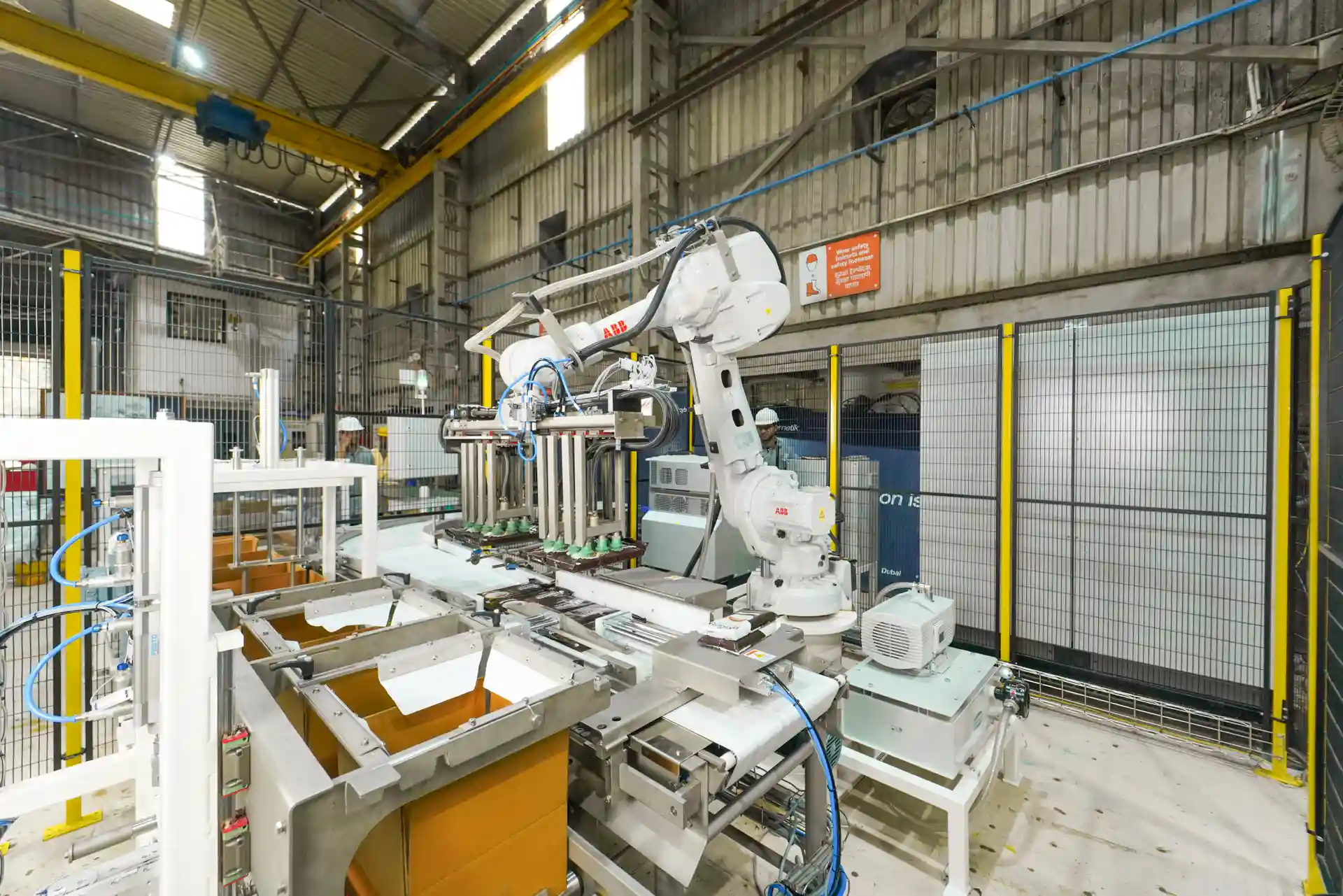
A case packing machine is automated equipment that takes primary-packed product , pouches, bottles, flow-wrapped bars, blister packs, sachets , and loads it into a corrugated case, display carton or shipping container in a defined arrangement. The case packing machine sits between the upstream filler/wrapper and the downstream sealer and palletizer, and is the single piece of equipment most directly responsible for whether the secondary packaging line achieves its rated throughput.
What makes case packing machine evaluation difficult is that ‘case packing machine’ is a category, not a product. The category covers semi-automatic configurations at one end, mid-tier fully-automatic SCARA and light six-axis units in the middle, and high-specification six-axis robotic configurations with 200 kg payload and 120 units per minute throughput at the top. Each tier serves a different operating envelope; comparing across tiers is comparing different solutions to different problems.
Cybernetik’s case packing machine portfolio is engineered for evaluation transparency. Every quote details the specification across throughput (sustained, not peak), payload (at working reach, not unconditional maximum), vision capability (vision-native vs retrofit), compliance build (as-built vs capable) and integration scope (standalone vs full line under unified PLC). Buyers evaluating Cybernetik’s quotes against alternative vendors can do so on equivalent dimensions rather than incommensurate ones.
Five Criteria for Evaluating Any Case Packing Machine
1. Throughput, Specified as Sustained on Your Product
Headline throughput on case packing machine spec sheets is usually peak under controlled conditions. Sustained throughput on your specific product, with your upstream variability, is the load-bearing number. Cybernetik’s quotes specify both; buyers should ensure competing quotes do the same. A 100-unit-per-minute headline that sustains at 70 is a 70-unit-per-minute machine , the brochure number is procurement noise.
2. Payload at the Working Reach Your Line Requires
Robotic case packing machine payload figures vary with arm extension. A six-axis arm rated at 200 kg payload may carry that load near the base but materially less at full reach. The load-bearing payload is what the arm delivers at the working reach your line geometry imposes. Cybernetik specifies payload per project; buyers should not accept unconditional maximum figures as comparable.
3. Vision Integration Depth, Not Just Vision Presence
Most case packing machine quotes now mention vision systems. The question that separates good from poor is integration depth. A vision-native machine has the vision system designed into the arm motion path from day one; a vision-retrofit machine has it bolted on after design freeze. The first preserves throughput; the second caps it. Cybernetik publishes vision-integration depth per configuration.
4. Compliance Build, As-Built vs Capable
GMP, FDA and CE compliance language on case packing machine quotes can mean ‘compliant as built and shipped’ or ‘capable of compliance with modifications.’ At audit time, only the first is meaningful. At quote time, the second is often invisible. Cybernetik distinguishes the two explicitly; buyers should require that distinction on every competing quote.
5. Line Integration Scope and Coordination Architecture
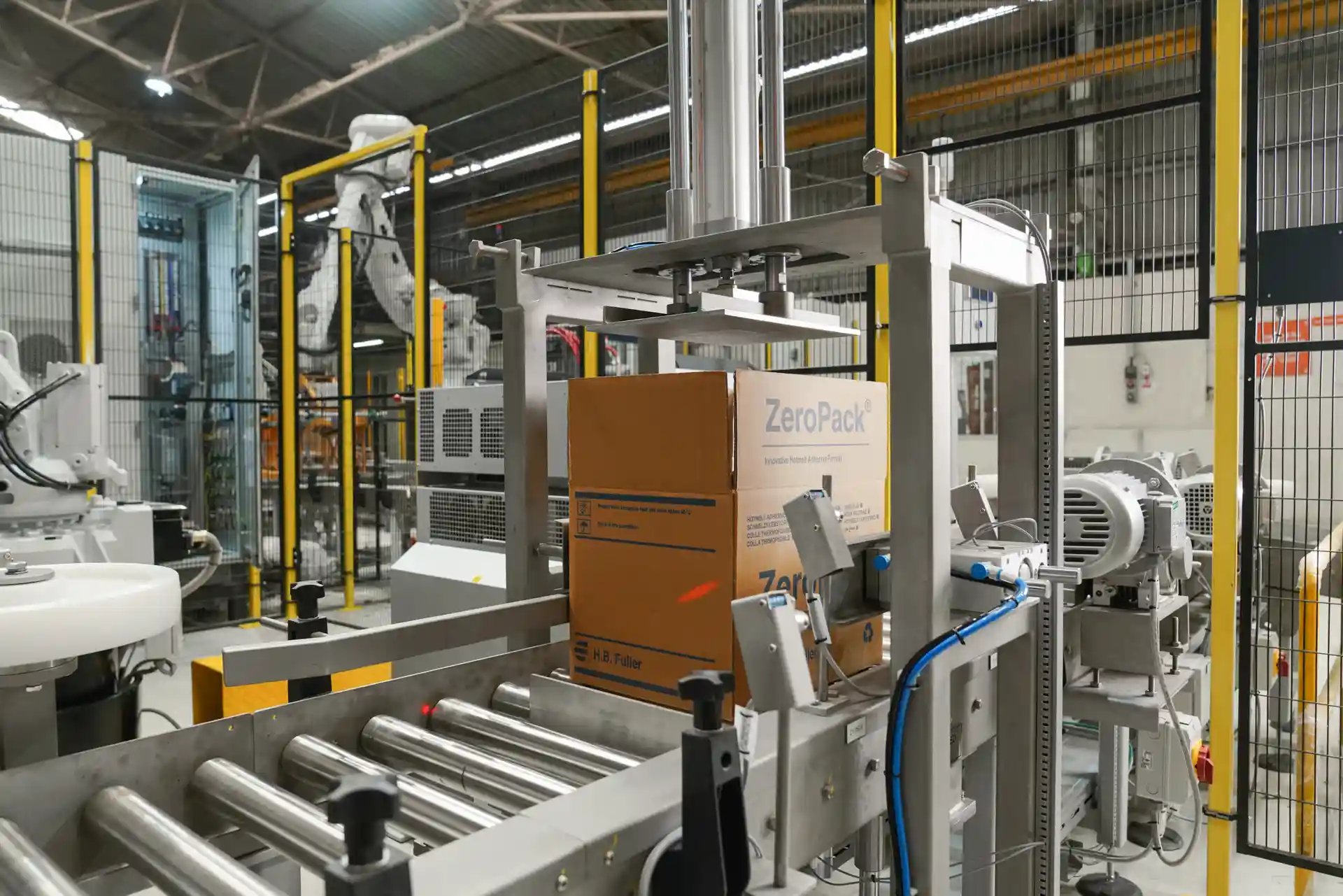
A case packing machine quoted standalone is a different solution from one quoted as part of an integrated line. The integrated quote includes unified PLC + SCADA, shared recipes, coordinated safety chain and single-vendor accountability. The standalone quote defers all of these to downstream integration consulting. Cybernetik specifies integration scope inline; standalone-machine comparisons against integrated-line comparisons are systematically misleading.
Case Packing Machine Evaluation Across Specification Tiers
The evaluation framework applies across the three case packing machine tiers Cybernetik builds. Each tier serves a different operating envelope and evaluates differently against the five criteria.
Entry-Tier Case Packing Machine Evaluation
Semi-automatic configurations with manual or assisted loading, automatic erecting and automatic sealing. Throughput is the dominant evaluation criterion; vision and compliance build are typically not differentiators at this tier. The right tier for plants approaching automation in phases or running predominantly single-SKU operations at moderate volume.
Mid-Tier Case Packing Machine Evaluation
Fully-automatic robotic configurations on SCARA or light six-axis platforms. All five evaluation criteria become differentiators at this tier , throughput, payload, vision integration, compliance build, integration scope. This is the tier where evaluation framework rigor matters most because vendor specifications diverge widely.
High-Specification Case Packing Machine Evaluation
Full six-axis robotic configurations with multi-array picking, full vision integration, GMP or FDA-as-built compliance and full line PLC integration. Throughput, payload and integration are typically table stakes; vision integration depth and compliance build distinguish vendors at this tier. The right tier for high-volume, multi-SKU, regulated-market operations.
Side-by-Side Comparison
The evaluation framework table below assigns weights to each criterion across the three tiers , useful as an RFQ scoring rubric.
| Criterion | Entry-Tier Weight | Mid-Tier Weight | High-Spec Weight |
|---|---|---|---|
| Sustained Throughput | 30% | 25% | 20% |
| Payload at Working Reach | 10% | 20% | 20% |
| Vision Integration Depth | 5% | 20% | 25% |
| Compliance Build | 10% | 20% | 25% |
| Line Integration Scope | 20% | 15% | 10% |
| Recipe Library Size | 5% | 15% | 15% |
| Lifecycle TCO | 20% | 25% | 25% |
| Total Evaluation Weight | 100% | 100% | 100% |
Cybernetik’s Case Packing Machine Portfolio Mapped to Evaluation Tiers
Entry-tier case packing machines
Mid-tier inclusions
High-specification case packing machines
 “Modern case packing machines create value through sustained throughput, intelligent automation, and seamless production integration – not headline performance figures.”

See it in action
Why Cybernetik’s Case Packing Machine Quotes Survive Cross-Vendor Comparison
Industries Where Case Packing Machine Evaluation Rigor Matters Most
When Case Packing Machine Re-Evaluation Becomes the Right Move
Where two or more of the following describe your current operation, the case packing machine was likely evaluated and selected against incomplete criteria , re-evaluation against a complete framework typically uncovers material improvement opportunity.
Where these conditions cluster, scoping the next case packing machine against a complete evaluation framework typically delivers payback in twelve to twenty-four months on throughput recovery, integration cost reduction and compliance closure combined.