
Key takeaways
Flexible packaging has been the fastest-growing segment of consumer packaging for more than a decade. Stand-up pouches replaced cans in soup; pillow pouches replaced trays in snacks; stick packs replaced sachets in pharma; gusseted pouches replaced rigid jars in pet food. The growth has reshaped what’s on retail shelves , and it has quietly broken every case packing machine engineered for the rigid-format world that came before it. Pouches do not stack like jars, do not pick like bottles, and do not retain pack density like rigid containers. A pouch case packer that works has to solve all three problems simultaneously.
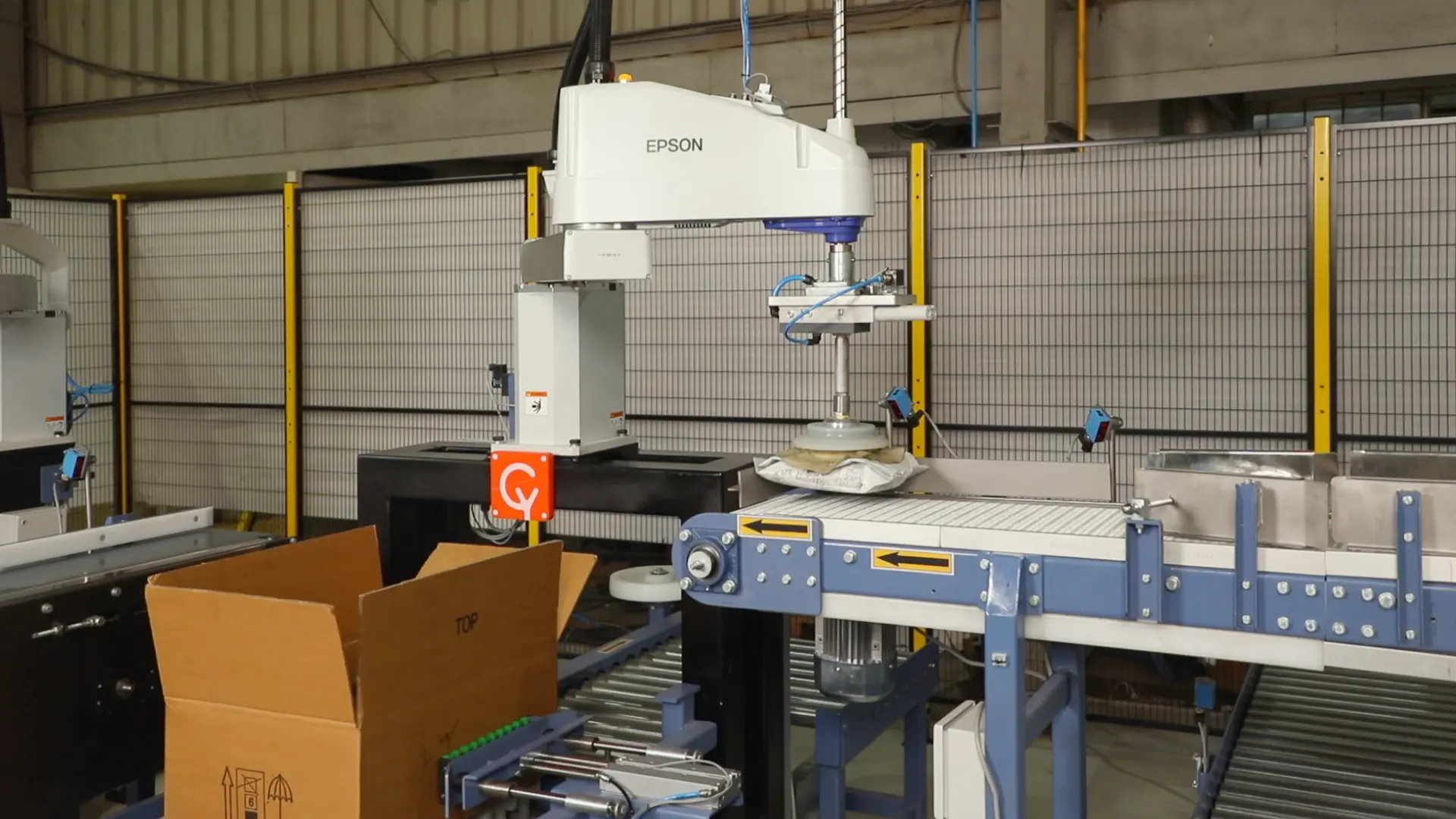
This guide walks through what makes flexible packaging hard to case pack, the engineering choices that distinguish a purpose-built pouch case packing machine from a rigid case packer retrofitted with new grippers, and how Cybernetik’s flexible pouch case packer , built around a SCARA robotic arm and a proprietary staggered pouch lifting system , handles up to 40 pouches per minute across stand-up, pillow, stick and gusseted formats. If your line ships pouches and your secondary packaging stage is the visible bottleneck, the engineering below is where the solution starts.
What Is a Pouch Case Packer?
A pouch case packer is a secondary packaging machine purpose-engineered to load flexible pouches , stand-up, pillow, stick, gusseted, three-side seal, four-side seal , into corrugated shipping cases or display cartons in a defined arrangement. Unlike a generic case packer adapted to handle pouches, a true pouch case packer is designed from the gripper inward around the specific challenges flexible packaging presents: variable pouch geometry per fill level, surface compressibility, label-face orientation sensitivity, and pack density variance across the case.
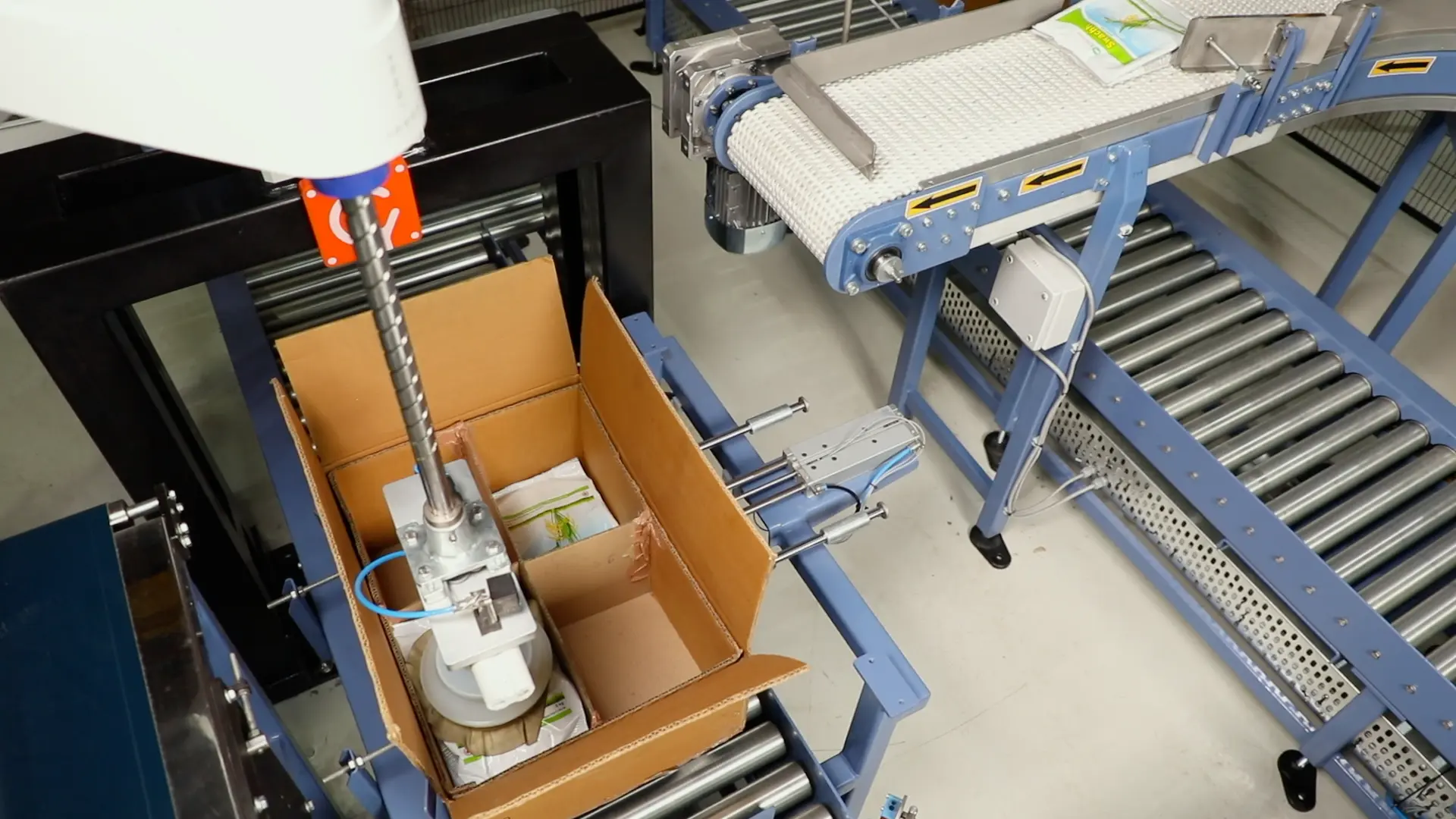
The defining engineering challenge of pouch case packing is the trade-off between pickup gentleness and pack density. A gripper soft enough not to crush filled pouches will struggle to pack them densely; a pack density technique aggressive enough to maximize case fill will tend to deform the pouches. Cybernetik’s flexible pouch case packer resolves this through a proprietary staggered pouch lifting technique that interleaves pouches in an overlapping configuration , maximizing case density without applying compressive force during loading.
The Cybernetik pouch case packing machine is built around a SCARA robotic arm that delivers up to 40 pouches per minute with a 6 kg payload envelope, supporting stand-up, pillow, stick, gusseted and four-side seal pouch formats from a single platform. Recipe-driven SKU changeover, vision-guided orientation and integration with upstream VFFS or pre-made-pouch baggers under a single PLC + SCADA architecture round out the platform.
Five Pouch-Specific Challenges a Purpose-Built Pouch Case Packer Solves
1. Variable Pouch Geometry from the Upstream Filler
Pouches change shape based on fill weight, headspace and product settling. Two pouches with the same labelled weight may have measurably different geometry after filling. The pouch case packer’s vision system reads each pouch’s actual dimensions in real time and adapts the gripper position and motion path per pouch , not per SKU recipe alone.
2. Surface Compressibility and Pickup Gentleness
Pouches compress under gripper force. A gripper tuned for rigid containers will crush pouches; one tuned too gently will drop them. Cybernetik’s flexible pouch case packer uses lifting heads engineered specifically for pouch surface mechanics , distributing force across a wider contact area than rigid-format grippers.
3. Pack Density Through Staggered Lifting
The proprietary staggered pouch lifting system interleaves pouches inside the case in an overlap configuration that maximizes pack density without applying compressive force during loading. The result is more pouches per case, fewer cases per shipment, and lower per-unit logistics cost , without compromising pouch integrity.
4. Label-Face Orientation Across the Case
Display cartons for pouches require consistent label-face orientation so the consumer sees the brand on the retail shelf. The pouch case packing machine’s vision system reads label-face position at pickup and adapts the loading motion to ensure every pouch in the display carton presents the same face.
5. Format Versatility Across Multiple Pouch Types
Stand-up pouches, pillow pouches, stick packs and gusseted pouches behave differently mechanically. The pouch case packer handles all four formats from a single platform via recipe-driven changeover, allowing plants running mixed pouch SKUs to standardize on one piece of equipment rather than dedicating one machine per format.
Pouch Case Packer Configurations for Different Flexible Packaging Formats
Different pouch formats place different demands on the case packer. The right pouch case packing machine configuration depends on the dominant pouch type, throughput target and SKU mix.
Stand-Up Pouch Case Packing
Stand-up pouches with bottom gussets are the dominant flexible format in food, pet food and beverage. Cybernetik’s pouch case packer handles them at up to 40 pouches per minute with staggered overlap loading for density-optimized cases. Display cartons and RSC shipping cases both supported via HMI recipe.
Pillow and Pillow-Style Pouch Case Packing
Pillow pouches , common in snack foods, biscuits and confectionery , are flatter than stand-up pouches and pack densely without specialized overlap. The pouch case packing machine handles them via direct vacuum pickup with the same SCARA platform at comparable throughput.
Stick Pack and Sachet Case Packing
Stick packs and small sachets, common in pharma, instant beverages and condiments , require finger-gripper pickup of multiple units per cycle. The flexible pouch case packer configuration with stick-pack tooling groups multiple stick packs per pick and loads them into display or shipping cases in pre-defined matrix formations.
Side-by-Side Comparison
The table below compares the three pouch case packing configurations on the parameters most relevant to flexible packaging line scoping.
| Specification | Stand-Up Pouch | Pillow Pouch | Stick Pack |
|---|---|---|---|
| Throughput | Up to 40 pouches/min | Up to 40 pouches/min | Up to 60 sticks/min |
| Payload | Up to 6 kg | Up to 6 kg | Up to 6 kg (multi) |
| Pickup Tooling | Specialized lifting head | Vacuum cups | Finger grippers |
| Pack Density Method | Staggered overlap | Direct stack | Multi-pack matrix |
| Common Format | Food, pet food, beverage | Snacks, biscuits, candy | Pharma, instant drinks |
| Display Carton Support | Yes | Yes | Yes |
| Vision QC | Standard | Standard | Standard |
Pouch Formats and Case Types Cybernetik’s Pouch Case Packer Handles
Pouch formats within scope
Case and carton formats supported
Upstream and downstream line integration
 “From stand-up pouches to stick packs and sachets, intelligent case packing delivers the flexibility, precision, and scalability required for today’s high-mix production environments.”

See it in action
Why Pouch Manufacturers Choose Cybernetik’s Flexible Pouch Case Packer
Industries Where the Pouch Case Packer Delivers Most Value
When to Move from Manual or Generic Case Packing to a Purpose-Built Pouch Case Packer
Where two or more of the following describe your current flexible packaging line, scoping a Cybernetik pouch case packer becomes the rational next step.
Where these conditions cluster, the Cybernetik pouch case packer investment typically pays back within twelve to twenty-four months on density gains, labour reduction, throughput recovery and retail-rejection elimination.