
Key takeaways
‘High speed’ is the most overloaded phrase in case packing equipment vocabulary. One manufacturer’s high speed case packer is another’s mid-range model. A case packer rated at 30 cases per minute is high speed for granular pharma and pedestrian for bottled water. The phrase has become a marketing convenience rather than a specification, leaving buyers to do the actual engineering translation themselves: what does this machine do, at what cadence, with what payload, on what product format, and at what sustainable yield?
This guide cuts past the marketing and walks through what actually makes a case packer high speed in engineering terms , and what makes a high speed case erector upstream of it equally important to the equation. Cybernetik builds high speed case packing equipment across the throughput envelope from 40 pouches per minute on light flexible packaging up to 120 bottles per minute on heavy rigid formats, with the engineering rationale below applied consistently across every configuration.
What Is a High Speed Case Packer?
A high speed case packer is a secondary packaging machine engineered to sustain a cadence at or above the rated speed of the fastest upstream filler, wrapper or bagger in the line , without bottlenecking, regardless of SKU mix or shift hour. The ‘high speed’ qualifier is meaningful only relative to the line: on a 100-bottle-per-minute filler, a 60-bottle-per-minute case packer is a chronic bottleneck; on a 30-pouch-per-minute bagger, a 40-pouch-per-minute case packer is high speed.
What makes a case packer high speed is not a single specification , it is the combination of upstream feed geometry, pickup mechanics, motion path optimization, end-of-arm tooling efficiency, recipe-driven changeover and downstream coordination. A case packer that picks fast but cannot maintain its cadence across an eight-hour shift, or that requires fifteen minutes of changeover per SKU change, is not high speed in any operational sense , it is fast at peak only.
Cybernetik builds high speed case packing equipment with this distinction in mind. The high speed case erector at the front of the line feeds cases at 15 to 30+ per minute; the high speed case packer downstream sustains 40 to 120 units per minute depending on product format; recipe-driven changeover holds across format switches; and shift-long cadence stability is engineered in rather than negotiated.
Five Engineering Decisions That Make a Case Packer Genuinely High Speed
1. Multi-Unit Array Pickup Instead of Single-Unit Cycles
Picking one product at a time imposes a cycle-time ceiling that no robotic arm can move past, regardless of acceleration. High speed case packers use array grippers that pick multiple units per cycle, Cybernetik’s six-axis platform with 200 kg payload supports multi-bottle picks that maintain 120 bottles per minute through fewer, larger cycles.
2. Vision-Speed Compatible Pickup Paths
Vision systems can become the bottleneck if pickup paths are not designed for vision-speed compatibility. Cybernetik’s high speed case packer co-designs the arm’s motion path and the vision system’s exposure window, eliminating the dwell time that retrofitted vision systems impose on the cycle.
3. Parallel Motion Paths Rather than Serial
On a serial-motion machine, every action waits for the previous one. On a parallel-motion high speed case packer, the case is being erected while the previous case is being loaded while the case before that is being sealed , three concurrent stages, three concurrent cycles, three times the effective throughput from the same footprint.
4. Predictive Cadence Matching with the Upstream Filler
The high speed case packer reads upstream filler rate via the line PLC in real time and adjusts its own cadence predictively, speeding up when the filler is surging, slowing slightly when the filler eases off. The wave-pattern starvation that plagues unintegrated lines does not occur.
5. Sub-Cycle Handoff to the Downstream Sealer
The handoff between the case packer and the case sealer is engineered to take less than one cycle, meaning the sealer is receiving the next case while the packer is loading the one after that. The serial-bottleneck this normally introduces is eliminated by sub-cycle transfer engineering.
High Speed Case Packing Configurations by Throughput Tier
Even within the high speed category, configurations vary by throughput tier and product format. The right choice depends on which upstream filler the case packer must keep pace with.
Tier 1: 40–60 Units per Minute, SCARA with Array Pickup
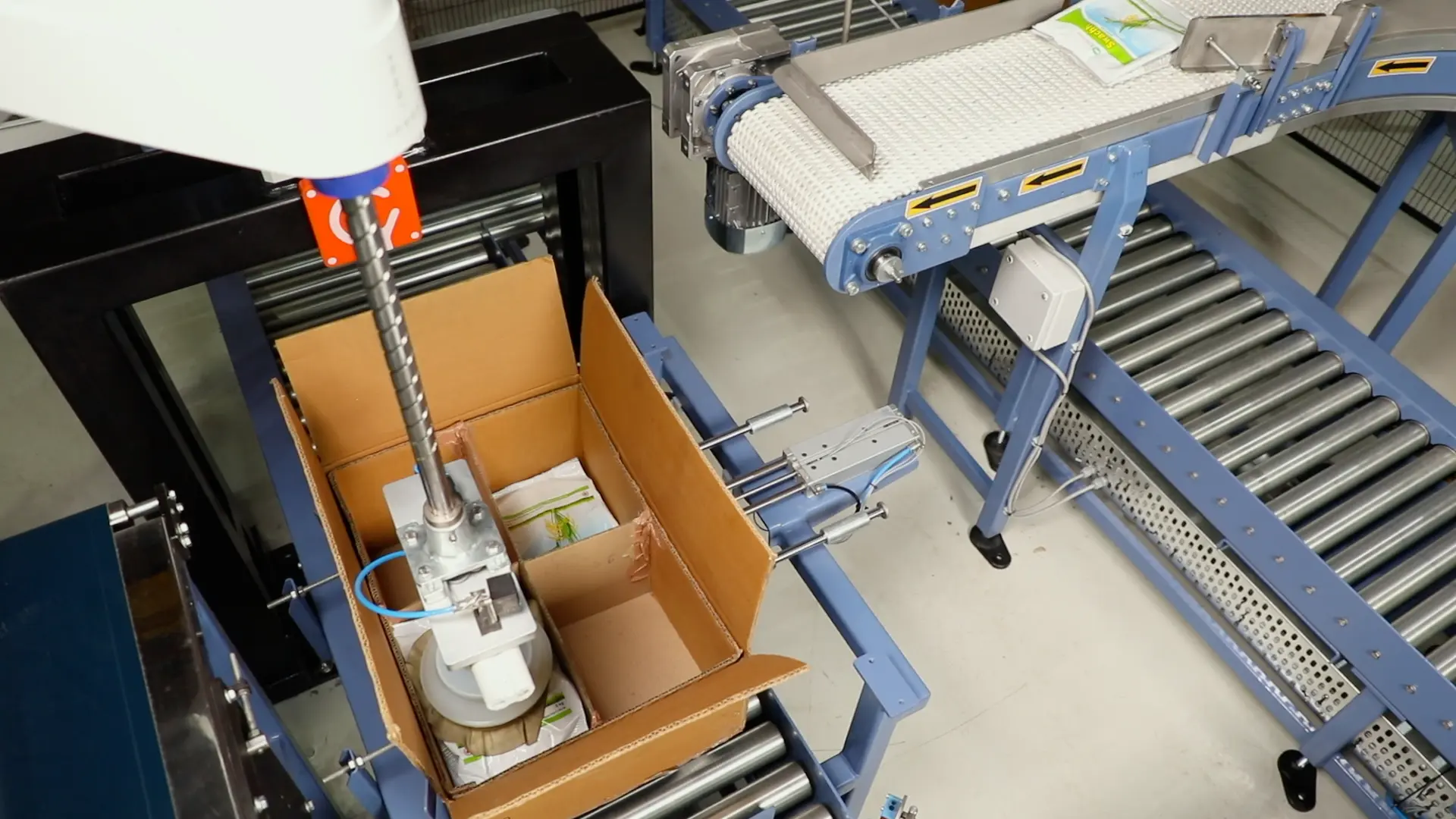
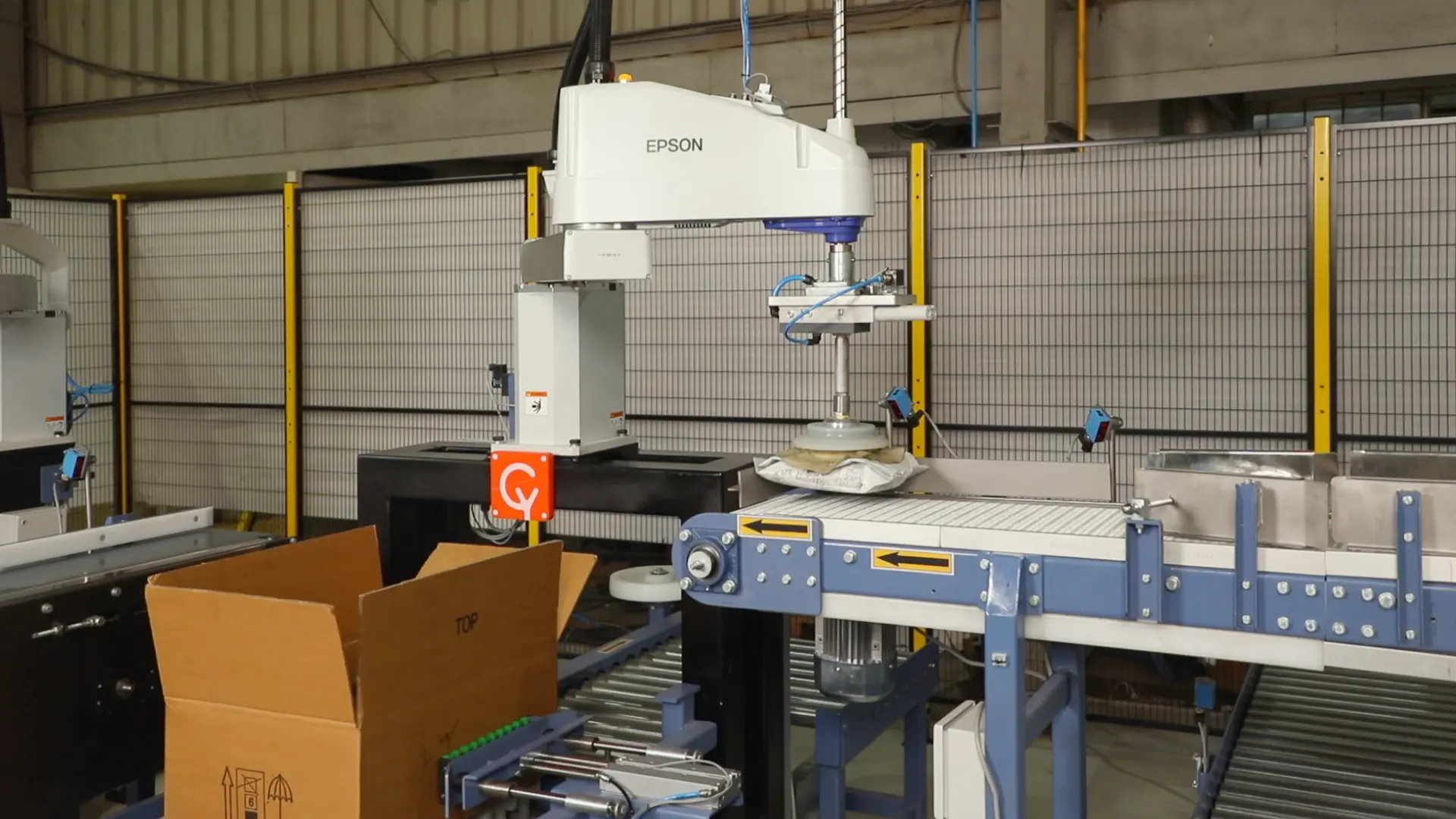
For pouch lines, light pharma sachet lines and small-format applications, a SCARA-based high speed case packer with array pickup sustains 40 to 60 units per minute. Cybernetik’s SCARA pouch case packer with proprietary staggered pouch lifting reaches 40 pouches per minute on flexible packaging.
Tier 2: 60–120 Units per Minute, Six-Axis with Multi-Array Pickup
For bottle lines, mid-format rigid containers and heavier packs, a six-axis high speed case packer with multi-array pickup sustains 60 to 120 units per minute. Cybernetik’s six-axis bottle case packer with 200 kg payload handles up to 120 bottles per minute across PET, glass and HDPE.
Tier 3: 120+ Units per Minute, Linear Mechanical at High Steady-State
For very high volume single-SKU lines, bottled water, soft drinks at extreme throughput, Cybernetik configures linear mechanical case packers with conveyor-mounted pushers that exceed 120 units per minute at sustained steady-state. Lower SKU flexibility, higher single-format throughput.
Side-by-Side Comparison
The table below compares high speed case packing configurations across the three throughput tiers.
| Specification | Tier 1 SCARA | Tier 2 Six-Axis | Tier 3 Linear |
|---|---|---|---|
| Throughput Range | 40–60 units/min | 60–120 units/min | 120+ units/min |
| Payload Class | Up to 6 kg | Up to 200 kg | Push-based |
| Pickup Mode | Array (light) | Multi-array (heavy) | Conveyor push |
| Product Format | Pouches, sachets | Bottles, jars, rigid | Single-SKU bottles |
| SKU Flexibility | High via recipe | High via recipe | Low; mechanical reset |
| Best Case Erector | 15 cases/min | 20–30 cases/min | 30+ cases/min |
| Best Industry Niche | Pouch food, pharma | Bottled beverages, dairy | Water, soft drinks volume |
High Speed Case Packing Equipment from Cybernetik
High speed case erecting upstream
High speed case packing throughput tiers
Downstream high speed sealing and transfer
 “Purpose-engineered high speed case packers transform packaging operations by eliminating bottlenecks, reducing changeover time, and maintaining consistent throughput.”

See it in action
The Cybernetik High Speed Case Packer Advantage
Industries Where High Speed Case Packing Pays Back Fastest
When ‘High Speed’ Becomes the Right Specification
Where two or more of the following describe your current line, scoping a high speed case packer (and matched high speed case erector) becomes the rational next move.
Where these conditions cluster, a Cybernetik high speed case packer typically returns its capex within twelve to twenty-four months on throughput recovery, changeover savings and shift-output stability combined.