
Key takeaways
Carton packaging sits closer to the consumer than any other stage of plant operations. Filling, sealing, labelling, primary wrapping- all of these are operational concerns invisible to the eventual buyer. The carton is different. The carton is what arrives in a warehouse, what holds product on a retail back-room shelf, what a store associate cuts open to stock the front-of-shelf display, and increasingly, in e-commerce, what arrives directly at the customer’s door. A carton that holds together, ships efficiently and opens cleanly is a brand asset; a carton that doesn’t is a brand liability.
This guide explains what modern carton packaging involves at the machine level, the difference between an automatic carton packing machine and a carton case packer in operational vocabulary, and how Cybernetik configures carton packaging lines for food, pharma, FMCG and confectionery manufacturers running shelf-ready and export-grade carton formats. If carton presentation has moved up the priority list in your business, and for most consumer brands, it has, the equipment specification that supports it deserves a fresh look.
What Is Carton Packaging in a Manufacturing Context?
In manufacturing operations, carton packaging refers to the stage where primary-packed product is loaded into a carton , usually a corrugated case, display carton or shelf-ready tray , and the carton is sealed and made ready for palletizing or direct dispatch. The activity sits within the broader secondary packaging category and is performed by an automatic carton packing machine, sometimes referred to as a carton case packer or carton packer.
What distinguishes carton packaging from generic case packing is the role the carton itself plays. A pure shipping case is invisible , its job is to protect contents from factory to retailer. A display carton or retail-ready case is the opposite: it travels to the retail shelf and stays there, presented to consumers as the carton is opened in store. Carton packaging equipment therefore handles both invisible shipping cases and consumer-visible display cartons, often on the same line with different recipes.
Cybernetik’s carton packaging portfolio spans automatic carton packing machines for standard RSC and HSC shipping formats, display carton loaders for shelf-ready retail packaging, and carton weigh-and-fill systems with vibratory feeders for accurate weight-based filling of small-format product into rigid cartons. All variants integrate with upstream primary packaging and downstream palletizing under a single PLC + SCADA architecture.
Five Capabilities That Define Modern Carton Packaging Equipment
1. Automatic Carton Erecting from Flat Blanks
Modern carton packaging starts with an automatic carton box making machine , a carton erector that picks flat blanks from a magazine, opens them into 3D form, folds and seals the bottom in a single uninterrupted cycle. Cybernetik’s carton erectors run at 15–30+ cartons per minute and supply a continuous stream to the downstream packer without operator intervention beyond magazine refill.
2. Multi-Format Carton Handling
A modern carton case packer must handle RSC shipping cases, HSC pharma cartons, retail display cartons and shelf-ready trays from the same physical asset , often switching between formats multiple times in a shift. Recipe-driven adjustment of carton magazine, conveyor pitch and loading mechanics makes this practical.
3. Accurate Weight or Count Loading
Carton packaging often requires weight or count verification before sealing , particularly in food, pharma and chemicals where carton weight is a labelled specification. Cybernetik’s Carton Weigh & Fill System integrates vibratory feeding with inline checkweighing, ensuring every carton meets declared weight within tolerance before sealing.
4. Visual Presentation Quality for Retail-Ready Cartons
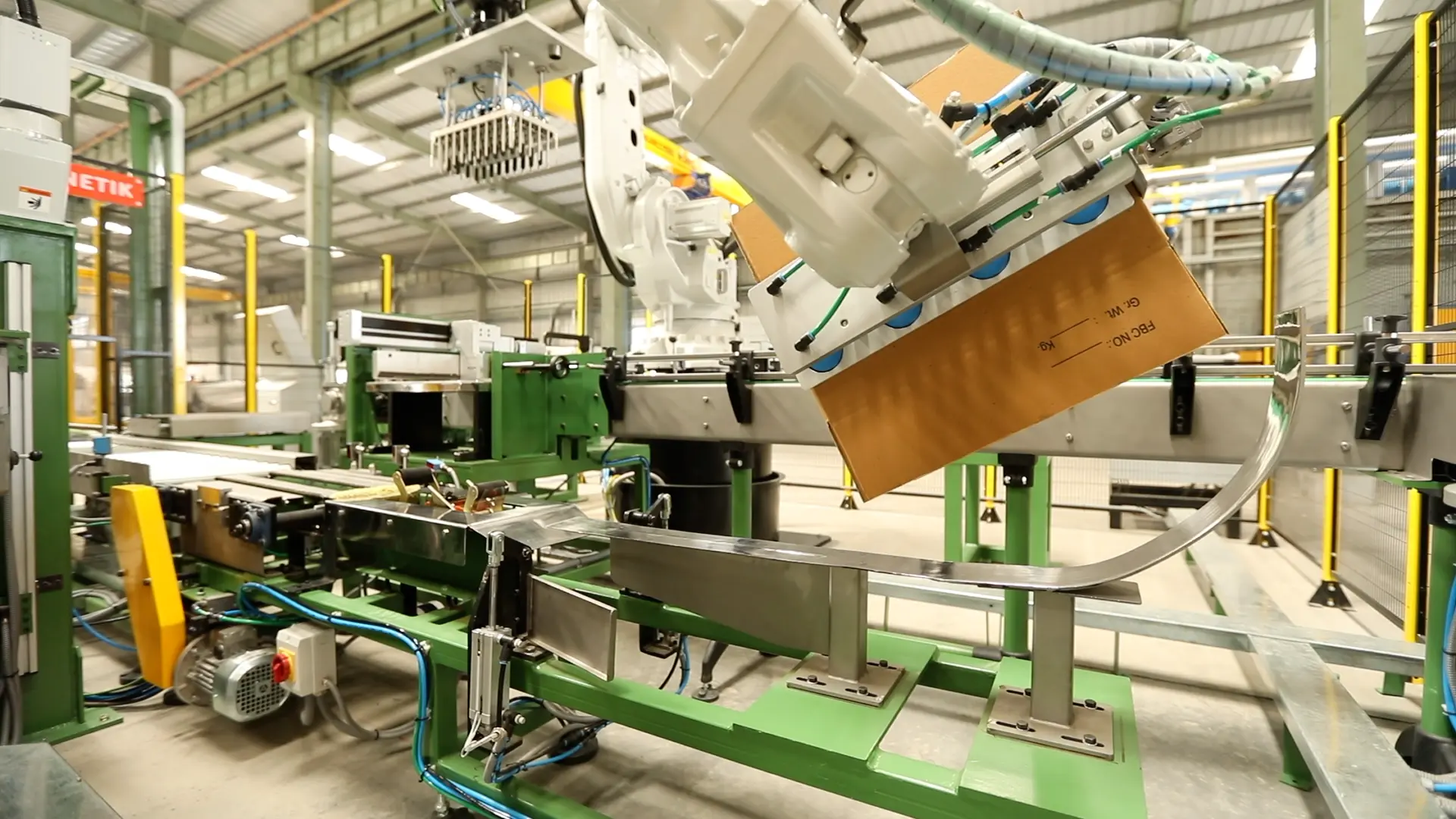
Display cartons require visually clean loading , products oriented correctly, label faces visible, no surface marking on the carton itself. Cybernetik’s automatic carton packing machines use vision-guided robotic pickup and cushioned placement to produce retail-ready cartons that meet major retailer shelf-ready packaging requirements.
5. Tamper-Evident and Audit-Grade Sealing
For pharma, nutraceutical and high-value FMCG, the carton seal is a regulatory artefact, not a logistical convenience. Cybernetik’s carton sealers support hot-melt, tape and combined tape+glue sealing with batch and date coding integrated into the line PLC for full audit traceability.
Three Approaches to Automatic Carton Packing
Carton packaging requirements vary substantially by product, throughput and shelf strategy. Cybernetik configures three distinct automatic carton packing approaches.
Standard Shipping Carton Packing
For invisible logistics cartons, RSC and HSC formats where the carton’s only job is protecting contents in transit, Cybernetik configures high-throughput automatic carton packing machines that prioritize speed and cost-per-case. Bottle and pouch lines feeding e-commerce warehouses are the typical application.
Retail-Ready and Display Carton Packing
For shelf-ready cartons that travel to the retail front-of-shelf, the carton case packer prioritizes presentation: clean loading geometry, label-face orientation, perfect carton-flap closure, and zero surface marking. Cybernetik’s vision-guided robotic carton packers are designed for this application across confectionery, beverage promo packs and consumer healthcare.
Weigh-and-Fill Carton Packing
For small-format and granular products, pralines, mini-bars, dry seasonings, Cybernetik’s Carton Weigh & Fill System with Vibratory Feeder loads cartons by weight rather than count, verifying each carton against label spec before sealing. The integrated system handles both the filling and the inline weight check.
Side-by-Side Comparison
The table below compares the three approaches across the parameters that drive specification decisions.
| Specification | Shipping Carton | Display Carton | Weigh & Fill |
| Primary Goal | Throughput and cost-per-case | Visual presentation quality | Accurate weight per carton |
| Throughput | Up to 60 cases/min | Up to 30 cases/min | Up to 20 cases/min |
| Carton Format | RSC, HSC | Display, retail-ready | Rigid cartons, tubs |
| Vision QC | Optional | Standard | Standard |
| Sealing | Tape or hot-melt | Hot-melt or glue | Hot-melt or glue |
| Best Industry | E-commerce, beverage | Confectionery, FMCG, retail | Spices, pralines, granular |
| Capex Profile | Lower per case | Higher per case | Mid-range |
Products and Carton Formats Cybernetik Handles
Primary product types loaded
Carton formats handled
Sealing and coding options
 “The right automatic carton packing machine ensures every carton leaves the production line with the accuracy, protection, and presentation today’s manufacturers demand.”

See it in action
The Cybernetik Carton Packaging Advantage
Industries Driving Investment in Automatic Carton Packing Machines
Symptoms That Justify an Automatic Carton Packing Machine Investment
If two or more of the following are visible in your current carton packaging operation, an automated carton packing machine investment is typically well justified.
Where these conditions appear together, the business case for a Cybernetik automatic carton packing machine is typically self-funding within twelve to twenty-four months on labour, scrap, transit-damage and changeover savings combined.