
Key takeaways
On a fully tooled-up plant floor, the case packer is the machine most operators take for granted and most plant managers underbudget. The filler is glamorous; the palletizer is visible; the case packer sits quietly in between, doing the unforgiving work of turning a stream of individual products into uniform, shipping-ready shipping cases. When it works, nobody notices. When it stops, every upstream and downstream stage stops with it.
This guide unpacks what a case packer actually does, the design choices that separate a great case packaging machine from a mediocre one, and how Cybernetik configures case packers for pouched, bottled and rigid-format production across more than thirty countries. Whether you are scoping a first-time investment or evaluating a replacement after years of running a legacy unit, the questions in this guide are the ones an experienced packaging engineer will walk through before signing off on a quote.
What Is a Case Packer?
A case packer is a piece of automated secondary packaging equipment that receives primary-packed product , pouches, bottles, sachets, blister packs, flow-wrapped bars , and loads it into a corrugated case or display carton in a defined arrangement. The output is a closed, sealed, ready-to-palletize unit; the input is a continuous stream of individually packed product arriving from the upstream filler, wrapper, or bagger.
The case packer is often called a case packaging machine in operations parlance, and the underlying activity is referred to as case packaging. Whatever the naming, the function is the same: bridge primary packaging and palletizing without becoming the line’s bottleneck. A correctly sized case packer keeps your filler running at rated speed, your palletizer fed, and your operators off direct product contact.
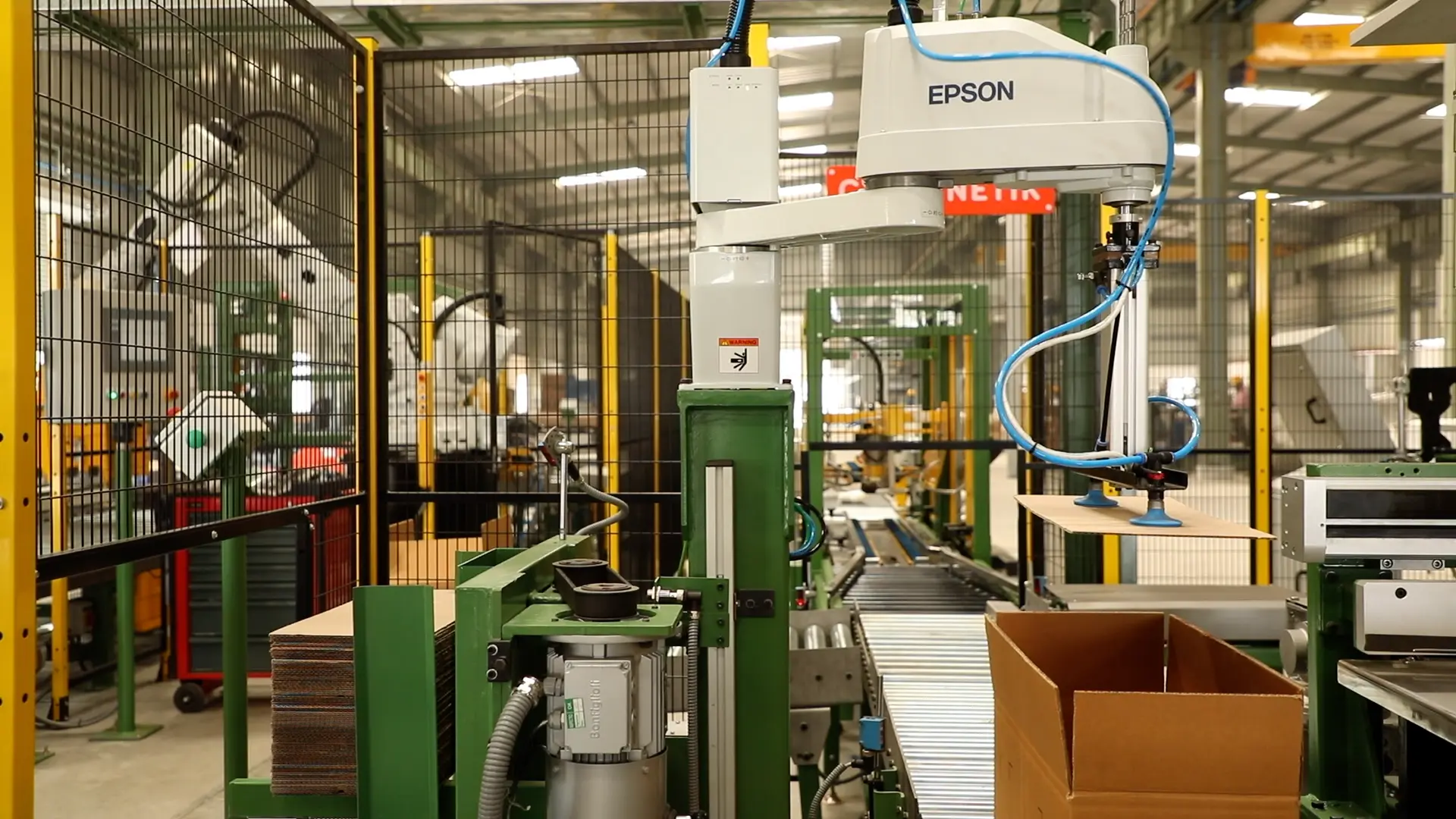
Cybernetik builds case packers on a flexible engineering platform that supports SCARA robotics for high-cadence light-payload work, six-axis robotics for heavier rigid formats, and hybrid configurations for plants running mixed-format SKUs. Common to every build are stainless steel contact parts, GMP-ready hygiene, recipe-driven HMI changeover, and integration into a single PLC + SCADA architecture across the secondary packaging line.
Five Functions a Modern Case Packer Performs Beyond Loading
It is tempting to think of a case packer as a single-purpose machine that ‘just’ puts product into cases. In a modern integrated line, it does considerably more.
1. Cadence Matching with the Upstream Filler
The case packer reads the upstream filler’s rate via the line PLC and synchronizes its loading cycle accordingly. There is no static cycle time; the machine speeds up or slows down within its envelope to absorb minor surges in the upstream stage, eliminating the wave-pattern starvation that plagues unintegrated lines.
2. Real-Time Product Inspection at Pickup
Vision systems mounted at the pickup station verify product orientation, count and integrity before each load cycle. Mis-oriented or visibly damaged units are rejected before they reach the case , preventing downstream rework, customer complaints, and the waste of an entire case worth of corrugated material.
3. Density-Optimized Pack Arrangement
For flexible packaging, a Cybernetik case packer uses a staggered overlap technique that interleaves pouches inside the case, maximizing pack density and reducing the case count required to ship a given volume of product. For rigid formats, the geometry-fixed matrix is verified by inline sensors before sealing.
4. Recipe-Based SKU Changeover
Modern multi-SKU production demands minute-scale changeover. Cybernetik’s case packer reconfigures end-of-arm tooling, conveyor pitch and case dimensions through a single HMI recipe selection , typically under five minutes within a format family, without operator intervention beyond magazine refill.
5. Coordinated Handoff to Case Sealing and Palletizing
The loaded case exits the packer at a known cadence with known dimensions, known SKU and known weight , all communicated to the downstream sealer and palletizer via shared PLC. This eliminates the lag, mis-identification and matrix-recalculation that operator-mediated handoffs introduce.
Three Case Packer Configurations Cybernetik Builds
There is no single ‘best’ case packer; the right configuration depends on product format, throughput target and SKU mix. Cybernetik builds three primary configurations on a common engineering platform.
SCARA Pouch Case Packer
Built around a SCARA robotic arm and a proprietary staggered pouch lifting system, this configuration is purpose-engineered for flexible packaging. Speeds reach up to 40 pouches per minute with a 6 kg payload envelope, handling single and multi-SKU production from VFFS and pre-made-pouch baggers. Best for food, pharma sachet, and pet food applications.
Six-Axis Bottle Case Packer
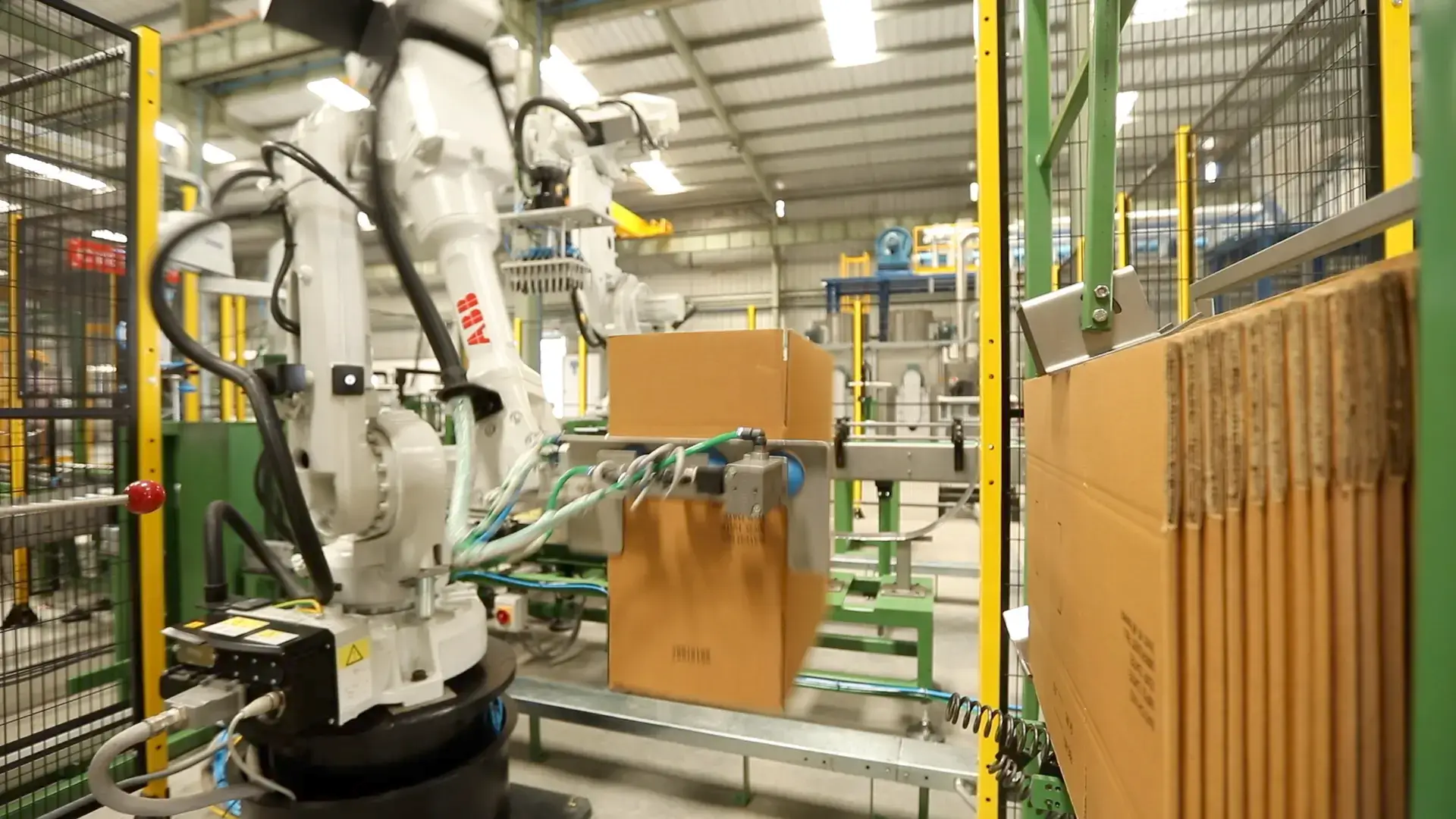
A six-axis robotic arm with up to 200 kg payload capability and speeds up to 120 bottles per minute. Handles PET, glass, HDPE and pharmaceutical bottles in customizable matrix formations, with vision-guided pickup and custom end-of-arm tooling per SKU. Best for beverage, dairy, chemicals and personal care lines.
Hybrid Mixed-Format Case Packer
For plants that run both flexible and rigid formats , co-packers, contract manufacturers, multi-brand FMCG , Cybernetik engineers hybrid case packers with quick-change end-of-arm tooling and dual-recipe HMIs that switch between format families in 15 to 30 minutes.
Side-by-Side Comparison
The table below compares the three configurations on the parameters that matter most when evaluating a case packer investment.
| Specification | SCARA Pouch | Six-Axis Bottle | Hybrid |
| Throughput | Up to 40 pouches/min | Up to 120 bottles/min | Format-dependent |
| Payload | Up to 6 kg | Up to 200 kg | Up to 200 kg |
| Best Product | Pouches, sachets, stick packs | PET/glass/HDPE bottles, jars | Mixed flexible + rigid |
| Pack Density | Density-optimized overlap | Geometry-fixed matrix | Both modes |
| Changeover | Under 5 min within family | Under 5 min within family | 15–30 min between modes |
| Hygiene | GMP-ready | GMP-ready | GMP-ready |
| Capex | Mid-range | Higher | Higher (versatile) |
Products and Cases the Cybernetik Case Packer Handles
Primary packs
Case and carton formats
Pack matrix formations
 “Purpose-engineered case packers deliver precise product handling, rapid format changeovers, and dependable secondary packaging across high-volume manufacturing environments.“

See it in action
The Cybernetik Case Packer Advantage
Across four manufacturing facilities and installed lines in thirty-plus countries, the Cybernetik case packer is engineered around six design principles that translate directly into uptime, hygiene and total cost of ownership.