
Key takeaways
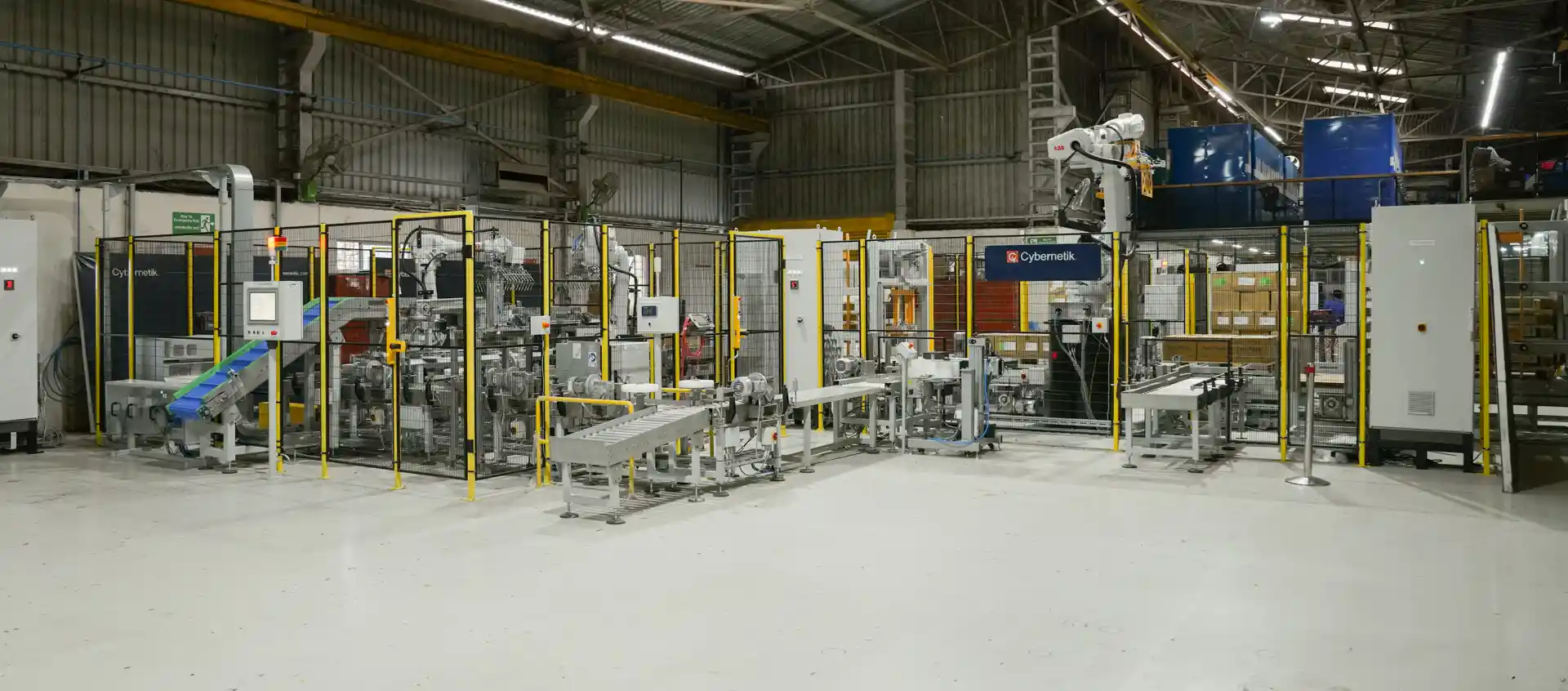
A case packing station is more than a machine. It is a zone of the factory floor ,a physical and operational boundary between primary packaging output and the palletizer input ,and its efficiency is determined not just by the case packer machine at its centre, but by everything around it.
Poorly designed case packing stations create bottlenecks that the best case packer machine in the world cannot overcome ,because the machine is only as efficient as the flow of product, cases, and data around it.
This guide provides a complete framework for designing an efficient case packing station ,from initial layout principles to machine selection, quality control integration, downstream connection, and the control architecture that makes it all run as a single system.
What a Case Packing Station Includes
A complete automated case packing station encompasses the following components:
Principle 1, Design Around Product Flow, Not Machine Footprint
The most common case packing station design error is placing the case packer machine first on the floor layout and fitting everything else around it. Efficient design starts with product flow ,the path a product takes from upstream primary packaging to the sealed case at the palletizer.
The correct design sequence:
Principle 2, Match Case Packer Machine to Product Flow Rate
How to calculate the required case packer machine speed: Primary packaging speed (units/min) ÷ Units per case = Cases per minute required. Add 15–20% headroom.
| Product Type | Machine Configuration | Sustained Speed |
|---|---|---|
| Pouches (high volume) | Case Packer for Pouches (dual-robot SCARA) | 40 pouches/min |
| Pouches (lower volume) | Horizontal Pouch Case Packer (SCARA) | 12 pouches/min |
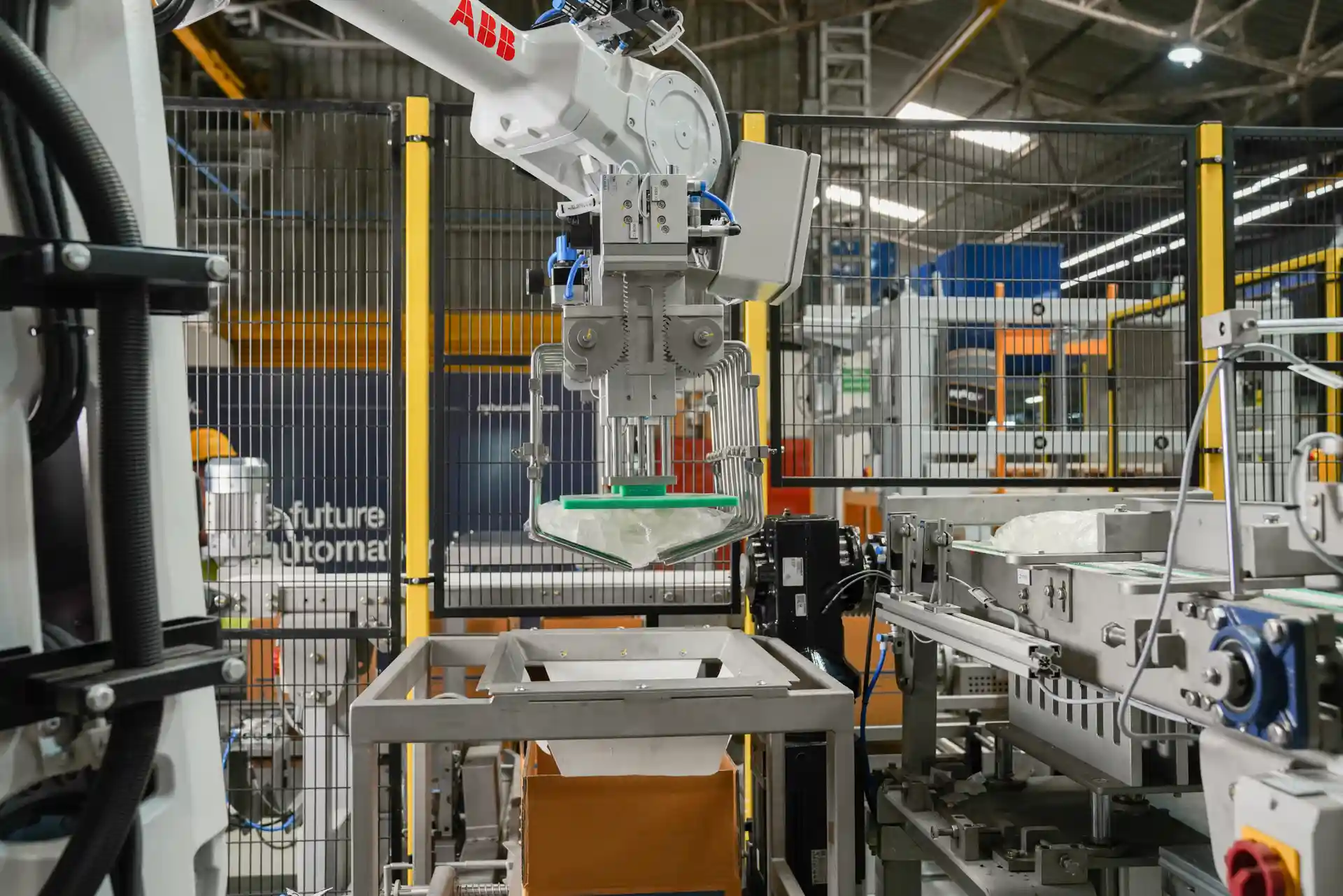
| Bottles | Case Packer for Bottles (Six Axis, 200 kg) | Up to 120 bottles/min |
| Shrink packs | Case Packer for Shrink Packs | Up to 400 cans/min |
| Shrink packs + bottles | Case Packer for Shrink Packs & Bottles | Up to 400/120 (mode dependent) |
Principle 3, Locate Quality Control Before Sealing, Not After
The position of quality control equipment within the case packing station is one of the design decisions that most significantly affects the total cost of quality on the line.
| QC Position | Cost of Rejection | What Gets Caught |
|---|---|---|
| Before sealing (correct) | One case of product + one corrugated blank | Missing units, defective products, misformed cartons |
| After sealing (wrong) | One sealed, labelled, potentially shipped compliance failure | Nothing – too late to prevent the failure |
Design rule, absolute: position all quality control instrumentation between the robotic loading station and the top sealer. Never downstream of the sealer.
Principle 4, Provide Adequate Blank Magazine Access
The case erector’s blank magazine must be refilled periodically. On a line running at 5 cases/min with a 200-blank magazine, the refill interval is 40 minutes.
Efficient case packing station design provides:
Principle 5, Design the Outfeed to Match Palletizer Intake Speed
When the case packer machine and palletizer share a PLC/SCADA architecture, the outfeed conveyor speed is synchronised automatically as part of the shared recipe ,cases flow from loading station to palletizer at a rate the palletizer can process without accumulation or starvation.
When they are from different suppliers on different PLC platforms, the outfeed conveyor becomes a buffer zone that absorbs speed mismatches. This is a floor-space cost, a capital cost, and a system complexity cost that is eliminated by specifying case packer and palletizer from the same supplier.
Principle 6, Select the Downstream Palletizer to Match Station Output
| Throughput Range | Palletizer Configuration | Key Feature |
|---|---|---|
| Up to 600 boxes/hour | Gantry Palletizer | Compact footprint, four-axis movement, easy programme, PLC-controlled |
| Up to 600 boxes/hour | Cobot Palletizer | Safe for human proximity, flexible, easy to reprogram |
| Up to 1,200 boxes/hour | Box Palletizer / Robotic Carton Palletizer | Single robot handles multiple variants, simultaneous 2-case palletizing |
| Up to 1,800 boxes/hour | Box Palletizer (high-level) | Layer-based palletizing at maximum throughput |
| Any + label printing | Cobot Palletizer & Case Printer | Label printing integrated in palletizing cycle – one less station |
 “An efficient case packing station is not defined by the machine at its center, but by how effectively product flow, quality control, and downstream automation work together as a single system.”

See it in action
Principle 7, Design Safety and Maintenance Access Into the Station
Safety requirements:
Maintenance access requirements:
Case Packing Station Design Checklist
| Design Parameter | Status |
|---|---|
| Product flow path is linear – no backflow or crossflow | ☐ Confirmed |
| Case packer machine speed matches primary packaging output + 15–20% headroom | ☐ Confirmed |
| Case erector speed matches case packer loading rate | ☐ Confirmed |
| Quality control is positioned before the top sealer | ☐ Confirmed |
| Missing unit detection included as standard | ☐ Confirmed |
| Blank magazine refill access is outside the safety envelope | ☐ Confirmed |
| Outfeed conveyor speed synchronised to palletizer intake | ☐ Confirmed |
| Case packer and palletizer share PLC/SCADA architecture | ☐ Confirmed |
| Full perimeter guarding with interlocked doors | ☐ Confirmed |
| Emergency stops at all operator positions | ☐ Confirmed |
| Two-sided maintenance access to robot | ☐ Confirmed |
| CE certification and ISO 12100 risk assessment documented | ☐ Confirmed |
| Recipe-driven changeover – no manual mechanical adjustment | ☐ Confirmed |
| Total changeover time confirmed for most frequent format pair | ☐ Confirmed |
| Single supplier for case packer and palletizer | ☐ Confirmed |
Common Case Packing Station Design Errors to Avoid
| Error | Consequence | Correct Approach |
|---|---|---|
| Specifying case packer before designing layout | Machine doesn’t fit floor, blocked magazine access | Design product flow path first, then position machine |
| Quality control positioned after sealer | Short-count cases sealed and shipped | Always position QC between loader and sealer |
| Case packer and palletizer from different suppliers | PLC incompatibility, dual-supplier fault accountability | Same supplier – shared architecture, single support contact |
| Underspecified blank magazine capacity | Frequent operator intervention interrupts throughput | Design magazine capacity for minimum 30–40 min unattended run |
| No maintenance access corridors designed in | Unplanned downtime within 12 months | Design two-sided robot access and erector access into footprint |