
Key takeaways
Lump breakers look interchangeable. A housing, a shaft, some blades, a motor. Quotations arrive with a throughput figure and a price, and the differences between them are not visible in either number.
What separates them is whether the machine will break your lumps, at your rate, without stalling on the hardest ones and without turning the rest of your product into fines. None of that follows from the specification sheet, and all of it follows from a conversation about the material.
This guide covers how to characterize the problem, the sizing parameters that actually matter, the configuration decisions and the questions that reveal what a supplier has understood. The mechanism itself is covered in the article on lump breakers and how they work.
Characterize the Lumps Before the Machine
The first question to answer, and the one that sorts suppliers, is what the lumps are actually like. Four properties matter and none appears on a material safety data sheet.
Sizing the Machine
Throughput at your material
Published capacities assume a free-flowing material with a modest proportion of soft lumps. Real throughput depends on bulk density, lump hardness, lump fraction and how the material feeds. Ask for a rate on your product, and if the supplier has not run it, ask what assumption their figure rests on.
Inlet dimension
Underrated and frequently the actual failure. The inlet has to accept the largest lump that will arrive, with margin, because a lump that will not pass sits across the opening and everything behind it stops. Where material comes from bulk bags or silo bottoms, the largest lump can be far bigger than anything the process produces.
Required output size
Decide whether a maximum output size must be guaranteed or simply improved. If it must be guaranteed, the machine needs a screen or grid beneath, and that screen becomes both the size control and a potential restriction on throughput. If improvement is enough, breaker bars with a defined clearance are simpler and less prone to blinding.
Torque, not power
Motor power tells you how much work per unit time the machine can do. Torque tells you whether it can break the hardest lump it will meet. A lump breaker is a low-speed, high-torque machine, so gearing and shaft sizing matter more than motor rating, and a supplier quoting only kilowatts has answered the less important question.
Duty cycle
Continuous duty under a silo outlet and intermittent duty under a bag tipping station are different problems. Intermittent operation brings surges: an operator empties a sack, the machine receives a slug of material including whatever lumps were at the bottom, and then nothing for a minute. Sizing for average throughput under those conditions produces a machine that stalls on every sack.
Configuration Decisions
| Configuration choice | The options | What decides it |
|---|---|---|
| Rotor count | Single rotor, or two counter-rotating rotors | Hard cake and inconsistent feed favor dual; soft agglomerates do not need it |
| Discharge restriction | Open discharge, fixed breaker bars, or a screen | Whether a maximum output size must be guaranteed or simply improved |
| Blade material | Standard stainless, or hardened and surface-treated | Abrasiveness of the product and expected blade life |
| Clearance | Fixed, or adjustable between blade and fixed element | Whether one machine must handle several products with different lump behavior |
| Mounting | Inline between flanges, standalone with hopper, or integrated under a bag tip | Whether the unit is being retrofitted into existing pipework or specified with a new station |
| Drive | Direct geared drive, or geared with variable frequency control | Whether rotor speed needs to change between products |
| Area rating | Standard, or explosion-resistant ATEX construction | Combustible dust classification of the material and the area |
The clearance row deserves emphasis in multi-product plants. A fixed clearance is set for one material behavior. Where the same machine handles a soft-caking powder and a hard-caking one, adjustability is what prevents the compromise setting that over-processes one and under-processes the other.
Feed Arrangement Decides Performance
More lump breaker complaints trace back to how material arrives than to the machine itself.
A breaker fed by a controlled, steady stream works within its design envelope. A breaker fed by a dump, when a bulk bag is opened or a hopper gate is thrown, receives its hourly capacity in a few seconds. The rotor stalls, material bridges above it, and the operator concludes the machine is undersized.
The remedy is metering rather than a larger machine. A rotary valve, screw feeder or controlled gate ahead of the breaker converts a surge into a rate, and that is usually cheaper than buying capacity to absorb surges the process should not be producing.
Flood feeding has the opposite problem. A breaker permanently full runs at high torque continuously, which accelerates blade wear and generates more fines than a machine seeing material at a controlled rate. Neither extreme is correct, and the feed arrangement belongs in the specification alongside the machine.
Safety and Guarding
A lump breaker contains a rotating blade behind an opening that material passes through, and in many installations that opening is at working height under a hopper.
Jam and Overload Handling
Something too hard to break will eventually arrive: a piece of hardened wall deposit, a fragment of packaging, occasionally something that should never have been in the material at all.
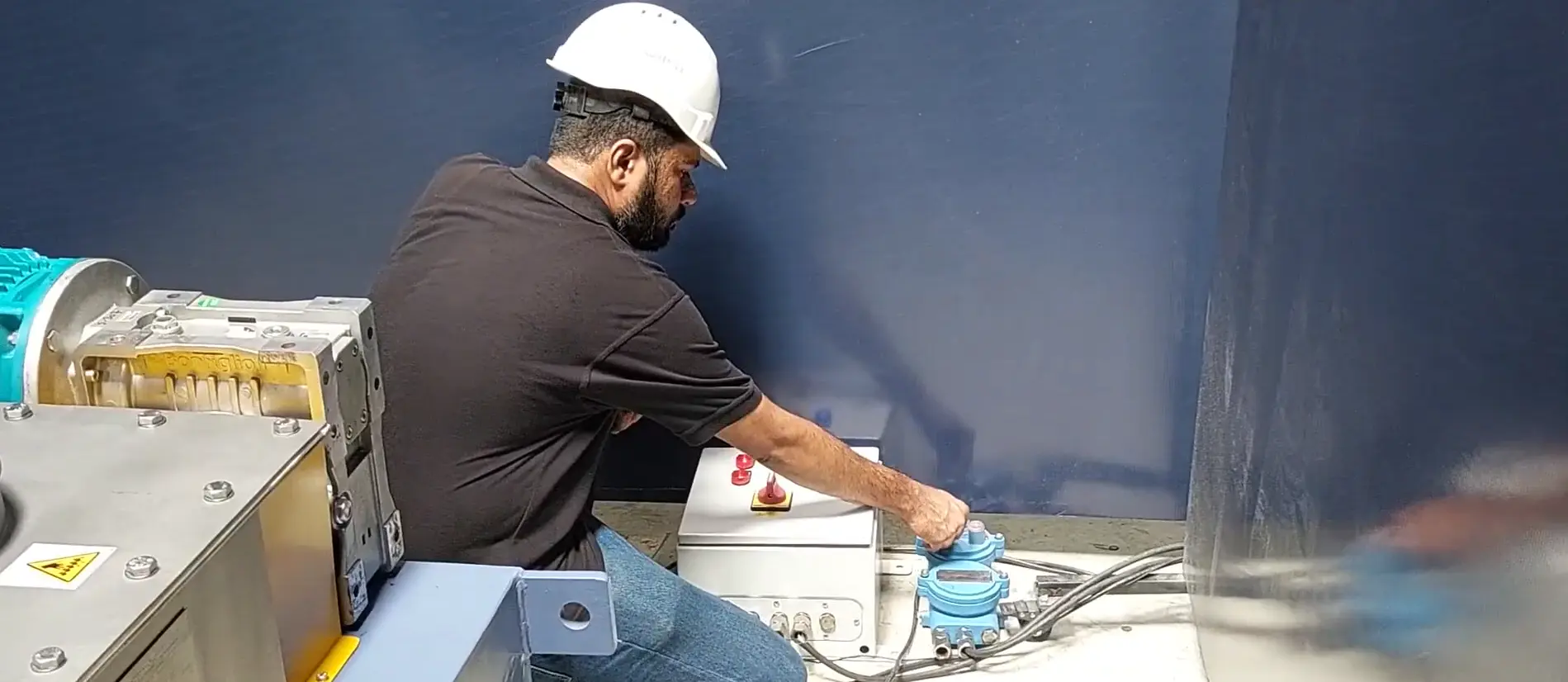
What the machine does at that moment determines whether it is a two-minute interruption or a repair. Options include torque limiting that disengages the drive, current monitoring that stops the motor before it stalls under load, mechanical shear protection, and a reversing facility that backs the rotor out of a jam without disassembly.
Ask specifically what happens and who clears it. A machine requiring the housing to be opened and the rotor cleared by hand at every jam is a different operational proposition from one that reverses and continues, particularly in a plant where the breaker sits under a hopper full of material.
Hygiene and Changeover
Blades, breaker bars and screens are precisely the geometry that traps residue, so in multi-product plants cleaning determines whether the machine is workable.
Establish how the housing opens, whether the rotor withdraws or the unit must be dismantled in place, whether tools are needed, and how long a full clean takes in practice. Ask to see it done rather than reading the procedure. Where the machine is mounted inline between flanges, also confirm whether it can be cleaned in position or must be removed from the line.
Surface finish and weld quality matter here too, since a rough internal surface holds product that a smooth one releases, and welds that are not dressed give residue somewhere to sit.
 “A lump breaker should be sized for the hardest lump and the worst feed condition, not the average throughput, because real production performance is determined by what the machine encounters at its limits.”

See it in action
Total Cost of Ownership
Questions to Put to a Supplier
- What do you need from us before you can size this, and can we send a caked sample?
- What throughput will it hold on our material, and how was that established?
- What is the largest lump the inlet will accept?
- What torque is available, and what happens when something will not break?
- Is clearance adjustable, and how is output size controlled?
- How does material feed into it, and does the arrangement need metering ahead?
- How is it cleaned, can that be done in position, and how long does it take?
- What blade life should we expect, and what does a replacement set cost?
The first and fourth questions carry the most weight. A supplier who wants a sample is going to select for your material, and a supplier with a clear answer about overload has thought about the day the machine meets something it cannot break.
Lump Breakers from Cybernetik
Cybernetik builds the lump breaker as part of complete powder handling lines, which means the feed arrangement, the downstream screening and the dust containment around it are specified with the machine rather than left to the plant.
| Cybernetik lump breaker | Specification |
|---|---|
| Capacity | Up to 6,000 kg/hr |
| Breaking elements | High-strength blades for smooth breaking action |
| Rotor options | Second rotor available where stronger action is required |
| Drive | Geared motor driving the rotor at controlled speed |
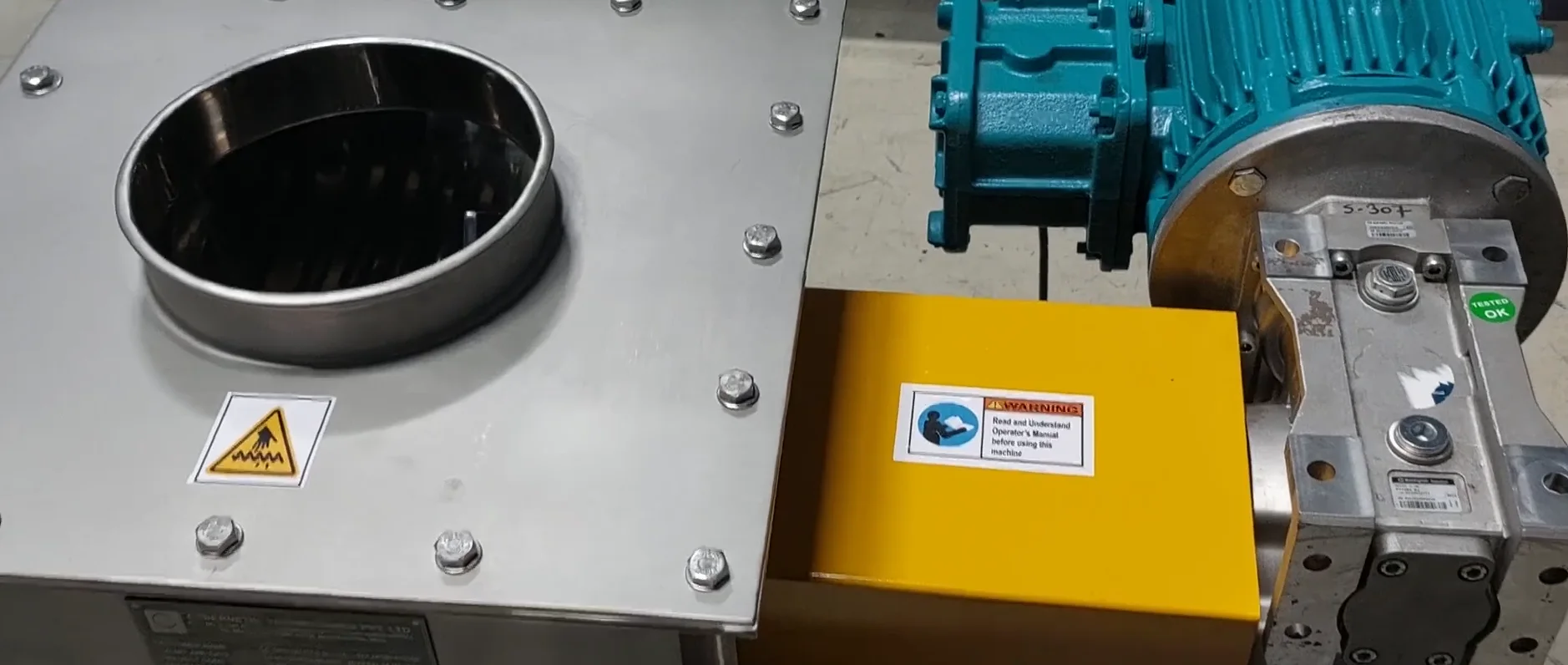
| Mounting | Fully enclosed sandwich unit fitted between two flanges in a butterfly-valve-type housing |
| Shaft sealing | Gland packing, preventing leakage along the shaft |
| Construction | Welded, robust build |
| Hazardous area | Explosion-resistant ATEX version available |
| Build standard | Hygienic, GMP construction, easy to clean and maintain |
| Integration | Specified with bag discharge stations, sifters, powder transfer systems and valves |
| Industries | Food, pharmaceuticals, chemicals and general manufacturing |
Several of those specifications map onto the decisions above. The second rotor option is the answer to hard, inconsistent cake without escalating to equipment that over-processes the rest of the batch. Inline sandwich mounting between flanges suits retrofits where new supporting structure is not practical. Gland packing seals the shaft on a machine that generates fines by design. And ATEX construction is available where dust classification requires it, which is a purchase decision rather than a later addition.
The natural downstream partner is screening. A turbo sifter at up to 6,000 kg/hr with mesh from 7000 down to 40 microns catches anything the breaker did not resolve, which is what gives genuine control over what leaves the stage rather than an improvement that has to be trusted.
Cybernetik has operated for more than three decades, is headquartered in Pune with additional facilities in Gujarat and Raigad and international offices in the United States and UAE, and has installed over 6,000 systems across 30 plus countries, including more than 400 custom automation solutions. Further background is on the Cybernetik about page.