
Key takeaways
Spice grinding looks like a size reduction problem and is actually a heat problem. What a customer pays for in ground spice is aroma and colour, and both live in volatile oils that grinding drives off. A mill that produces perfect particle size while running hot delivers powder that meets specification on a sieve analysis and smells like nothing.
That is the reason industrial spice grinder selection is not a matter of choosing a bigger motor. The decision runs through heat generation, oil content, particle size control, metal contamination, dust explosion risk and how quickly the machine can be cleaned between a turmeric batch and a chilli batch.
This guide covers the mill types used in spice processing, what actually determines output quality, and the specification decisions that separate a machine which works in your plant from one that merely works.
Industrial Grinders Are a Different Category
A quick clarification, because the term covers two unrelated things. A domestic electric spice grinder is a kitchen appliance handling grams at a time with a small blade and no temperature control. An industrial spice grinding machine processes hundreds of kilograms per hour, controls output particle size to a specification, operates under food safety and explosion protection requirements, and integrates with upstream feeding and downstream sifting and packing.
Everything below concerns the second category. If the requirement is a few kilograms a day, none of it applies.
What Determines Ground Spice Quality
Heat, and where it comes from
Every mill converts most of its input energy into heat. Friction and impact raise chamber temperature quickly, and volatile oils begin escaping well before the powder feels hot to touch. Colour degrades alongside aroma, which matters commercially because buyers judge chilli and turmeric on colour value before they judge anything else. Heat management is therefore the first question to put to any grinder, not the last.
Oil and fat content
Spices are not one material. Coriander and dry chilli grind cleanly. Cumin, mustard, nutmeg and clove carry enough oil to smear rather than fracture, clogging screens and coating the chamber. High oil products either need chilled or cryogenic grinding, or they need a mill whose geometry tolerates smearing. Selecting on the basis of your easiest product and discovering the problem with your hardest one is a common and expensive sequence.
Particle size distribution
The specification is rarely a single number. Masala blends usually sit in a coarser band while fine powders run much finer, and what matters is the spread around the target as much as the target itself. A wide distribution means oversize particles that a customer notices and fines that dust during packing. This is why a sifter downstream of the mill is part of the specification rather than an accessory: oversize is returned for regrinding instead of shipped.
Incoming moisture
Material that arrives too wet clogs screens and mills inconsistently. Spices are normally ground within a defined moisture band, and if incoming material varies, drying belongs upstream of grinding rather than being handled by adjusting the mill.
Mill Types Used in Spice Processing
Five configurations cover almost all industrial spice grinding, and they differ mainly in how they apply energy and how much heat that generates.
| Grinder type | How it reduces size | Suits | Limitation |
|---|---|---|---|
| Impact pulveriser or hammer mill | Beaters strike material against a liner, discharge through a screen | General purpose spice milling across most dry products | Generates significant heat; screen changes govern output size |
| Pin mill | Two discs studded with pins, one rotating, creating high shear | Fine grinding of free flowing, low oil spices | Heat build-up; high fat products smear rather than fracture |
| Air classifying mill | Grinding chamber with an integral classifier wheel returning oversize | Tight particle size distribution where consistency is critical | Higher capital cost and more complex to operate |
| Cryogenic mill | Liquid nitrogen chills product before and during grinding | High oil, heat sensitive spices such as clove, nutmeg, cardamom | Ongoing nitrogen cost, and cryogenic handling infrastructure |
| Roller mill | Compression between counter-rotating rolls | Coarse grinding at low heat input | Limited fineness; not suited to fine masala powders |
For most commercial masala and powder production, an impact mill with proper heat management and downstream sifting is the practical answer. Cryogenic grinding earns its running cost only where volatile oil retention carries a genuine price premium, such as high-value clove, cardamom or pepper, or where fat content makes ambient grinding impractical.
The Specification Decisions
1. Capacity and output size together
These two are linked, and quoting one without the other is meaningless, because any mill produces more coarse powder than fine. Cybernetik’s spice grinding system is rated at 500 kg/hr with a minimum output size of 40 µm, both customisable, which is the way capacity should be stated: throughput at a defined fineness.
2. Speed control
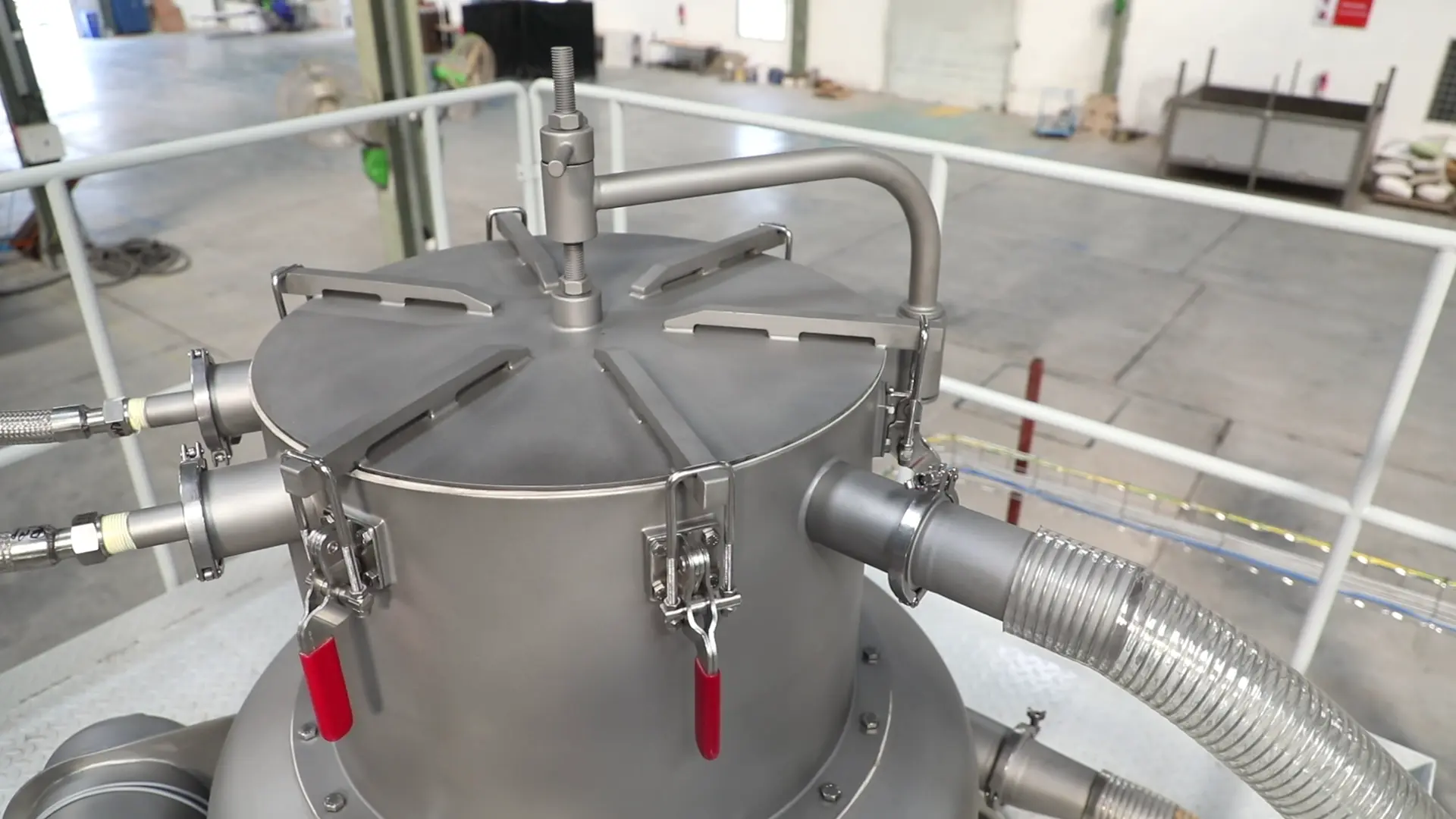
Different spices need different tip speeds, and a fixed speed mill compromises on all but one product. The high speed fine grinder operates across a 2,000 to 6,000 rpm range and mills down to 30 µm, which allows the same machine to run a coarse blend and a fine powder without mechanical change.
3. Materials of construction
Spices are acidic and often corrosive, so product contact surfaces should be SS316 rather than SS304. Non-contact parts and structure can step down, and a properly specified machine states this separately: SS316 for contact, SS304 for non-contact, powder coated mild steel for structure. A supplier who describes the whole machine as stainless steel without splitting it is not telling you what you need to know.
4. Metal contamination control
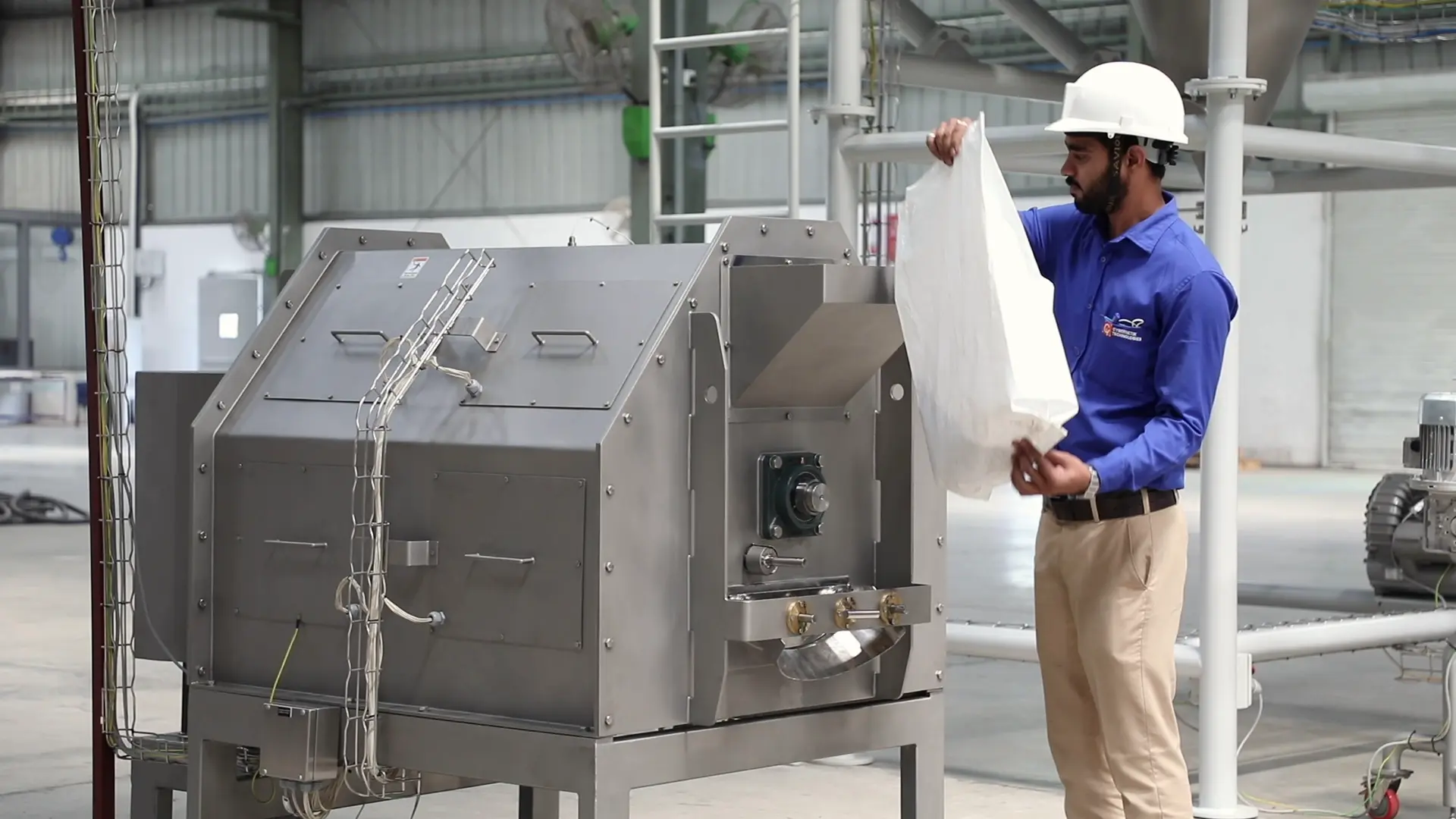
Whole spices arrive with foreign material, and metal reaching a high speed mill damages the machine and contaminates the batch. Control belongs at two points: a magnetic grill at the loading station and inlet magnets immediately before the grinding chamber. This is also a food safety requirement in most export markets, not merely equipment protection.
5. Explosion protection
Fine organic powder suspended in air is combustible, and spice dust is no exception. Where the risk assessment calls for it, ATEX rated explosion resistant construction, earthing, and a demarcated flameproof area are specification items rather than optional extras. This is one of the few decisions that cannot be retrofitted cheaply.
6. Changeover and cleaning
Plants running turmeric, chilli and coriander through one line lose more hours to colour and aroma carryover than to mechanical faults. Detachable contact parts, tool-free access to the grinding chamber and screens, and a design that can be visually verified as clean are what make multi-product operation viable. Ask for a timed changeover between two of your actual products rather than a general claim of easy cleaning.
7. Machine or system
The last decision is the largest. A grinder alone leaves feeding, sifting, conveying and packing as separate procurement and integration problems. An integrated line handles them as one.
 “Industrial spice processing requires more than powerful grinding; it requires controlled particle size, effective heat management, metal contamination prevention, and safe handling of combustible dust.”

See it in action
Grinder Alone, or Complete Line?
A complete spice grinding line runs as a sequence, and each stage exists to protect the one after it.
The same architecture applies to adjacent products. The sugar grinding system follows a comparable sequence with ATEX demarcation throughout, since sugar dust becomes combustible at sufficient concentration and temperature.
Cybernetik Spice Grinding Specifications
| Parameter | Specification |
|---|---|
| System capacity | 500 kg/hr, customisable |
| Output particle size | 40 µm minimum, customisable |
| Grinder speed | 2,000 to 6,000 rpm |
| Finest milling | Down to 30 µm on the high speed fine grinder |
| Materials of construction | SS316 product contact, SS304 non-contact, MS powder coated structure |
| System footprint | 5 x 3 m, customisable |
| Metal control | Magnetic grill at bag tipping station, inlet magnets on the grinder |
| Safety build | Explosion resistant ATEX construction available for flameproof areas |
| Hygiene build | Food grade, cGMP construction with dust-free operation |
The system is engineered for flavour and nutrient retention, output particle size control, no metal contamination, seamless integration from loading through processing to packaging, and rapid parts changeover between products with easily detachable components. Cybernetik has operated for more than three decades, is headquartered in Pune with offices in the United States and the UAE, and has installed over 6,000 systems across 30 plus countries.