
Key takeaways
Fat arrives at most food plants as a solid block and has to leave the first process stage as a clean, uniform liquid at a controlled temperature. That sounds like a heating problem with an obvious solution. It is actually one of the more unforgiving operations in food processing, because the window between properly melted and thermally damaged is narrower for fats than for almost any other ingredient.
Overheat butter and it oxidises. Overheat chocolate and the sugar and milk solids scorch onto the vessel wall. Let moisture into cocoa butter and the batch seizes. Under-melt and unmelted lumps carry through to a mixer never designed to deal with them. Each of these is routine in plants where fat melting was treated as a tank with a heater.
This guide covers what fat processing equipment does, why fats behave the way they do, which products need which handling, and where these systems fit in food manufacturing lines.
What Fat Processing Covers
In a food plant, fat processing spans four linked operations, and equipment selection depends on which of them are in scope.
A melter that performs the first operation perfectly and hands off to an unheated transfer line has solved half the problem and created the other half.
Why Fats Are Difficult
They do not have a melting point
Fats melt across a range rather than at a single temperature, because they are mixtures of triglycerides with different melting behaviours. Part of the batch is liquid while part is still solid, which means the vessel needs agitation to prevent the liquid fraction from overheating while it waits for the rest to catch up. A static heated tank produces exactly that stratification.
Heat damage is cumulative and invisible
Time at temperature matters as much as peak temperature. Fat held moderately hot for a long period can end up more oxidised than fat taken briefly higher. Free fatty acid levels rise, off-flavours develop and shelf life shortens, none of which is apparent at the point of processing.
Contact surfaces cause burn-on
Where fats carry sugar or milk solids, any hot spot on a jacket surface produces scorching. Burn-on then insulates the surface, reducing heat transfer and prompting the operator to raise the setpoint, which accelerates the problem. Heat distribution and agitation matter more here than installed heating capacity.
Moisture is a contaminant
Water entering molten cocoa butter or chocolate causes seizing, turning a smooth liquid into a thick, unusable mass. Open vessels in a washdown environment invite exactly this, which is the practical argument for a closed chamber design rather than a hygiene abstraction.
How an Industrial Fat Melter Works
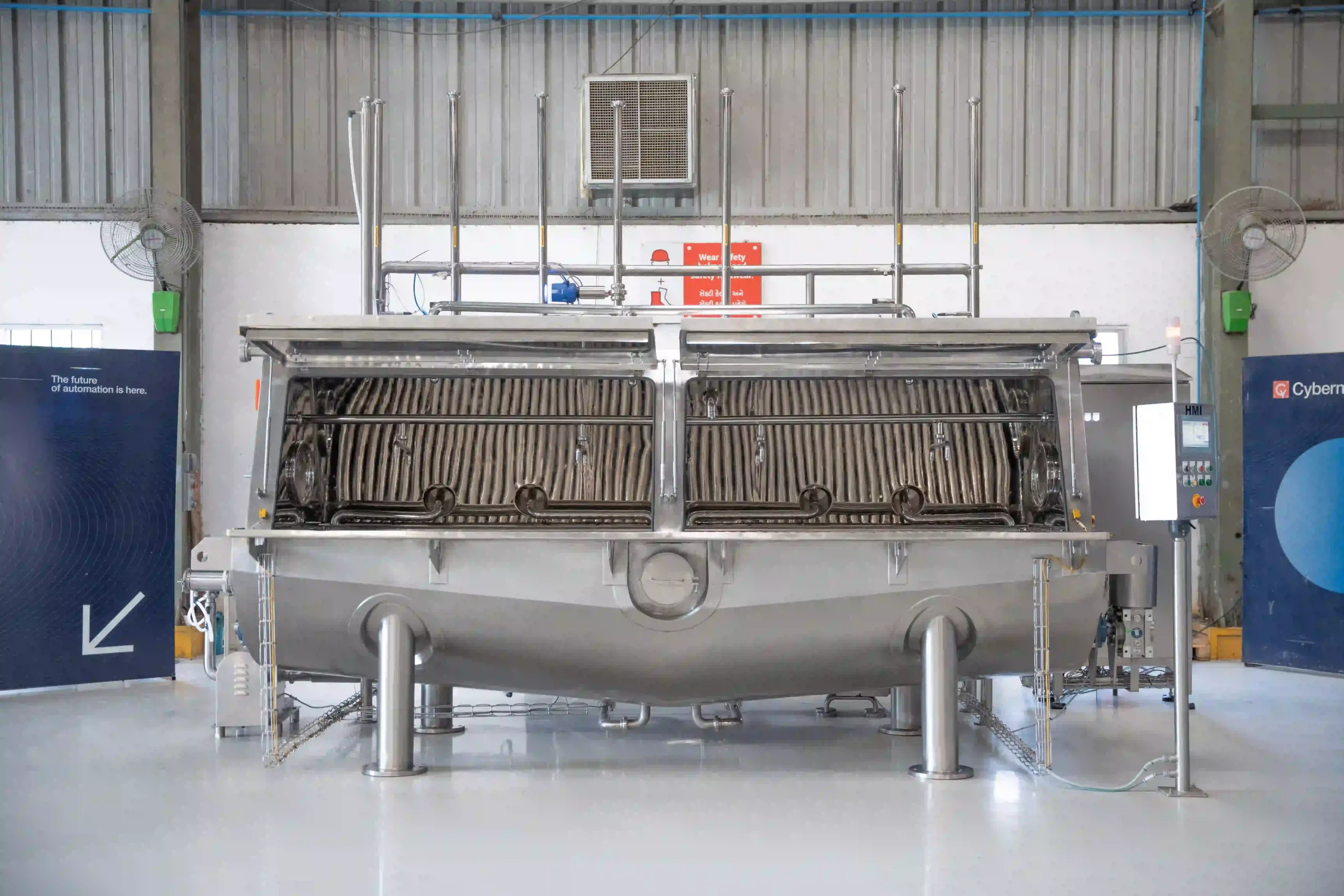
An industrial melter brings solid fat into contact with a heated surface, controls the rate of heat input, and keeps the melting mass moving so temperature stays uniform across the batch.
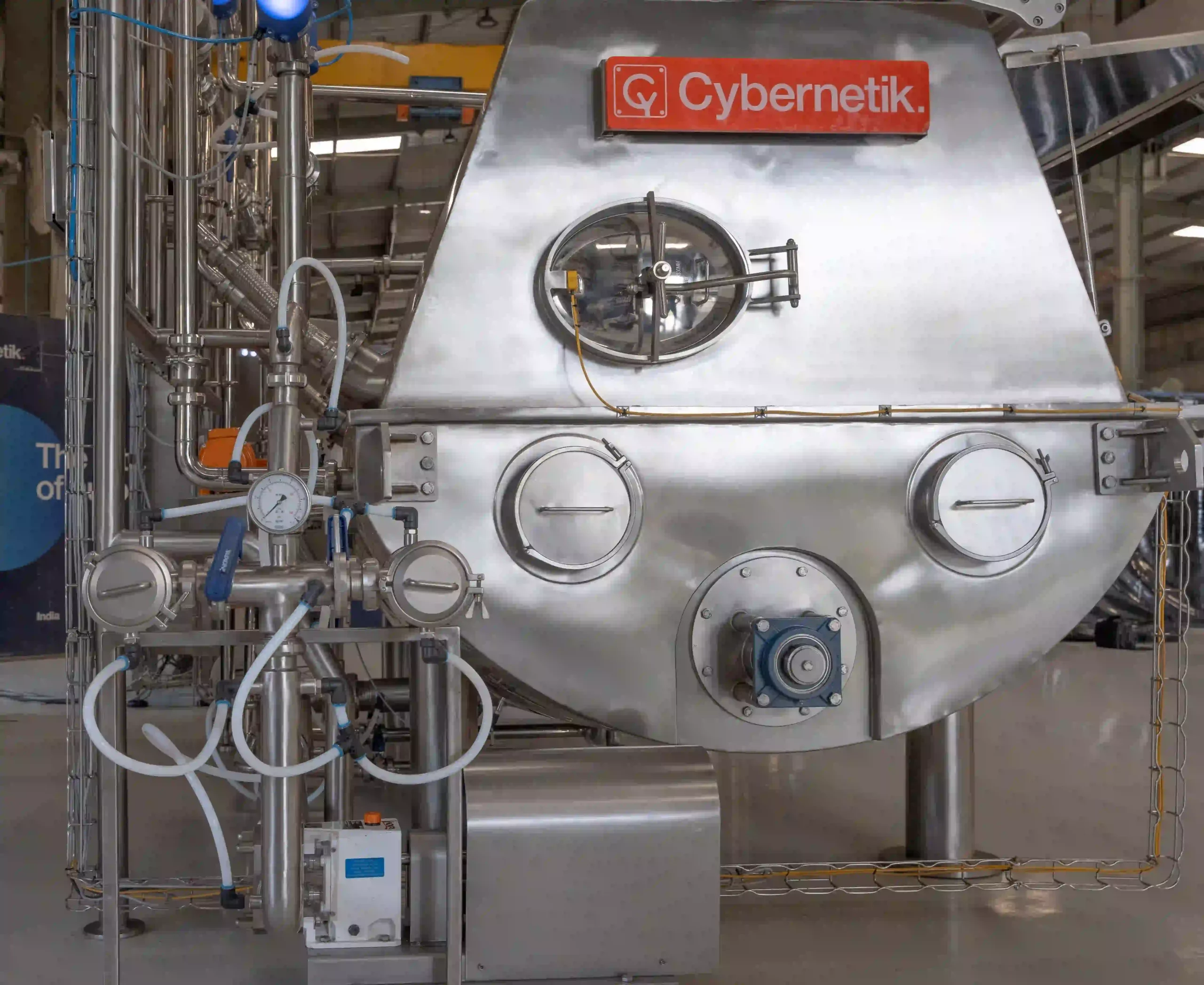
Three design elements do most of the work. A closed chamber excludes moisture and airborne contamination and prevents material loss. Automatic temperature control holds the setpoint rather than depending on an operator watching a gauge, which is what prevents the slow drift into thermal damage. An agitator screw circulates the mass so the liquid fraction does not sit against a hot surface while solid material waits, and it assists discharge, which matters because viscous molten fat does not drain willingly.
For materials that resist melting, a vibratory grid breaks blocks down and increases the surface area in contact with heat. This is the difference between a melter that handles pre-cut chips and one that accepts whole blocks as delivered, which in turn determines whether an operator is spending time breaking material up by hand before it goes in.
Materials and How They Behave
Fat processing equipment in food manufacturing handles a wide range of materials, and their processing requirements differ enough that the specification should name the actual products.
| Material | Processing behaviour | What the equipment must handle |
|---|---|---|
| Cocoa butter and cocoa liquor | Narrow melting range, multiple crystal forms, sensitive to moisture | Precise temperature control and a genuinely closed chamber; water ingress causes seizing |
| Chocolate and compound | Contains sugar and milk solids that scorch on hot surfaces | Gentle, evenly distributed heat with agitation to prevent burn-on |
| Butter and concentrated butter | Melts readily but oxidises and develops off-flavours when overheated | Tight upper temperature limits and short residence at temperature |
| Palm oil and palm kernel fat | Fractions differ substantially in melting behaviour | Recipe-based temperature setpoints rather than one fixed profile |
| Coconut fat and melano fat | Low melting point, solidifies quickly in cool lines | Trace heating downstream, not just heat in the vessel |
| Cheese | High viscosity, prone to stringing and sticking | Strong agitation and assisted discharge |
Applications Across Food Manufacturing
Where Fat Processing Goes Wrong
 “Modern fat processing combines hygienic construction, automatic temperature control, controlled agitation, and integrated automation to deliver consistent molten fat without unnecessary thermal exposure.”

See it in action
Cybernetik Melter Specifications
| Parameter | Specification | Notes |
|---|---|---|
| Model code | INCO-MELT | Cybernetik industrial melter range |
| Capacity | 500, 700, 1000, 1200, 1500 and 2000 kg/hr | Customisable between and beyond listed capacities |
| Materials of construction | SS304 or SS316 | SS316 where product acidity or corrosion resistance requires it |
| Chamber design | Closed chamber | Prevents contamination and material loss during melting |
| Temperature control | Automatic | Holds setpoint rather than relying on operator judgement |
| Agitation | Agitator screw | Thorough mixing and assisted discharge of molten material |
| Difficult materials | Vibratory grid | Breaks down tough-to-melt blocks to speed heat transfer |
| Build standard | Hygienic, GMP built | Food grade construction for direct product contact |
| Integration | Automation options for downstream processes | Melter feeds mixing, dosing or cooking equipment directly |
Products handled include chocolates, butter, concentrated butter, cocoa butter, cocoa liquor, palm oil fat, palm kernel fat, coconut fat, melano fat and cheese. The melter is also available as part of an integrated fat melting system, where melting, holding and downstream transfer are engineered as one sequence rather than assembled from separate purchases.
Where the Melter Sits in the Line
In prepared food production, molten fat is typically dosed into cooking equipment as part of a recipe. Cybernetik’s cooking kettle handles rapid pressure cooking of up to 2,000 litres with flavour and nutrient preservation, and takes fat as one metered ingredient among several.
For gentler processing, a tilting kettle cooks up to 1,500 litres at atmospheric pressure, which suits operations such as tempering additions where pressure cooking would be too aggressive. Specifying the melter alongside the equipment it feeds is what avoids the mismatch between melt rate and consumption rate that causes fat to sit at temperature.
Cybernetik has operated for more than three decades, is headquartered in Pune with offices in the United States and the UAE, and has installed over 6,000 systems across 30 plus countries, including more than 400 custom automation solutions. With over 600 employees and divisions spanning Process Automation, Packaging Automation, CleanTech, Extraction, Labs and Defence, the engineering base behind a fat melting system is considerably wider than the machine itself. Further background sits on the Cybernetik about page.
Why Manufacturers Choose Cybernetik for Fat Processing
Fat melting is rarely bought in isolation. It arrives as part of a wider food processing requirement, and the supplier decision usually turns on whether one party can own the whole sequence.
The practical value of that range shows up in the details that cause problems elsewhere. A supplier who also builds the kettle knows what temperature the fat needs to arrive at. A supplier who also builds the clean-in-place system knows that a melter handling chocolate has to be cleanable without water reaching the product side. Those are the decisions that determine whether a line runs, and they are difficult to coordinate across separate procurements.