
Key takeaways
Cleaning is one of the most important processes in food and pharmaceutical manufacturing. Production equipment comes into direct contact with raw materials, ingredients, powders, liquids, oils, additives, and finished products throughout the manufacturing cycle. If equipment is not cleaned properly, product residues can accumulate and create contamination risks that affect product quality, operational efficiency, and regulatory compliance.
Traditional cleaning methods often require operators to stop production, disassemble equipment, perform manual cleaning, inspect every component, and then reassemble the entire system before restarting operations. While this approach can be effective, it also increases downtime, requires significant labor, and creates inconsistencies between cleaning cycles.
As manufacturing facilities continue to automate their production processes, cleaning operations have evolved as well. Clean-in-Place (CIP) systems have become the preferred solution because they allow equipment to be cleaned without disassembly. Automated cleaning cycles improve hygiene, reduce production interruptions, optimize resource utilization, and ensure consistent cleaning across multiple production batches.
In industries such as food processing and pharmaceutical manufacturing, where sanitation standards are extremely strict, CIP technology has become an essential part of modern production facilities.
What Is a Clean-in-Place (CIP) System?
A Clean-in-Place (CIP) system is an automated cleaning solution designed to clean the internal surfaces of processing equipment without requiring the equipment to be dismantled.
Instead of manually cleaning tanks, pipelines, pumps, and processing vessels, CIP systems circulate cleaning solutions through the equipment using controlled flow rates, temperatures, pressures, and chemical concentrations.
The entire cleaning sequence follows a programmed cycle that removes product residues, eliminates contaminants, and prepares the equipment for the next production run.
Modern CIP systems are commonly used to clean:
- Processing tanks
- Storage vessels
- Pipelines
- Mixers
- Heat exchangers
- Filling systems
- Transfer systems
Automated cleaning ensures that every production cycle follows the same cleaning parameters, improving process consistency and reducing human error.
Why Are CIP Systems Important in Food and Pharmaceutical Manufacturing?
Food and pharmaceutical products are highly sensitive to contamination. Even small amounts of residue left inside processing equipment can affect product quality and create serious safety concerns.
In food manufacturing, contamination can change product flavor, texture, shelf life, and overall quality. In pharmaceutical manufacturing, contamination can affect product formulation, stability, and patient safety.
CIP systems help manufacturers address several operational challenges, including:
Automated cleaning helps manufacturers maintain consistent hygiene standards while increasing production efficiency.
How Does a CIP System Work?
Although cleaning cycles vary depending on the product being processed, most CIP systems follow a structured operating sequence to ensure that every surface within the production system is cleaned effectively. Each stage of the cleaning cycle is designed to remove specific types of contaminants while maintaining process efficiency, reducing resource consumption, and ensuring that equipment meets hygiene requirements before production resumes.
Pre-Rinse Cycle
The cleaning process begins with a pre-rinse cycle that removes loose materials and residual product from the equipment. Water circulates through tanks, pipelines, pumps, and processing equipment to flush out any remaining product before chemical cleaning begins. This initial stage helps reduce product buildup inside the system, improves cleaning efficiency, and decreases the amount of cleaning chemicals required during subsequent stages.
Chemical Cleaning Cycle
Once the initial rinse is complete, cleaning solutions are circulated throughout the system to remove more stubborn residues that cannot be eliminated with water alone. Depending on the manufacturing application, CIP systems may use alkaline solutions to remove fats and proteins or acidic solutions to dissolve mineral deposits and scale buildup. The selection of cleaning chemicals depends on the product being processed, the type of residue present, equipment materials, and the sanitation requirements of the facility. Proper chemical cleaning ensures that all internal surfaces are cleaned thoroughly without damaging the equipment.
Intermediate Rinse
After the chemical cleaning cycle, an intermediate rinse is performed to remove any remaining cleaning agents from the equipment. This stage prevents cleaning chemicals from contaminating the next production batch and prepares the system for sanitization. An effective intermediate rinse also helps maintain product quality, improves cleaning consistency, and ensures that the sanitization process performs as intended.
Sanitization Cycle
The sanitization cycle focuses on reducing microbial contamination and improving overall hygiene within the production system. Food and pharmaceutical manufacturers often use hot water, steam, or specialized sanitizing solutions to eliminate microorganisms that may remain after chemical cleaning. This stage is particularly important in applications that require strict sanitation standards because it helps manufacturers maintain product safety, comply with regulatory requirements, and reduce the risk of contamination between production batches.
Final Rinse and Validation
The final stage removes any remaining cleaning solutions and prepares the equipment for the next production cycle. However, cleaning is not considered complete until the process has been validated. Modern CIP systems continuously monitor critical parameters such as temperature, pressure, flow rate, conductivity, chemical concentration, and cleaning duration to verify that every cleaning cycle meets predefined standards. This validation process provides documented evidence of cleaning performance, supports quality assurance programs, and helps manufacturers maintain compliance with food safety and pharmaceutical regulations.
Standard CIP Process
| Cleaning Stage | Primary Function |
|---|---|
| Pre-rinse | Removes loose residues |
| Chemical cleaning | Dissolves contaminants |
| Intermediate rinse | Removes cleaning chemicals |
| Sanitization | Eliminates microorganisms |
| Final rinse | Prepares equipment for production |
Key Components of a CIP System
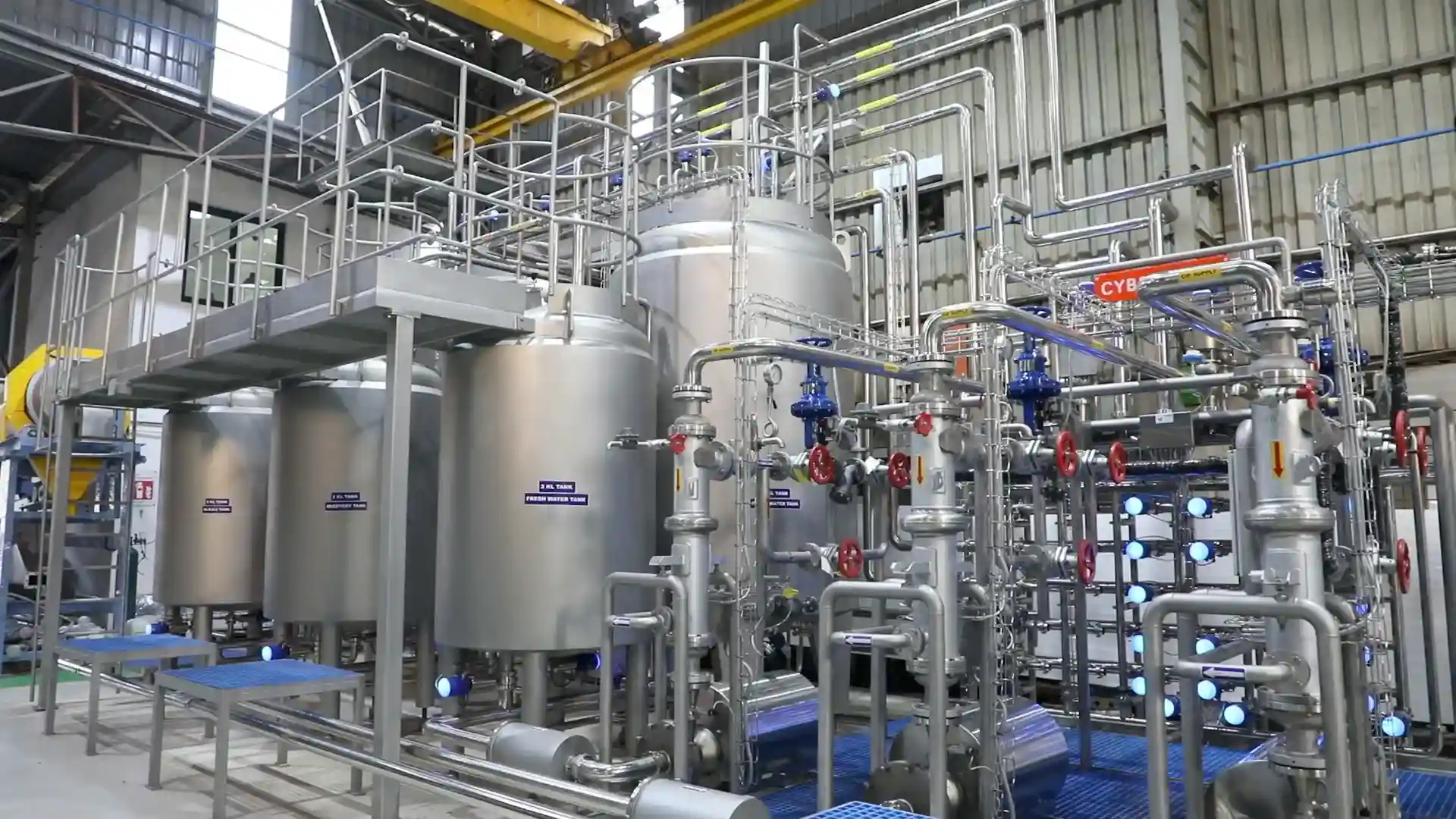
CIP Tanks
The tank is one of the most important components of a CIP system because it stores the liquids used during the cleaning cycle.
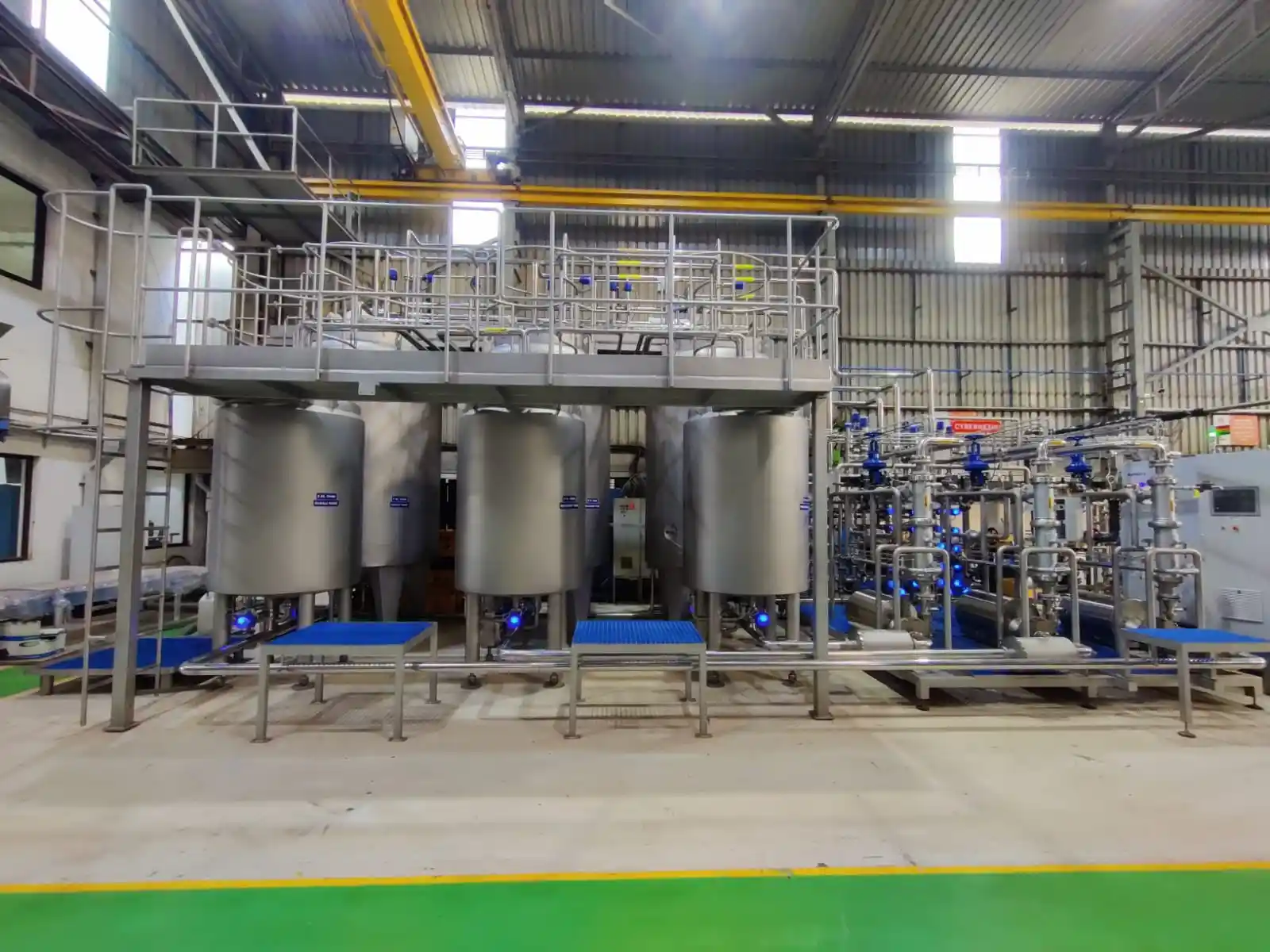
Cybernetik offers both single-tank and multiple-tank CIP systems with capacities of up to 8,000 liters.
Tank configurations may include:
- Water tanks
- Acid tanks
- Alkali tanks
- Recovered water tanks
The correct tank configuration depends on production requirements, cleaning frequency, and process complexity.
Pumps and Circulation Systems
Pumps circulate cleaning solutions throughout the entire process line.
Maintaining the correct flow rate is essential because inadequate circulation can reduce cleaning effectiveness and allow residues to remain inside the equipment.
Proper circulation ensures that cleaning solutions reach every surface within the system.
Spray Devices
Spray balls and rotary cleaning heads distribute cleaning solutions inside tanks and vessels.
These devices improve cleaning efficiency by ensuring complete coverage of internal surfaces.
Different spray technologies are available depending on tank size and product characteristics.
Sensors and Automation Controls
Modern CIP systems rely on automation technologies to improve cleaning consistency.
Several process parameters are monitored throughout the cleaning cycle, including:
- Temperature
- Flow rate
- Pressure
- Chemical concentration
- Conductivity
- Cycle duration
PLC and HMI controls allow operators to monitor and manage every stage of the cleaning process.
Single-Tank vs. Multiple-Tank CIP Systems
Manufacturers can select different CIP configurations depending on production requirements.
Single-Tank CIP Systems
Single-tank systems are commonly used in smaller production facilities.
These systems are:
- Compact
- Cost-effective
- Easy to operate
- Suitable for simpler production processes
Single-tank configurations are often appropriate for manufacturers with limited cleaning requirements.
Multiple-Tank CIP Systems
Multiple-tank systems provide greater flexibility and support more complex cleaning operations.
Cybernetik offers multiple tank configurations, including:
- Four-tank systems
- Three-tank systems
- Two-tank systems
- Single-tank systems
A four-tank CIP system can include separate tanks for:
- Acid
- Alkali
- Fresh water
- Recovered water
Recovery systems help minimize water consumption while improving resource utilization.
CIP Tank Configurations
| Model | Capacity (Liters) | Material of Construction |
|---|---|---|
| WACL-CIP | 500 | SS304 |
| WACL-CIP | 1,000 | SS316 |
| WACL-CIP | 2,000 | SS316 |
| WACL-CIP | 5,000 | SS316 |
| WACL-CIP | 6,000 | SS316 |
| WACL-CIP | 8,000 | SS316 |
 “The true value of a CIP system lies in its ability to balance hygiene, productivity, and resource efficiency within a single automated cleaning cycle.”

See it in action
Applications of CIP Systems in the Food Industry
Food manufacturing facilities process a wide range of products that require strict sanitation standards.
Common food applications include:
- Potato processing
- Rice processing
- Pulses and lentils
- Peppercorn processing
- Condiments and spices
- Flour processing
- Salt processing
- Sugar processing
- Bean processing
- Fruit processing
- Vegetable processing
- Paneer manufacturing
- Oil processing
Different products leave different residues inside processing equipment. CIP systems provide the flexibility required to clean multiple production lines while maintaining product quality and food safety.
Applications of CIP Systems in the Pharmaceutical Industry
Pharmaceutical manufacturing requires a higher level of cleaning validation and documentation.
CIP systems support pharmaceutical production by cleaning:
- Pharmaceutical formulations
- Active pharmaceutical ingredients (APIs)
- Mixing vessels
- Transfer systems
- Storage tanks
- Processing equipment
Automated cleaning improves traceability while helping manufacturers comply with Good Manufacturing Practices (GMP) and other regulatory requirements.
Because pharmaceutical manufacturers frequently process multiple formulations, effective cleaning is essential to prevent cross-contamination.
Automation Features in Modern CIP Systems
Today’s manufacturing facilities require more than basic cleaning equipment.
Modern CIP systems incorporate advanced automation features that improve performance and simplify operations.
Important automation features include:
- Fully automatic operation for improved process control
- User-friendly interfaces that simplify equipment management
- Standard and customized system configurations
- Automation integration with upstream processing equipment
- Recovery systems that reduce water consumption
- Real-time process monitoring
- Recipe-based cleaning programs
These technologies allow manufacturers to improve cleaning performance while reducing operational complexity.
Why Choose Cybernetik for CIP Systems?
Cybernetik develops automated CIP systems that combine hygienic design, process automation, and intelligent engineering to support modern manufacturing environments.
Several features differentiate Cybernetik’s solutions:
Cybernetik’s modular approach allows manufacturers to develop cleaning solutions that align with current production requirements while supporting future expansion.