
Key takeaways
Fully Automatic Carton Box Making Machines Explained: How They Erect, Fold and Seal Cartons at Line Speed
On a modern secondary packaging line, the rate at which cartons are erected, folded and sealed sets the ceiling for every downstream operation , from filling and case packing to palletizing and dispatch. Yet for many manufacturers in food, pharmaceuticals, FMCG and consumer goods, this stage is still partly manual. Operators hand-fold flat blanks, mis-tape bottoms, mix up carton variants, and lose hours to changeovers between SKUs. The result is a packaging line that runs well below its rated speed and produces cartons inconsistent enough to cause transit damage downstream.
This guide explains what a fully automatic carton box making machine actually does, why it matters for high-volume secondary packaging, and how Cybernetik’s automatic carton erectors integrate into a wider line architecture covering filling, sealing, palletizing and end-of-line dispatch. Whether your line packs pouches, bottles, bars, sachets or pharmaceutical strip packs, the right carton-forming architecture decides whether the rest of the line runs at rated capacity or starves waiting for boxes.
What Is a Fully Automatic Carton Box Making Machine?
A fully automatic carton box making machine , also known as a carton erector, case erector, or carton forming machine , is a piece of secondary packaging automation that takes flat, knocked-down (KDF) carton blanks from a magazine, opens them into a three-dimensional box, folds the bottom flaps, and seals the bottom with tape or hot-melt glue. The erected, sealed-bottom carton is then transferred onto a conveyor, ready for filling.
Sitting upstream of carton filling, the carton box making machine absorbs all the upstream variability , magazine refill, blank orientation, carton size changes , so the filler, sealer, and palletizer never wait for a box. In a fully automatic configuration, blank pickup, vacuum-assisted opening, flap folding, and bottom sealing all happen in a single uninterrupted cycle, with servo-driven changeover between carton sizes managed from the HMI.
Cybernetik’s carton erectors are engineered specifically for this role. With hygienic build options, magazine capacities sized for shift autonomy, servo-controlled flap folding, and integration into a single PLC + SCADA architecture across the wider line, they replace operator-dependent erecting with a system that delivers consistent, square, fully sealed cartons at the rated speed of the downstream filler.
Semi-Automatic vs Fully Automatic Carton Box Making Machines: Which Configuration Fits Your Line?
Cybernetik offers carton forming on a flexible platform that can be specified as semi-automatic or fully automatic. The right configuration depends on your throughput, SKU mix, and integration plan.
Semi-Automatic Carton Erecting
In a semi-automatic configuration, the operator hand-loads each blank into the forming station; the machine then folds and seals the bottom. Suitable for low- to mid-volume lines (typically under 8 cartons per minute), single-SKU operations, or operations with minimal floor space, semi-automatic carton box making machines deliver consistent bottom seals while still relying on operator pace at the magazine. Capital cost is lower but throughput is capped by operator endurance.
Fully Automatic Carton Box Making Machine
In a fully automatic configuration, the blank is picked from a high-capacity magazine by a vacuum-suction arm, opened against opposing guides, folded at the bottom by mechanical or pneumatic plows, and sealed in a single cycle. Throughputs of 15 to 30 cartons per minute on standard configurations and 30 to 45+ on high-speed configurations are typical. Operator involvement is limited to magazine refill, recipe selection, and routine cleaning. This is the right specification for any line that needs sustained throughput across multi-SKU runs.
Side-by-Side Specifications
The table below compares the two configurations on the parameters that matter most for a packaging engineer or plant head evaluating a line investment.
| Parameter | Value |
|---|---|
| Capacity | 40 pouches/min (based on pouch size) |
| Payload | Up to 25 kg |
| Footprint | 10 × 10 × 3 m (customizable) |
| Certifications | CE (as required) |
| Quality Options | Broken pouch rejection, metal detector, pouch pressing system |
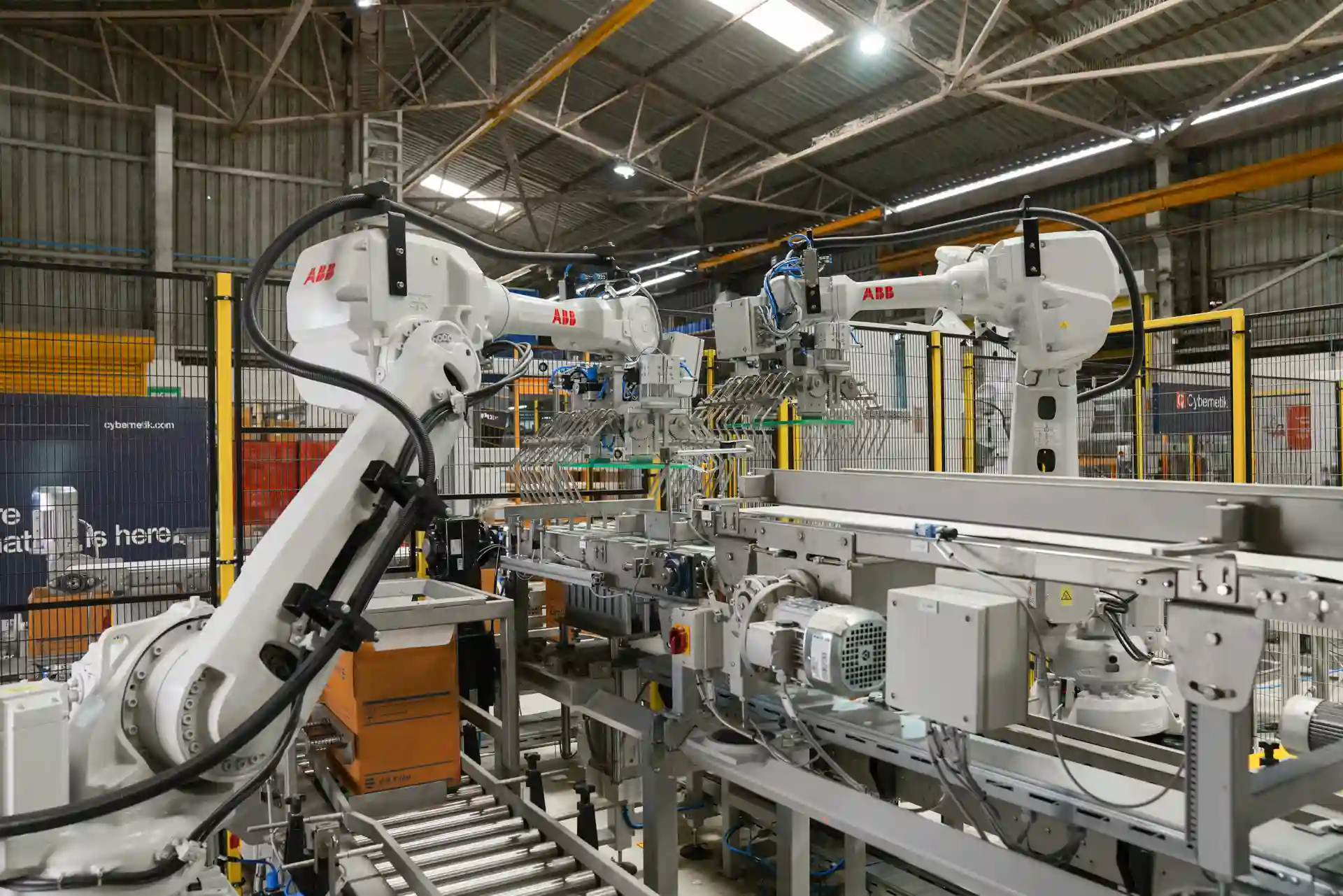
| Robot Configuration | 2 pick-and-place robots |
| Key Mechanism | Staggered pouch lifting + vibratory thickness conveyor |
Products and Carton Types Cybernetik’s Carton Box Making Machine Handles
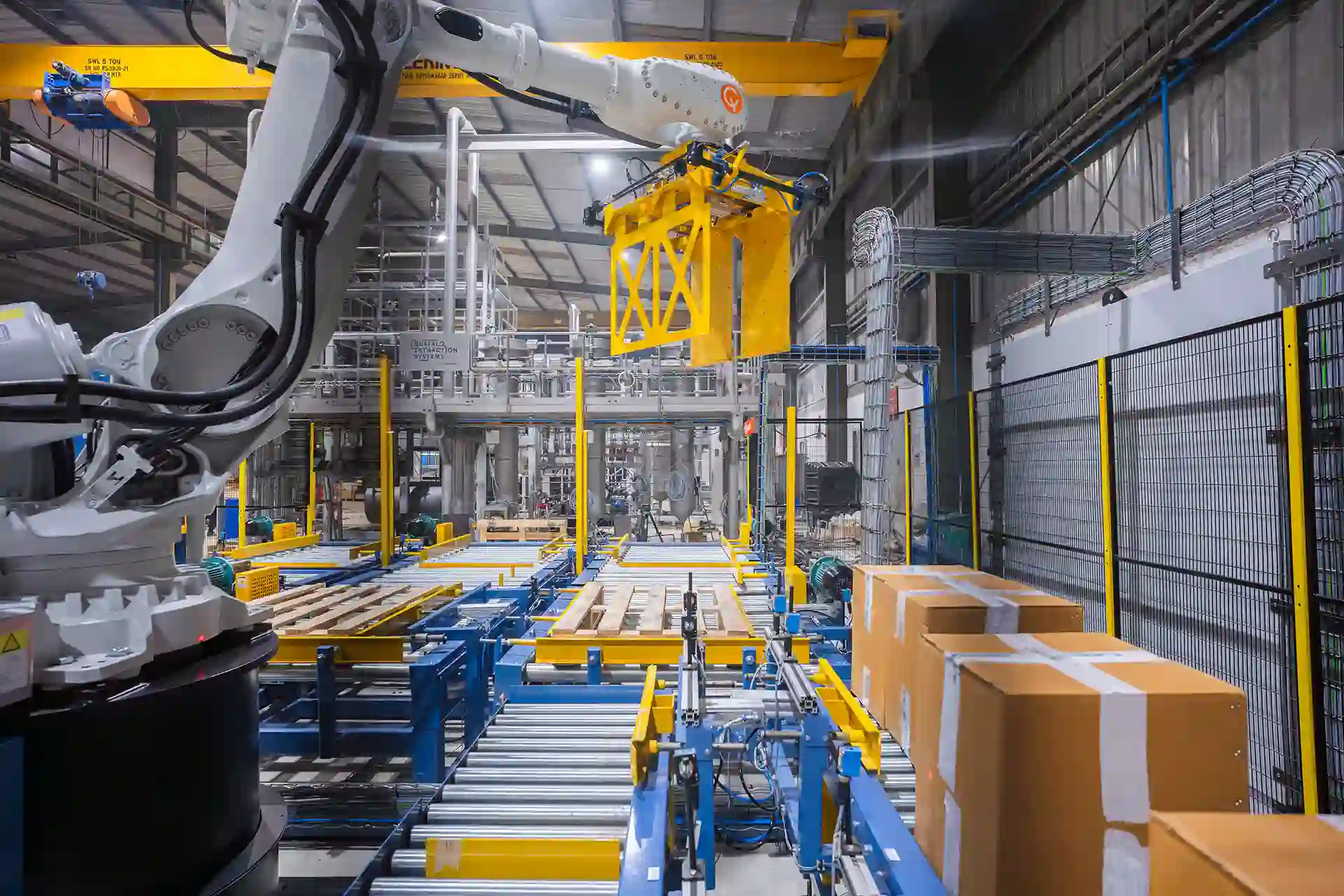
Across installed lines in food, pharma, FMCG and chemicals, the same Cybernetik carton-forming platform has been configured for a wide range of carton formats and end products.
Carton formats handled
Sealing options
End products inside the carton
 “A fully automatic carton box making machine doesn’t just erect cartons; it ensures every downstream packaging operation receives a continuous, accurately formed carton supply at line speed”

Cybernetik packaging engineering team
See it in action
The Cybernetik Advantage: Engineering Decisions That Make the Difference
Across more than 30 countries and four manufacturing facilities, Cybernetik has refined a set of build standards that translate directly into uptime and total cost of ownership for the customer:
When Should You Move from Manual or Semi-Automatic to a Fully Automatic Carton Box Making Machine?
If your line shows any combination of the symptoms below, a fully automatic carton box making machine will pay back faster than incremental fixes:
Where two or more of these are true simultaneously, the business case for a Cybernetik fully automatic carton box making machine is typically self-funding within 12 to 24 months on labor, scrap and uptime savings alone.